International Space Station Tour on Earth (1g) - Smarter Every Day 141
TL;DR
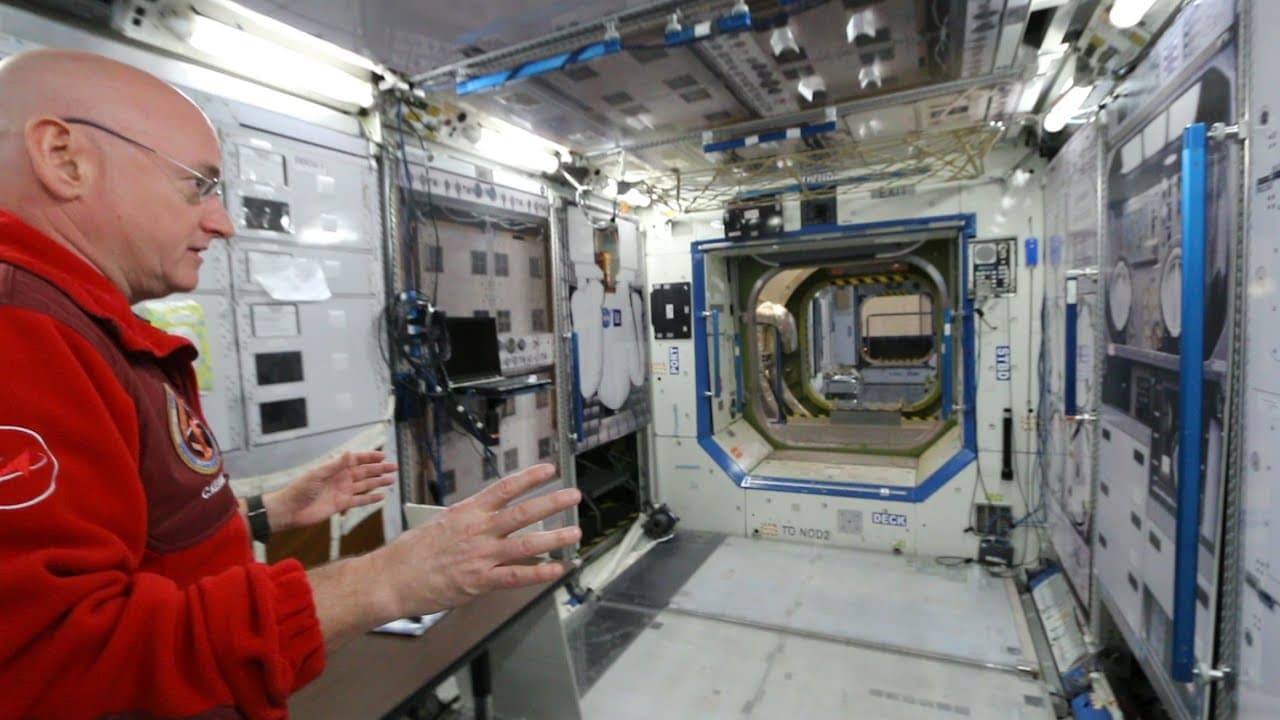
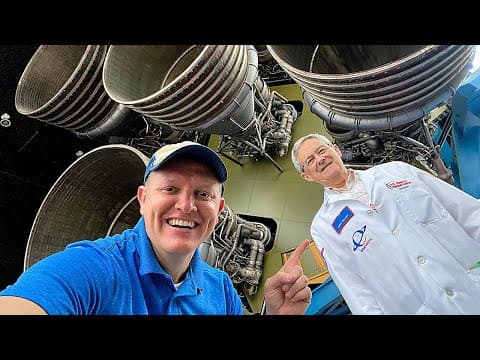
Astronaut Scott Kelly guides Destin through a Houston mock-up of the International Space Station, tracing a route from the Russian segment to the Japanese module. The tour explains where Soyuz spacecraft dock, how Node 1 connects key areas, what the cupola is used for, and how systems generate oxygen, recycle urine into water, and remove carbon dioxide. Read on for a clearer mental map of life aboard the ISS.
Transcript
Hey it's me Destin welcome back to Smarter Every Day. I want to be an astronaut so I love taking tours of the International Space Station online. But there's a problem. Every time I do this I can't get my bearings. It's like without gravity my main reference frame has been stolen from me and I can't tell up from down and I get turned around and I'm... Read More
Key Insights
- 🙃 The International Space Station consists of various modules, owned by different countries, each serving different purposes such as living space, science experiments, and docking areas.
- 🛟 Life support systems and equipment such as oxygen generators and urine processors are essential for sustaining human life and maintaining the International Space Station's functionality.
- ⛑️ Orientation in the absence of gravity relies on visual cues, lighting, and label placements in the modules.
- 🫵 The cupola provides a breathtaking view of Earth and is used for photography and Earth observations by astronauts.
- 😴 Astronauts adapt to unique sleeping arrangements, exercise routines, and personal hygiene practices in a microgravity environment.
- 👹 Scientific research is conducted in dedicated modules, such as the US laboratory module and the Japanese Pressurized Module, which house various racks and equipment for experiments.
- 🙃 Mobility within the International Space Station is more restricted compared to the mock-ups, as there is additional hardware and equipment present in the real station.
- 🛝 Communication and data connectivity with the ground are facilitated through computers and intermittent internet access.
Install to Summarize YouTube Videos and Get Transcripts
Explore YouTube Video Summarizer or Get YouTube Transcript Extractor
Questions & Answers
Q: What does Scott Kelly show in the International Space Station tour on Smarter Every Day 141?
Scott Kelly guides Destin through an ISS mock-up in Houston, beginning where Kelly’s Soyuz spacecraft would dock in the Russian segment. The route continues through the US segment toward the Japanese module while identifying living, exercise, observation, science, and spacewalk areas.
Q: How does the video help viewers understand the layout of the International Space Station?
A video-game-style radar shows the current module, position, and orientation throughout the tour. The viewer appears as a white dot and Scott Kelly as a red dot, helping prevent the confusion caused by changing orientations in microgravity.
Q: Where does Scott Kelly’s Soyuz spacecraft dock on the ISS?
Kelly says his Soyuz docks to MRM2, a module extending from the top of the station in the Russian segment. Other Soyuz spacecraft dock in other parts of that segment.
Q: What are the service module and FGB used for?
Scott Kelly identifies both while moving forward through the Russian segment. The FGB is Russian-built but owned by the United States, and it is used mostly for cargo stowage.
Q: What is Node 1 used for on the International Space Station?
Node 1 is an adjoining module that connects other parts of the station. Crew members in the US segment eat there, and Russian crew members sometimes join them; its equipment includes a galley rack, drink-bag filling facilities, small refrigerators, and food warmers.
Q: What is the ISS cupola used for?
Astronauts use the cupola’s windows to photograph and observe Earth. Scott Kelly notes that the US laboratory and Russian segment also have useful windows for Earth observation.
Q: What equipment is located near the cupola?
The cupola, a resistive exercise device, the US-segment toilet, and a treadmill are all within a few feet of one another. Because they have different orientations, one astronaut might run on a wall while others use the toilet or exercise sideways.
Q: How does the International Space Station support breathable air and recycle water?
Node 3 contains an oxygen-generating system that converts water into oxygen, a processor that converts urine into water, and a carbon-dioxide removal assembly. Lithium hydroxide canisters serve as a backup if the US removal systems fail, while the Russian Vozdukh system alone cannot support six people.
Summary & Key Takeaways
-
Smarter Every Day takes a virtual tour of the International Space Station with astronaut Scott Kelly, gaining a deeper understanding of the different modules and their purposes.
-
The tour starts from the Russian segment, where the Soyuz spacecraft docks and explores various sections including the US segment, exercise areas, cupola, and laboratory module.
-
Scott Kelly explains the life support systems, scientific equipment, sleeping arrangements, and orientation challenges faced by astronauts in the space station.
Read in Other Languages (beta)
Share This Summary 📚
Summarize YouTube Videos and Get Video Transcripts with 1-Click
Try YouTube Summary with ChatGPT & Claude or YouTube Transcript Generator
Explore More Summaries from SmarterEveryDay 📚
Summarize YouTube Videos and Get Video Transcripts with 1-Click
Try YouTube Summary with ChatGPT & Claude or YouTube Transcript Generator