What Is Digital Marketing and How Does It Work?
TL;DR
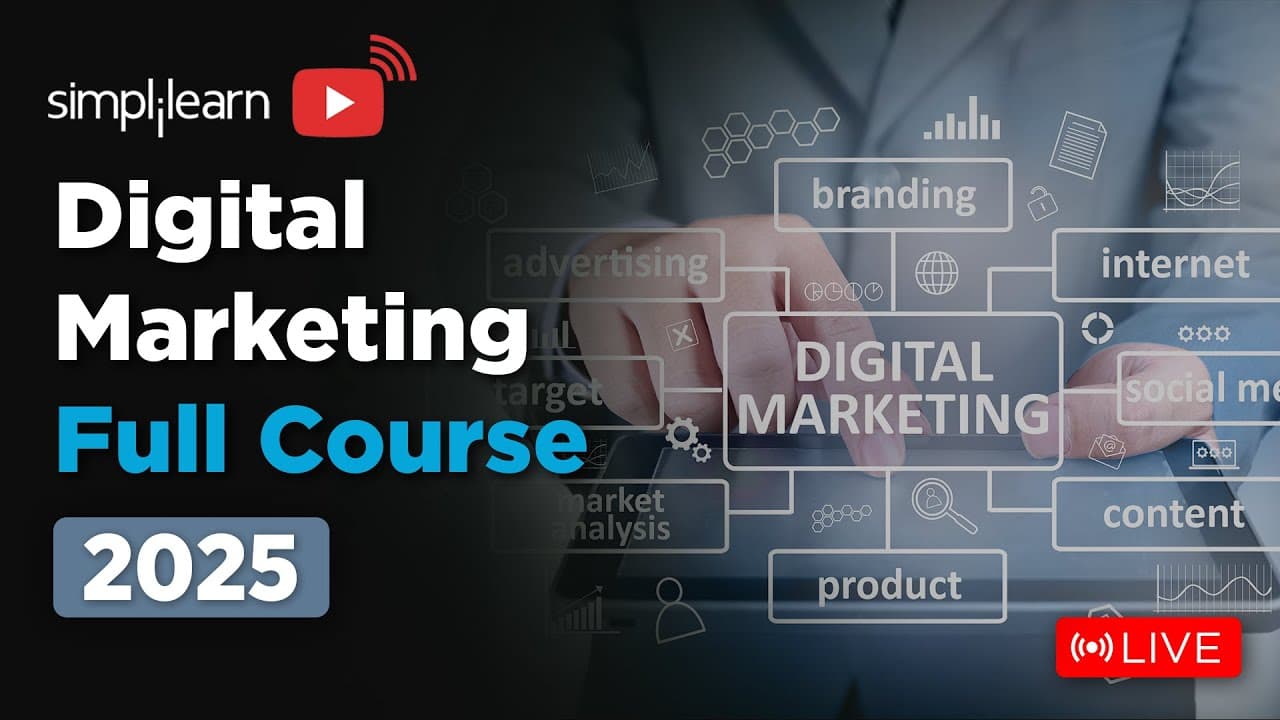
Digital marketing is promoting a company's or individual's product or service with the help of a device or technology, such as a laptop, mobile device, app, or software. It beats traditional print, radio, billboard, newspaper, and TV marketing on reach, versatility, speed, cost efficiency, targeting, and measurement. SEO is the king of its channels, alongside SEM, email, affiliate, social, content, and mobile marketing.
Transcript
Hey there. Are you curious about how digital marketing works and how AI is changing the game? You are in the right place. Digital marketing is one of the most in demand skills today with businesses of all sizes looking for professionals who can help them grow online. From social media to search engines, from email campaigns to content creation, dig... Read More
Key Insights
- Digital marketing is defined as promoting a company's product or an individual's product or service with the help of a device or technology. Devices include laptops and mobile phones, and technology can be an app, a cloud-based platform, or a piece of software.
- Traditional marketing includes print, radio, billboard, newspaper, and TV, meaning anything that is not on a mobile device or laptop. Its reach is limited, it is non-versatile, communication is delayed, results are not real time, and campaign measurement is poor.
- Reach is the clearest gap between the two approaches: a print run of a thousand flyers might reach roughly 2,000 people once shared, while a digital campaign targeting an audience on Facebook or Google search makes 2,000 look like nothing.
- Versatility favors digital because a printed flyer is fixed at 8.5 by 11 inches, while display banners come in sizes such as 468x60, 200x200, 250x250, and 300x300, on top of text ads and video or multimedia formats.
- Real-time reporting is one of the biggest benefits of digital marketing, because analytics show instant results while traditional channels such as a TV spot may only offer an open slot at 1 in the morning and give no immediate feedback.
- Cost efficiency comes from control: digital marketing lets you choose who, when, where, and what to target, set bidding and hours for search, and cap actual spend, whereas traditional postcards add printing plus postage fees.
- SEO is described as the king of all digital marketing channels, and it means increasing the quality and quantity of relevant organic traffic on search engines including Google so that a relevant page shows up first and gets clicked.
- Search engine marketing, also called pay-per-click, cost-per-click, PPC, CPC, sponsored search, or Google Ads, is simply the use of paid ads on search engines, and paid listings can appear above organic results for a query such as online shopping.
Install to Summarize YouTube Videos and Get Transcripts
Explore YouTube Video Summarizer or Get YouTube Transcript Extractor
Questions & Answers
Q: What is digital marketing?
Digital marketing is the act of promoting a company's product, or an individual's product or service, with the help of a device or technology. The device side covers laptops and mobile devices, while the technology side can be an app, a cloud-based platform, or a piece of software. In short, you are using technology to promote your product or service. Because of that, campaigns can run across many platforms, including search, social, email, and mobile apps, with variations in what you can do on each.
Q: What is the difference between digital marketing and traditional marketing?
Traditional marketing covers print, radio, billboard, newspaper, TV, and anything that is not on your mobile or laptop. Traditional marketing has limited reach, is non-versatile, involves delayed communication, lacks real-time results, can be very costly, makes it difficult to reach a target audience, and offers poor campaign measurement. Digital marketing reverses each of those: maximum reach, high versatility, no time restrictions on communication, instant real-time results, strong cost efficiency, easy targeting of a specific audience, and campaigns that are easy to measure and optimize.
Q: Why is digital marketing important today?
Digital marketing has become more popular than traditional marketing, and over the past few decades it has evolved at a rapid pace. These days a lot of people spend most of their time on the internet, and a great deal happens there every 60 seconds. According to social media today, in any 60-second window there are large volumes of snaps, clicks, texts, videos watched, pictures taken, voice-activated activity, tweets, emails, and swipes. Essentially every marketer is now using digital marketing for their business.
Q: What are the main digital marketing channels?
The channels listed are SEO, search engine marketing, email marketing, affiliate marketing, social, content, and mobile, and each of these can be broken down further into subsets. SEO is presented first because it is considered the king of all the channels. When you want to promote a product or service through a campaign, you choose among these channels depending on where your audience is and what kind of message and format you want to deliver.
Q: How does SEO work in digital marketing?
SEO stands for search engine optimization, and it means increasing the quality and quantity of relevant organic traffic on the search engines, including Google. In the US market Google holds a large market share, so the goal is for the pages on your website to be found and clicked organically. When someone types in a keyword, you want the relevant page to show up first so they can click the link. Since millions of people search daily in the US and worldwide, ranking for relevant keywords can bring substantial traffic. A search for online shopping, for example, returns Amazon as the top organic listing.
Q: What is search engine marketing and what else is it called?
Search engine marketing, commonly shortened to SEM, is really just using paid ads on search engines. It goes by many synonymous names, including pay-per-click, cost per click, PPC, CPC, sponsored search, and Google Ads. It sits alongside SEO in search results: in the example of a query for online shopping, the first listing shown is a paid search ad, while the second listing, Amazon, is the organic result. Paid search lets you place bids and control when and how your ads appear.
Q: Why is digital marketing more cost efficient than traditional marketing?
Traditional marketing can be very costly. Printing postcards is only part of the expense, because you also have to mail them, which adds postage fees. Digital marketing is described as very cost efficient because you can pick and choose who you want to target, when you want to target, where you want to target, and what you want to target. If you are running search campaigns, you can set your bidding and your hours, so you control how much you actually spend. Combined with real-time results, this lets you optimize based on how much the campaign is costing.
Q: What will you learn in this digital marketing full course?
The course walks step by step through the world of digital marketing and shows how AI can make things easier and faster. It covers creating eye-catching ads, finding the right keywords, and using tools such as Google Ads, Facebook Ads, WhatsApp Business, WordPress, and Google Analytics, even for complete beginners. It also covers seven strategies you can use right away, including social media marketing, affiliate marketing, and setting up a dropshipping store with Shopify. Additional topics include SEO audits, keyword research, go-to-market strategy, creating and selling digital products, copywriting, and using ChatGPT and other AI platforms to write content, generate leads, and boost campaigns.
Summary & Key Takeaways
-
Digital marketing is the act of promoting a company's product or an individual's product or service with the help of a device or technology. Devices include laptops and mobile devices, while technology covers apps, cloud-based platforms, and software. Campaigns can run on search, social, email, and mobile apps.
-
Traditional marketing covers print, radio, billboard, newspaper, TV, and anything not on a mobile or laptop. Compared with it, digital marketing offers maximum reach, high versatility, instant communication, real-time results, cost efficiency, easy audience targeting, and campaigns that are easy to measure and optimize.
-
The main digital marketing channels are SEO, search engine marketing, email marketing, affiliate marketing, social, content, and mobile, each with its own subsets. SEO increases the quality and quantity of relevant organic traffic on search engines including Google, where a search for online shopping ranks Amazon organically.
-
The full course walks step by step through digital marketing while showing how AI makes work easier and faster, covering ad creation, keyword research, and tools including Google Ads, Facebook Ads, WhatsApp Business, WordPress, and Google Analytics, plus seven strategies such as social media marketing, affiliate marketing, and Shopify dropshipping.
Read in Other Languages (beta)
Share This Summary 📚
Summarize YouTube Videos and Get Video Transcripts with 1-Click
Try YouTube Summary with ChatGPT & Claude or YouTube Transcript Generator
Explore More Summaries from Simplilearn 📚
![Digital Marketing Full Course 2026 [FREE] | Digital Marketing Tutorial for Beginners | Simplilearn thumbnail](/_next/image?url=https%3A%2F%2Fi.ytimg.com%2Fvi%2F5altc8xTzBg%2Fhqdefault.jpg&w=750&q=75)
Summarize YouTube Videos and Get Video Transcripts with 1-Click
Try YouTube Summary with ChatGPT & Claude or YouTube Transcript Generator