How I got into Y Combinator
TL;DR
Build relationships with potential mentors by helping people you genuinely believe in, using skills you already possess, without first asking for recognition or guidance. Garry Tan says photographing Startup School speakers and sharing the images helped his Y Combinator application stand out, beginning a career shaped by contribution, strong collaborators, and paying opportunities forward.
Transcript
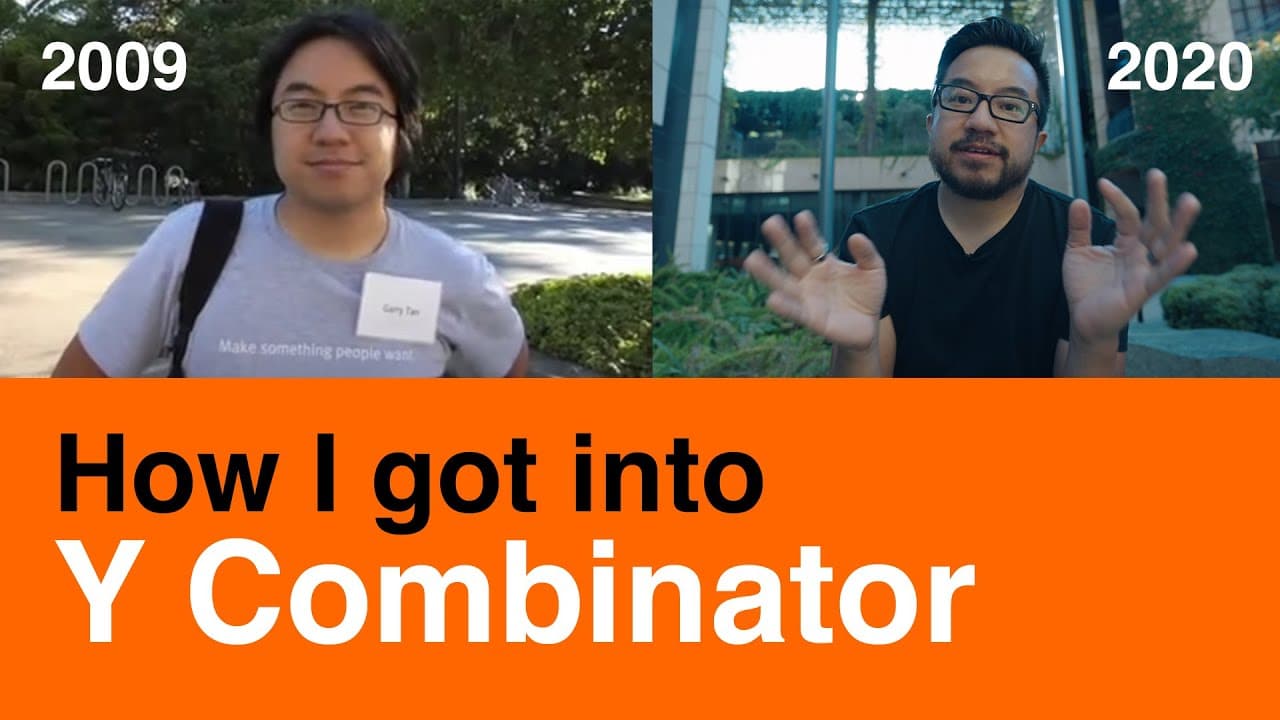
- Well I'm back here at Stanford University. Place is awesome. Today, I wanted to talk to you about mentors, because a lot of people are asking me to be their mentor. You shouldn't go and try and find a mentor, you should go find people who you want to help and help them, and then good things happen from there. And that's how I got into Y Combinato... Read More
Key Insights
- Mentorship is more likely to develop through useful contribution than through a formal request. Tan says he never acquired his mentors by asking them to accept that role, and instead built relationships by finding people he believed in and helping them with work he could perform well.
- Tan's Y Combinator opportunity began with event photography at Startup School in 2008. He arrived early, photographed prominent speakers from the front row, edited the photographs that night, published them on a blog platform, and submitted the post to Hacker News, where it gained visibility.
- A visible contribution can distinguish an applicant before the formal selection process. Paul Graham and Jessica Livingston later told Tan that his Startup School photography was one reason his team stood out among the many applications Y Combinator received for its program.
- The give-first mindset starts by asking how to help rather than what access or guidance you can receive. Tan recommends identifying people doing work you genuinely support, recognizing where your abilities are useful, and completing the helpful work without necessarily waiting for an invitation.
- A broad collection of practical skills increases the value a person can offer. Tan's product design and engineering interests were relevant to startups, but his separate interest in editorial and event photography unexpectedly became the skill that opened an important professional opportunity.
- Being a great joiner can prepare someone to become a strong leader. Tan argues that joining promising efforts, contributing skills, and learning alongside capable people builds experience that later supports becoming a founder, leader, or independent professional.
- Early belief in promising people or organizations can create long-term opportunities. Tan believed in Y Combinator in 2008, when software engineers, designers, and product people were paying attention but venture capitalists had not yet broadly embraced it, so he wanted to support its work.
- Long-term careers benefit from repeatedly working with intelligent, capable people. Tan describes a magnet effect in which joining worthwhile efforts brings strong collaborators into your network, creating relationships that continue paying dividends as responsibilities, leadership roles, and professional ambitions grow.
Install to Summarize YouTube Videos and Get Transcripts
Explore YouTube Video Summarizer or Get YouTube Transcript Extractor
Questions & Answers
Q: How can I find a mentor without asking for mentorship?
Find people whose work you genuinely believe in, identify a skill that would be useful to them, and contribute before requesting guidance or access. Garry Tan says none of his major mentorship relationships began with a formal request. They developed after he helped people and organizations he respected, allowing useful work and shared interests to create an authentic connection.
Q: How did Garry Tan get into Y Combinator?
Before applying to Y Combinator in 2008, Garry Tan attended Startup School at Stanford with his photography equipment. He arrived early, sat in the front row, photographed every speaker, edited the images that night, published them on a blog platform, and shared the post on Hacker News. Paul Graham and Jessica Livingston saw the work, which helped his application stand out.
Q: Why did event photography help a Y Combinator application?
The photography gave Garry Tan a concrete way to support an event and community he valued. By creating strong images, publishing them quickly, and sharing them where the startup community could see them, he demonstrated initiative and useful skills. Paul Graham and Jessica Livingston later told him that the contribution was one reason they selected his team from the applicant pool.
Q: What does a give-first mindset mean for career growth?
A give-first mindset means beginning professional relationships by considering what useful contribution you can make. Tan recommends following people whose work you support, finding where your abilities meet their needs, and helping without demanding an immediate return. In his experience, this approach produced mentorship, opportunities, skills, and relationships that later influenced the direction of his career.
Q: Why is being a great joiner important before becoming a leader?
Being a great joiner provides opportunities to contribute, practice skills, observe capable people, and understand how worthwhile projects grow. Tan argues that early-career professionals often benefit more from joining promising efforts than from immediately trying to lead. The experience and relationships gained through excellent participation can prepare someone to become a stronger founder or leader later.
Q: What skills should I offer to people I want to help?
Offer skills you can already perform well and that address a real need. Tan had experience in design, product building, engineering, and photography, but his interest in event photography created the unexpected opening at Startup School. He recommends developing multiple abilities because every additional skill gives you another practical way to contribute to people and projects you believe in.
Q: How can joining promising communities improve a career?
Joining a promising community can place you near intelligent people who may become long-term collaborators, mentors, or professional partners. Tan calls this a magnet effect. His early support for Y Combinator led to admission, company building, relationships, and eventually five years as a partner. Those accumulated skills and connections later helped him pursue venture capital independently.
Q: What happened after Garry Tan joined Y Combinator?
Tan entered Y Combinator's summer 2008 batch, launched Posterous.com, raised an angel round, and reported about 1.5 million unique users in the United States by the following Startup School. He later worked as a Y Combinator partner for five years. After building his skills and network there, he was ready to pursue venture capital on his own.
Summary
In this video, the speaker shares his experience with finding mentors and offers advice on how to approach mentorship. He emphasizes the importance of helping others and giving back, rather than simply seeking out a mentor. The speaker recounts how his involvement in a startup event and his willingness to offer his skills and assistance led to opportunities that ultimately changed his life. He also highlights the value of being a great joiner early in one's career and the benefits of surrounding oneself with smart and talented individuals. The speaker concludes by expressing gratitude for the opportunities he has been given and his commitment to paying it forward.
Questions & Answers
Q: How did the speaker find his mentors?
The speaker never obtained his mentors by directly asking them to be his mentor. Rather, he found people he believed in and wanted to help. Through his willingness to offer his skills and assistance, he built relationships with influential individuals who provided mentorship and guidance.
Q: How did the speaker's involvement in a startup event lead to an opportunity with Y Combinator?
The speaker attended a startup school event at Stanford University and took photos of all the speakers. He then posted these photos online, which caught the attention of Paul Graham and Jessica Livingston, co-founders of Y Combinator. This ultimately opened up an opportunity for the speaker to join Y Combinator and have his life changed.
Q: Did the speaker formally ask his mentors for guidance?
No, the speaker never formally asked his mentors for guidance. According to him, this is not a common practice. Instead, he believes in the idea of giving first and offering one's unique skills to others without even having to ask. By doing so, he believes that what you put out into the world will come back to you in a magnified manner.
Q: What advice does the speaker give about becoming a great leader?
The speaker suggests that early in one's career, it is more important to be a great joiner rather than focusing on becoming a leader right away. Being a great joiner involves finding things that genuinely interest you and offering your skills to contribute to those endeavors. This approach allows for skill-building and sets a strong foundation for future leadership roles.
Q: How can one prepare themselves to be a great joiner?
The speaker outlines three steps to prepare oneself to be a great joiner. Firstly, one must have something they are great at, such as a particular skill or expertise. Secondly, they should follow people who they believe in and whose work aligns with their interests and values. Finally, by being a great joiner, one tends to attract and work alongside incredibly intelligent individuals, which can lead to long-term benefits and opportunities.
Q: How did the speaker's involvement with Y Combinator shape his career?
Working at Y Combinator as a partner for five years had a profound impact on the speaker's career. It provided him with valuable skills, experiences, and a powerful network. It became a launching pad for his subsequent career as a venture capitalist. The speaker attributes the path he took to his initial willingness to help and give back, and he expresses gratitude for the opportunities he received.
Q: What is the speaker's advice for finding mentors?
Rather than actively seeking out mentors, the speaker suggests finding people and causes that one believes in and offering their unique skills and assistance. This approach, rooted in giving and helping others, often leads to mentorship opportunities and personal growth.
Q: How does the speaker recommend approaching mentorship?
The speaker advises approaching mentorship with a mindset of giving first. Instead of asking for mentorship, individuals should seek to help and support others without expecting anything in return. By doing so, they may be surprised by the reciprocal benefits and opportunities that come their way.
Q: What mindset shift did the speaker experience?
The speaker learned the importance of recognizing that much of our lives are taken care of by other people. This realization led to a shift in mindset, embracing a mindset of giving and offering assistance to others. The speaker believes that by giving first, individuals can experience an abundance of positive returns in their lives.
Q: How does the speaker hope to impact others in their careers?
The speaker expresses a genuine desire to pay it forward and help others in their careers, just as people have helped him. He acknowledges the significant support he has received and hopes to provide similar support to others, emphasizing the importance of appreciating the opportunities one has been given and extending the same to others.
Takeaways
The key takeaways from this video are the importance of helping others and giving back, the value of being a great joiner early in one's career, and the power of surrounding oneself with smart and talented individuals. The speaker's personal experience showcases how opportunities and mentorship can arise from a genuine willingness to offer skills and assistance. By embracing a mindset of giving first, individuals can unlock personal and professional growth. Furthermore, the speaker emphasizes the significance of gratitude and paying it forward in order to create a positive impact on the careers of others.
Summary & Key Takeaways
-
Garry Tan did not gain mentors by formally requesting mentorship. He recommends identifying people and organizations whose work you believe in, determining which of your skills could help them, and contributing first. This approach creates authentic professional relationships while allowing useful work, rather than a request for access, to demonstrate your character and abilities.
-
In 2008, Tan attended Startup School before Y Combinator applications were due. He arrived early with photography equipment, sat in the front row, photographed every speaker, edited the images that night, published them on a blog platform, and shared them on Hacker News, where Paul Graham and Jessica Livingston discovered his contribution.
-
Tan's company entered Y Combinator's summer 2008 batch, launched Posterous.com, raised an angel round, and later reached about 1.5 million unique users in the United States. He subsequently became a Y Combinator partner for five years, then used the skills and network he developed to begin working as a venture capitalist independently.
Read in Other Languages (beta)
Share This Summary 📚
Summarize YouTube Videos and Get Video Transcripts with 1-Click
Try YouTube Summary with ChatGPT & Claude or YouTube Transcript Generator
Explore More Summaries from Garry Tan 📚



Summarize YouTube Videos and Get Video Transcripts with 1-Click
Try YouTube Summary with ChatGPT & Claude or YouTube Transcript Generator