Will Major Social Media Platforms Survive?
TL;DR
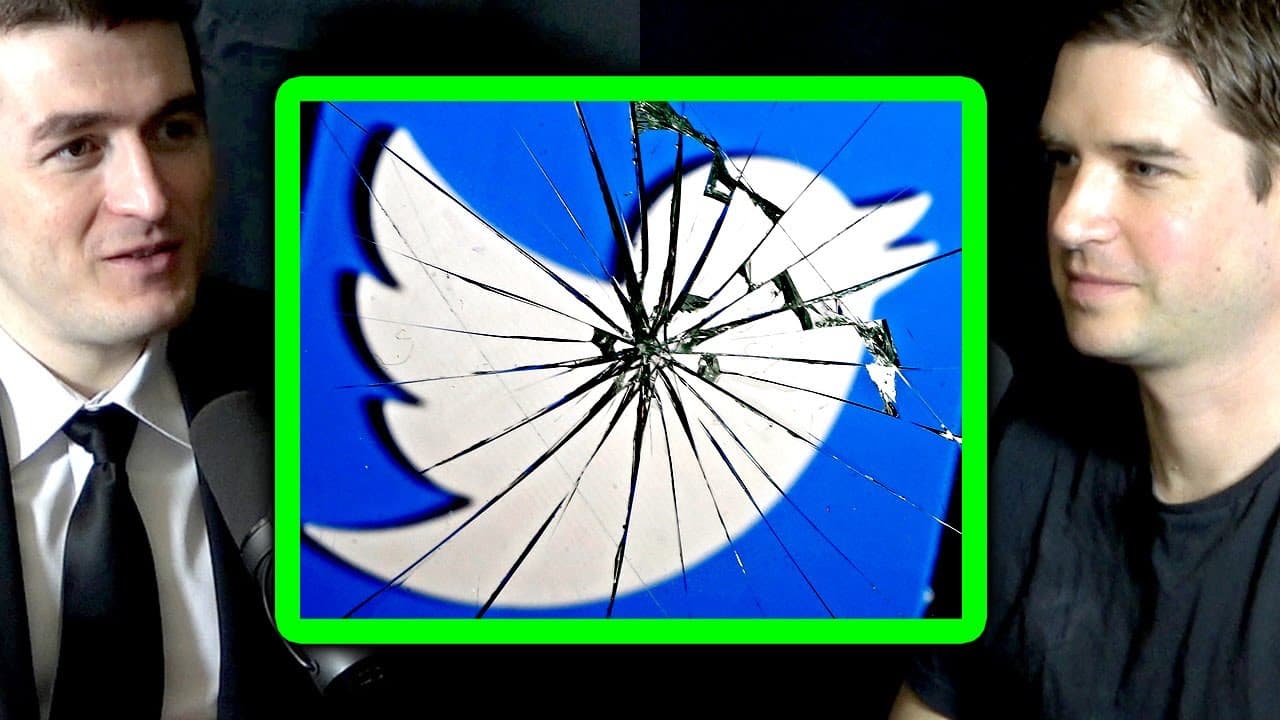
Major social media platforms are likely to decline as their unique advantages diminish and users gravitate toward more specialized, smaller platforms. The shift from personal connections to news feed algorithms has intensified competition, leading to fragmentation where niche platforms may offer deeper connections and more engaging content.
Transcript
well so so my my big unified theory on social media is i'm very i'm very bearish yes on the big platforms having a long future you are i think the moment i think the moment of three or four major platforms is uh not gonna last right so i don't know okay this is just perspective right so you can start shorting these stocks uh on my don't sell it's n... Read More
Key Insights
- 😃 Big social media platforms are losing their advantage due to the erosion of the network effect and competition from other forms of entertainment.
- 🥺 The shift towards news feed algorithms on platforms like Facebook has led to a homogenized experience, reducing the diversity and quality of content.
- 🛩️ Fragmentation into smaller, specialized platforms can offer more personalized and engaging experiences, fostering connections and reducing the reliance on attention-harvesting strategies.
- 👤 The clunkiness and aesthetics of social media platforms can significantly impact user adoption and engagement.
- 🎙️ More videos with Cal Newport:
Install to Summarize YouTube Videos and Get Transcripts
Explore YouTube Video Summarizer or Get YouTube Transcript Extractor
Questions & Answers
Q: Why do big social media platforms like Facebook and Twitter face fierce competition?
The shift towards a news feed model and the erosion of the network effect has allowed other platforms and forms of entertainment, such as podcasts, to compete for user attention, making the competition fiercer.
Q: What advantages do smaller, specialized platforms offer?
Smaller platforms can provide more meaningful connections and content as they cater to specific interests, allowing users to find like-minded individuals and engage in discussions or activities they are passionate about.
Q: What led to the decline of big social media platforms?
The author argues that big platforms lost their advantage when they shifted from focusing on the network effect to prioritizing news feed algorithms, which opened up opportunities for other platforms and forms of entertainment to capture user attention.
Q: How can social media fragmentation benefit users?
Fragmentation into smaller platforms allows users to have more control over their social media experiences, as they can choose platforms that align with their interests and values. It also fosters more meaningful connections and reduces the reliance on attention-harvesting strategies.
Summary & Key Takeaways
-
The network effect that originally made big social media platforms like Facebook and Instagram valuable has been eroded as users turn to other tools like group text messages and WhatsApp.
-
The shift towards a news feed model on platforms like Facebook has opened up competition with other forms of entertainment, such as podcasts, making it harder for big platforms to maintain their dominance.
-
The author predicts a fragmentation of social media into smaller, specialized platforms that cater to specific interests and offer a more personalized and engaging experience.
Read in Other Languages (beta)
Share This Summary 📚
Summarize YouTube Videos and Get Video Transcripts with 1-Click
Try YouTube Summary with ChatGPT & Claude or YouTube Transcript Generator
Explore More Summaries from Lex Clips 📚




Summarize YouTube Videos and Get Video Transcripts with 1-Click
Try YouTube Summary with ChatGPT & Claude or YouTube Transcript Generator