How to Make Soap: A Complete Guide to Cold Process Soap
TL;DR
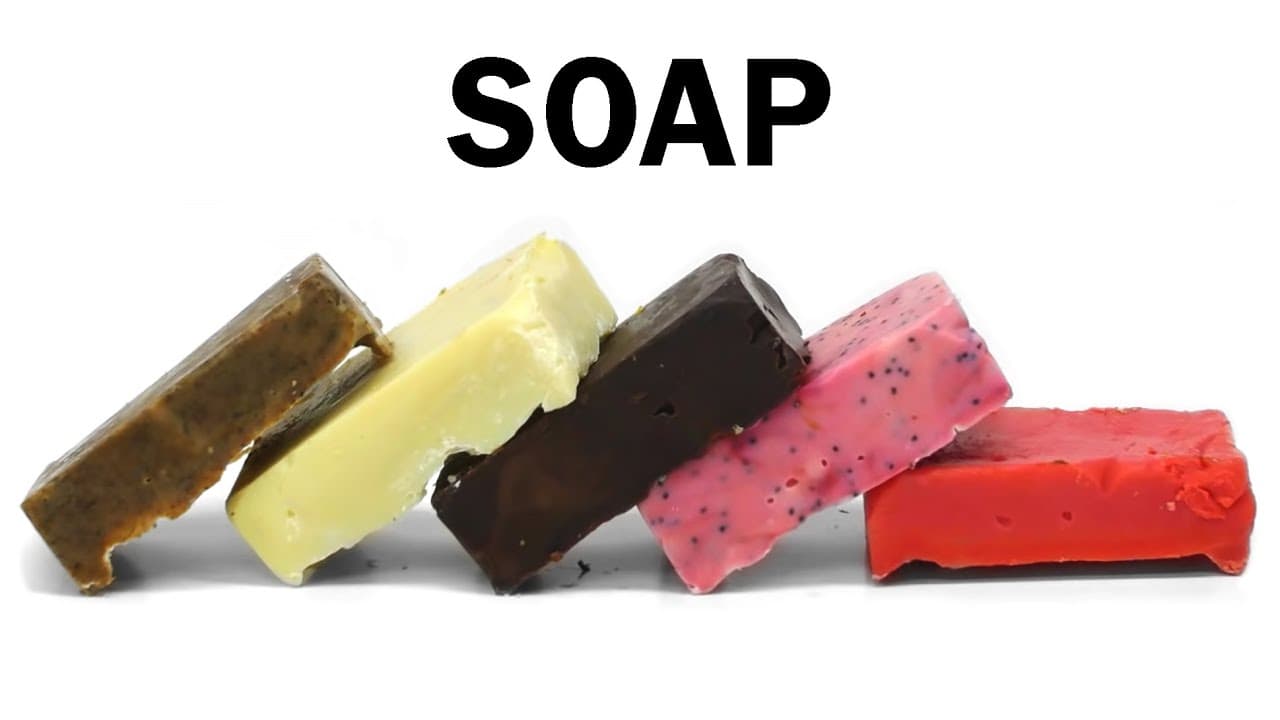
To make soap using the cold process, mix olive oil, coconut oil, and a sodium hydroxide solution, which initiates a saponification reaction. Adjusting the oils and additives impacts the final soap's properties. The mixture is poured into molds and left to cure for 4-6 weeks before use, yielding a handmade bar that's effective as a surfactant.
Transcript
Soap is used to wash many things like dishes or clothing, and in every case it's acting the same way. It works as something called a surfactant, which emulsifies oils and allows them to be carried by water. Historically, soap was made by using a combination of rain water, animal fats or vegetable oils, and ashes. Over thousands of years the process... Read More
Key Insights
- 🚾 Soap acts as a surfactant, allowing oils to be carried away by water, making it an effective cleaning agent.
- 💪 Soap is derived from triglycerides through a saponification reaction with a strong base.
- 🧼 Different bases and triglyceride sources result in soaps with different properties.
Install to Summarize YouTube Videos and Get Transcripts
Explore YouTube Video Summarizer or Get YouTube Transcript Extractor
Questions & Answers
Q: How does soap work to clean oil and grease?
Soap acts as a bridge between oil and water due to its polar and non-polar properties. The polar, hydrophilic head attracts water, while the non-polar, lipophilic tail attracts oil. When soap is shaken with water, it forms micelles that surround and dissolve oil droplets, preventing them from recombining.
Q: What are the major ingredients in soap?
The major ingredients in soap are triglycerides, which are fat storage molecules found in animals and plants, and a strong base such as sodium hydroxide. Triglycerides are hydrolyzed by the base in a saponification reaction to form soap.
Q: How does the choice of base and triglyceride source affect the properties of soap?
The choice of base influences the properties of the soap. Sodium hydroxide forms harder and less soluble soap, while potassium hydroxide forms softer and more water-soluble soap. The source of triglycerides and the length of the fatty acid chains also affect the properties of the soap.
Q: What is the difference between cold process and hot process soap making?
Cold process soap making involves mixing oils or fats with a base, allowing it to cure for several weeks. Hot process soap making involves heating the mixture to accelerate the reaction and reduce curing time. The choice of process affects the shape and compatibility with additives.
Summary & Key Takeaways
-
Soap works as a surfactant, allowing oil to be carried by water and making it easier to clean things like floors and clothing.
-
Soap is derived from triglycerides, which are fat storage molecules. When triglycerides are treated with a strong base, they undergo a saponification reaction to form soap.
-
Soap can be made using different ingredients and processes, resulting in soaps with different properties.
Read in Other Languages (beta)
Share This Summary 📚
Summarize YouTube Videos and Get Video Transcripts with 1-Click
Try YouTube Summary with ChatGPT & Claude or YouTube Transcript Generator
Explore More Summaries from NileRed 📚
Summarize YouTube Videos and Get Video Transcripts with 1-Click
Try YouTube Summary with ChatGPT & Claude or YouTube Transcript Generator