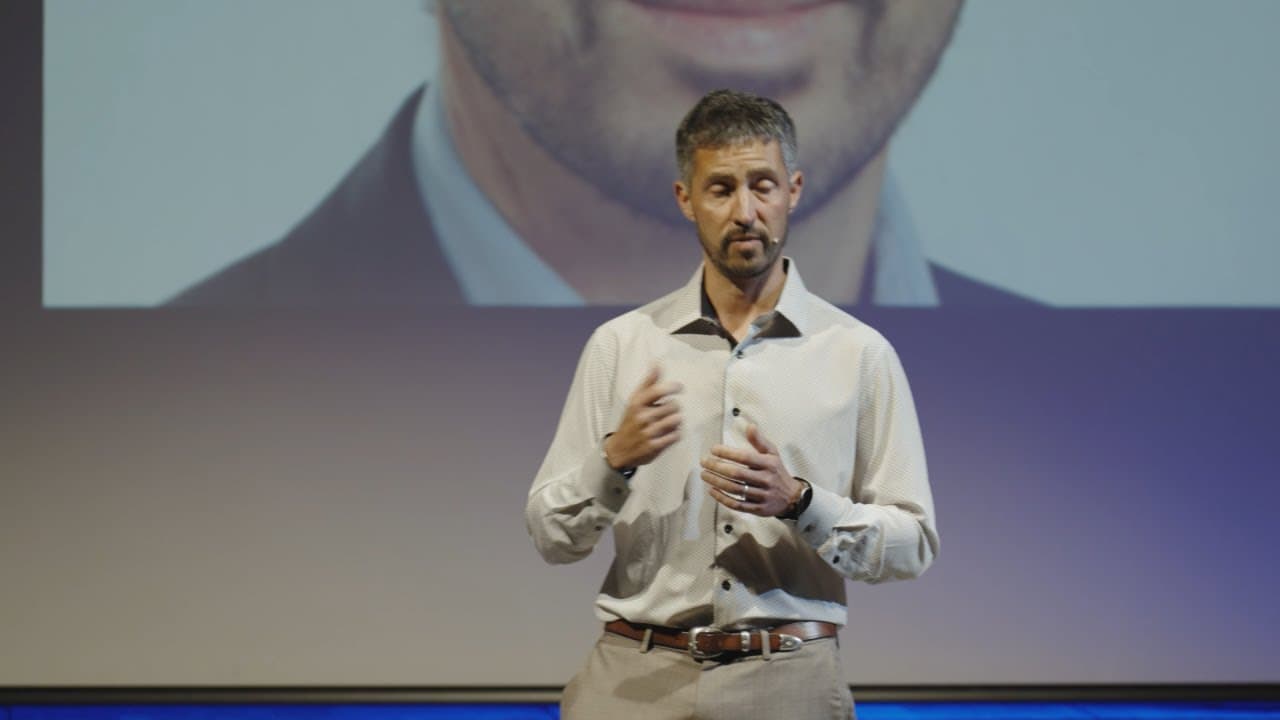
The future of sport's medicine | Dr. Aaron Baggish | TEDxLa Cote International School
TL;DR
Shared decision-making in sports medicine allows athletes and doctors to collaboratively make healthcare choices. This approach empowers athletes like Kevin, who, despite a serious heart condition, were given a chance to play based on informed consent and personal values rather than solely relying on traditional medical guidelines. It emphasizes treating patients as individuals and considering their preferences in healthcare decisions.
Transcript
good evening ladies and gentlemen I am delighted to be here with you this evening three things listen to your doctor do what your doctor tells you and most importantly doctors know best I believe many of you learned this at a young age and have never stopped to challenge those paradigms the story I'm going to tell you tonight which is a story about... Read More
Key Insights
- 😷 Traditional medical guidelines may not always align with an individual's personal values.
- 💄 Shared decision-making fosters collaborative healthcare decisions.
- 🖐️ Personal choice plays a crucial role in enhancing patient outcomes.
- 💼 The importance of treating patients as individuals rather than mere cases.
- 😷 Healthcare practitioners should consider patient preferences alongside medical expertise.
- 💼 Kevin's case illustrates the significance of patient empowerment in healthcare decisions.
- 😷 The evolution of medical practices towards personalized care and patient autonomy.
Install to Summarize YouTube Videos and Get Transcripts
Explore YouTube Video Summarizer or Get YouTube Transcript Extractor
Questions & Answers
Q: How did the doctor's encounter with Kevin challenge traditional medical practices?
The doctor's meeting with Kevin, diagnosed with a heart condition, challenged the traditional practice of outright disqualification from sports based on outdated medical guidelines.
Q: What role did shared decision-making play in Kevin's case?
Shared decision-making allowed Kevin, the doctor, and other stakeholders to collaborate on a treatment plan that aligned with Kevin's personal values and preferences, deviating from traditional medical dictates.
Q: How did the doctor's experience with Kevin lead to a shift in medical practices?
The doctor's experience with Kevin prompted a reevaluation of traditional medical guidelines, leading to a more patient-centric approach that prioritizes personal choice and shared decision-making in sports cardiology.
Q: What impact did Kevin's case have on the field of sports cardiology?
Kevin's case exemplified the transformative power of personal choice in healthcare, influencing a shift towards collaborative decision-making processes that consider individual patient values and preferences.
Summary
This video is a talk by a sports cardiologist, who shares a personal story about the importance of personal choice in medical decisions. He talks about how traditionally, doctors have used a document called the Bethesda conference proceedings to make decisions about whether athletes with heart problems can continue playing their sport. However, he shares a story about a young athlete named Kevin who was diagnosed with a heart condition that would disqualify him from playing in the National Football League (NFL). Instead of making the decision for Kevin, the cardiologist engages in shared decision making and allows Kevin to make an informed choice about his own health and future in sports. This experience leads the cardiologist to question the traditional approach to medical decision-making and advocate for a more patient-centered approach.
Questions & Answers
Q: What is the role of a sports cardiologist?
A sports cardiologist specializes in the care of elite-level athletes. They perform pre-participation screenings, take care of athletes when they need heart surgeries or medications, and determine sports eligibility for athletes with heart problems.
Q: What is the Bethesda conference proceedings?
The Bethesda conference proceedings is a document that lists every conceivable heart problem a young person could have and provides recommendations on whether they can participate in sports or not. It was written over 40 years ago by doctors who were mostly white men.
Q: Why are athletes with heart problems often disqualified from playing their sport?
Doctors often rely on the Bethesda conference proceedings to make decisions about sports eligibility for athletes with heart problems. The document mostly recommends against playing sports for individuals with heart conditions, except for a few less physically demanding sports like billiards, curling, bowling, golf, and rifle shooting. This approach prioritizes the safety of the athlete but may not take into account an individual's personal choice and aspirations.
Q: Who is Kevin and why is his case significant?
Kevin is a young athlete who had a promising career in American football. During the pre-employment physical examination known as the NFL combine, he was diagnosed with a heart condition called hypertrophic cardiomyopathy. This condition could potentially cause sudden death during physical exertion. According to the Bethesda conference proceedings, his days of playing football were over. However, this cardiologist allowed Kevin to make an informed choice about his own health and sports career.
Q: Why did the cardiologist change his approach to practicing medicine?
After Kevin's case, the cardiologist realized that the traditional approach of making decisions based solely on medical guidelines wasn't the way he wanted to practice medicine anymore. He started questioning the paradigm and began advocating for shared decision making, which involves working with the patient-athlete to collectively arrive at a decision that integrates medical knowledge with personal preferences and values.
Q: What is shared decision making?
Shared decision making is an approach where doctors and patients work together to make informed decisions about healthcare. It recognizes that patients have unique values, preferences, and beliefs that should be taken into account when determining the best course of action. It involves a partnership between the doctor and patient, with both parties contributing knowledge and expertise to arrive at a decision that aligns with the patient's goals and values.
Q: How was Kevin's eligibility for the NFL reinstated?
Through shared decision making, the cardiologist and Kevin worked together to challenge the disqualification decision. They engaged in a collaborative process where they carefully evaluated the risks and benefits of Kevin continuing to play in the NFL. They also took into account Kevin's personal preferences and values. After considerable work, they were able to get him eligible for the NFL draft, and he ultimately signed a contract that ensured his financial security.
Q: What impact did Kevin's case have on the way the cardiologist practiced medicine?
Kevin's case had a profound impact on the cardiologist's approach to practicing medicine. It made him realize that treating patients as individuals with their own desires and personal choices was more important than simply following medical guidelines. He believes in treating patients not just as patients but as people, respecting their autonomy and allowing them to define who they want to be.
Q: How has the practice of sports cardiology changed since Kevin's case?
The cardiologist's experience with Kevin prompted him to write and study the topic of shared decision making in sports cardiology. In 2020, the European Society of Cardiology released their Sports Cardiology document, which recognized and recommended the concept of shared decision making in the field. This shift marks a change in how sports cardiology is practiced worldwide, with a greater emphasis on involving the patient-athlete in the decision-making process.
Q: Are there risks associated with shared decision making in sports cardiology?
Critics might question the potential risks of allowing athletes with heart conditions to continue playing. They might argue that if one of the athletes allowed to play were to die on the field, it would reflect poorly on the doctor's decision. However, the cardiologist clarifies that shared decision making doesn't involve simply "letting" athletes play. It involves a process where both the doctor and the patient-athlete take responsibility for the decision. If the athlete understands the risks involved and chooses to accept them, the doctor's role is to support them in that decision.
Takeaways
This talk highlights the importance of respecting personal choice in medical decisions, especially when it comes to athletes with heart conditions. Instead of relying solely on medical guidelines, doctors should engage in shared decision making to involve the patient-athlete in the decision-making process. The concept of shared decision making is gaining recognition in the field of sports cardiology, with the European Society of Cardiology recommending its practice. By considering an athlete's individual goals, preferences, and values, doctors can help athletes make informed decisions about their own health and strive for a balance between safety and personal choice.
Summary & Key Takeaways
-
Sports cardiologist recounts meeting NFL hopeful Kevin diagnosed with heart condition.
-
Traditional medical guidelines would disqualify Kevin from playing, but the doctor reconsiders.
-
Through shared decision-making, Kevin is allowed to play, highlighting the importance of personal choice in healthcare.
Read in Other Languages (beta)
Share This Summary 📚
Summarize YouTube Videos and Get Video Transcripts with 1-Click
Try YouTube Summary with ChatGPT & Claude or YouTube Transcript Generator
Explore More Summaries from TEDx Talks 📚



Summarize YouTube Videos and Get Video Transcripts with 1-Click
Try YouTube Summary with ChatGPT & Claude or YouTube Transcript Generator