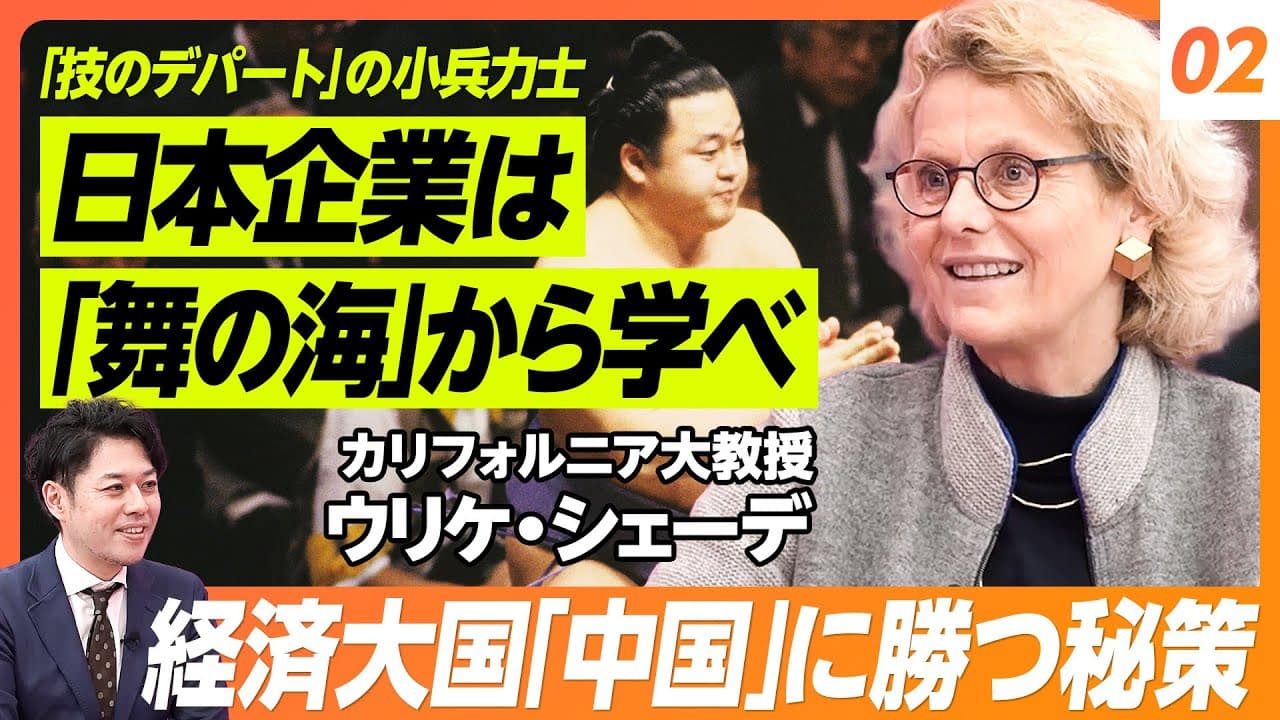
【逆説の日本企業論】カリフォルニア大(UCSD)の経営学者「小兵力士・舞の海」から学べ」/ウリケ・シェーデ教授が明かす集合ニッチ戦略/大企業にも「隠れた良さ」
TL;DR
Japan's economy thrives through agile, niche-focused strategies despite challenges.
Transcript
so my favorite Sumo in those days was a fellow named May a but he was still skinny like 100 kilg and my only came to be known asano the department store techniques they if they want to win against these very large players uh including from China they have to go on a diet they have to become fast and Nimble and they have to become the laano dep a so... Read More
Key Insights
- Japan's economy, despite facing challenges like a weak yen and low wages, remains the third largest globally due to its unique niche strategies.
- The 'aggregate niche strategy' allows Japanese companies to dominate small yet critical market segments, maintaining economic influence.
- Companies like Hitachi are shedding non-core businesses to focus on core competencies, enhancing competitiveness in digital transformation.
- Japan's chemical companies lead in specialized markets, such as fine chemicals for electronics, showcasing innovation and high-quality production.
- The Japanese economy mirrors the 80/20 principle, where a minority of companies drive the majority of economic activity and innovation.
- The government and educational institutions are fostering startups, encouraging innovation, and supporting the aggregate niche strategy.
- Large Japanese companies can leverage their resources to innovate, while startups offer agility and fresh perspectives, creating potential for synergy.
- Despite negative perceptions, Japan's hidden economic strengths lie in its specialized industries, which are crucial to global supply chains.
Install to Summarize YouTube Videos and Get Transcripts
Explore YouTube Video Summarizer or Get YouTube Transcript Extractor
Questions & Answers
Q: What is the 'aggregate niche strategy' mentioned in the content?
The 'aggregate niche strategy' refers to Japanese companies focusing on small, specialized market segments where they can dominate. This strategy allows them to maintain significant influence in global supply chains by excelling in high-tech and specialized areas, despite the overall size of the markets being relatively small.
Q: How has Hitachi adapted to remain competitive in the global market?
Hitachi has adapted by selling off non-core businesses and focusing on core competencies. This strategic realignment, termed 'choose and focus version 2.0,' aims to enhance its competitiveness in digital transformation, positioning Hitachi as a leader in smart city solutions and digital infrastructure.
Q: Why is the Japanese economy compared to the 80/20 principle?
The Japanese economy is compared to the 80/20 principle because a small percentage of companies drive the majority of economic activity and innovation. This reflects how a minority of highly successful companies can significantly impact the overall economy, despite many others lagging in performance.
Q: What role does the Japanese government play in fostering innovation?
The Japanese government supports innovation by creating a conducive environment for startups and encouraging co-creation between large firms and new businesses. Initiatives like deregulation, funding for startups, and promoting smart city projects aim to stimulate demand for new ideas and technological advancements.
Q: How do large Japanese companies and startups complement each other in innovation?
Large Japanese companies have resources, talent, and infrastructure, while startups bring agility and fresh perspectives. By collaborating, they can leverage each other's strengths, with large firms providing funding and support, and startups offering innovative solutions, creating a synergistic environment for innovation.
Q: What challenges does Japan face despite its economic strengths?
Japan faces challenges such as a weak yen, low wage growth, and an aging population. These issues contribute to negative perceptions, but the country's focus on niche markets and innovation helps counterbalance these challenges, maintaining its position as the third-largest economy in the world.
Q: Why are Japan's specialized industries crucial to global supply chains?
Japan's specialized industries, particularly in high-tech and fine chemicals, are crucial because they produce essential components for global supply chains. These industries ensure the quality and performance of products worldwide, such as electronics and automotive parts, highlighting Japan's hidden economic strengths.
Q: What future opportunities exist for Japan's economy?
Future opportunities for Japan's economy include leveraging its niche market dominance, fostering innovation through government and educational support, and enhancing collaboration between large companies and startups. These strategies aim to drive economic growth, improve competitiveness, and adapt to global technological advancements.
Summary & Key Takeaways
-
Japan's economic strategy focuses on dominating small, high-tech market niches, allowing it to maintain a strong global position despite challenges. Large companies like Hitachi are refocusing on core competencies, while chemical companies lead in specialized markets, contributing significantly to global supply chains.
-
The Japanese economy operates under the 80/20 principle, where a small percentage of companies drive most economic activity. Government initiatives support startups and innovation, aligning with the aggregate niche strategy to enhance competitiveness and foster economic growth.
-
Japan's hidden economic strengths are found in its specialized industries, which are integral to global supply chains. The synergy between large companies and startups presents opportunities for innovation, balancing traditional business practices with modern entrepreneurial approaches.
Read in Other Languages (beta)
Share This Summary 📚
Summarize YouTube Videos and Get Video Transcripts with 1-Click
Try YouTube Summary with ChatGPT & Claude or YouTube Transcript Generator
Explore More Summaries from PIVOT 公式チャンネル 📚





Summarize YouTube Videos and Get Video Transcripts with 1-Click
Try YouTube Summary with ChatGPT & Claude or YouTube Transcript Generator