How to Synthesize Paracetamol from Aspirin Tablets
TL;DR
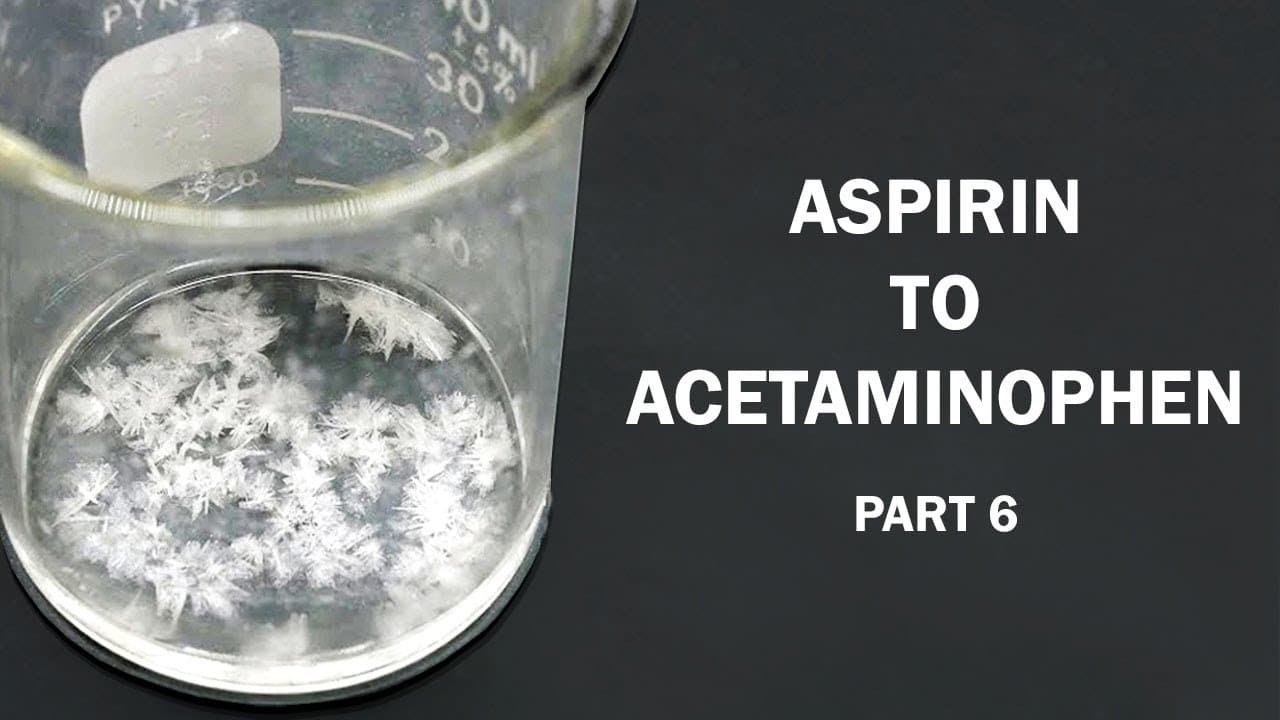
To synthesize paracetamol from aspirin, first hydrolyze aspirin to P-amino phenol, then react it with acetic anhydride to form paracetamol. Purify the product through multiple recrystallizations and filtration to achieve a high degree of purity.
Transcript
this is the sixth and final installment of this video series getting to this point has kind of been a journey and I want to recap everything I've done so far the aspirin was first extracted then it was hydrolyzed decarboxylated nitrated and reduced this left me with a molecule called pea amino phenol which needs to be accelerated to form the final ... Read More
Key Insights
- ❓ The synthesis of paracetamol from aspirin tablets involves several chemical reactions, including hydrolysis, decarboxylation, nitration, reduction, and acetylation.
- 🎮 Acetic anhydride is used in the synthesis, although it is a controlled substance due to its association with illegal drug production.
- ❓ The product is purified through filtration, washing, recrystallization, and purification using activated charcoal.
Install to Summarize YouTube Videos and Get Transcripts
Explore YouTube Video Summarizer or Get YouTube Transcript Extractor
Questions & Answers
Q: What are the initial chemicals used in the synthesis of paracetamol?
The initial chemicals used are P-amino phenol, obtained from the previous video, and acetic anhydride.
Q: What is the purpose of using acetic anhydride in the synthesis?
Acetic anhydride is used to acetylate the P-amino phenol, which leads to the formation of paracetamol.
Q: Why is the use of water important in the synthesis?
Water is used to create an evenly mixed suspension of P-amino phenol and to wash away impurities during the purification steps.
Q: Why is the product recrystallized multiple times?
Multiple recrystallizations are performed to purify the paracetamol and remove impurities, resulting in a cleaner final product.
Summary & Key Takeaways
-
The video demonstrates the step-by-step process of synthesizing paracetamol from aspirin tablets, including reactions such as hydrolysis, decarboxylation, nitration, reduction, and acetylation.
-
The synthesis involves the use of P-amino phenol and acetic anhydride as starting materials, which are mixed together to form a suspension, followed by the formation of a precipitate.
-
The precipitate is then filtered, washed, recrystallized, and purified using activated charcoal to obtain a pure form of paracetamol.
Read in Other Languages (beta)
Share This Summary 📚
Summarize YouTube Videos and Get Video Transcripts with 1-Click
Try YouTube Summary with ChatGPT & Claude or YouTube Transcript Generator
Explore More Summaries from NileRed 📚

Summarize YouTube Videos and Get Video Transcripts with 1-Click
Try YouTube Summary with ChatGPT & Claude or YouTube Transcript Generator