What Are Freud and Jung's Views on the Unconscious?
TL;DR
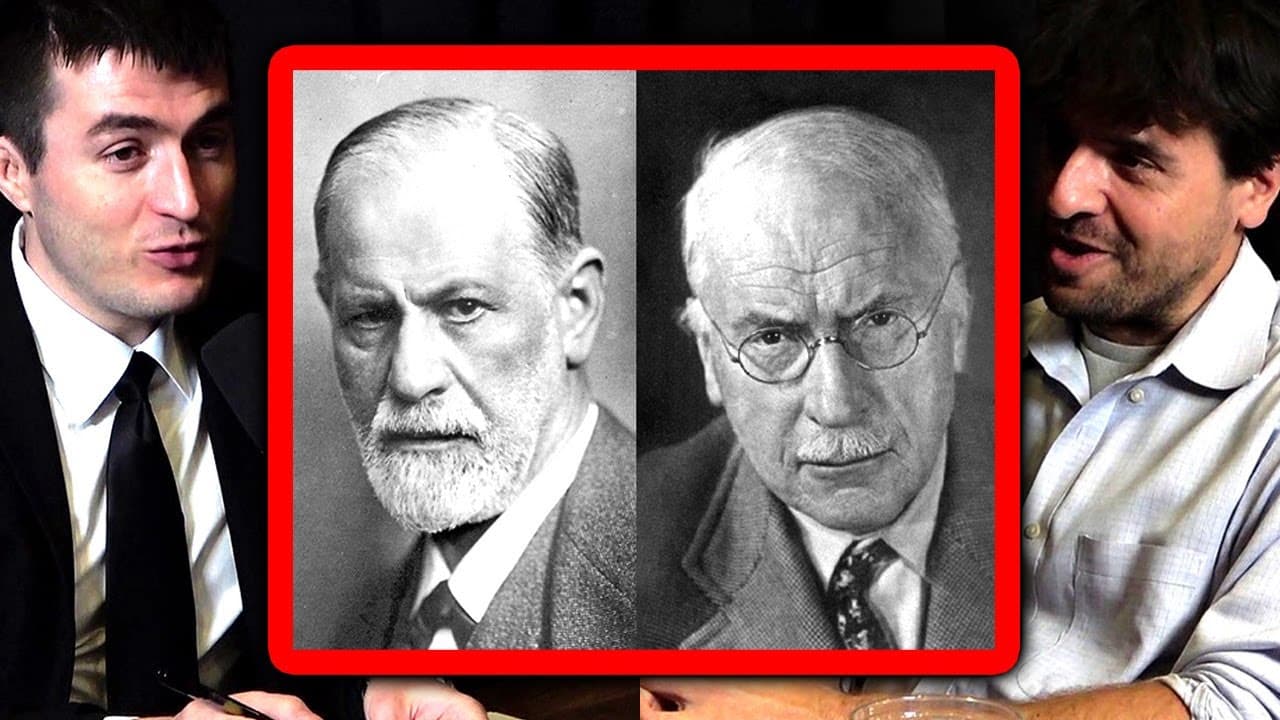
Freud viewed the unconscious as primarily tied to libido and sexual drives, while Jung believed it encompassed a broader range of motivations and desires. This difference led to their philosophical and therapeutic divergence, with psychoanalysis influencing literature and art while challenging rigid categorizations of the mind as understood by modern neuroscience.
Transcript
sigmund freud what do you make of the ideas that he had so you mentioned taking the unconscious the subconscious seriously that's like step one like that there could be worlds we do not have direct access for we probe at them through conversation or um is it too simplistic to call psychoanalysis conversation that's not too simplistic but that's rig... Read More
Key Insights
- 🤯 Freud's focus on the libidinous aspects of the unconscious mind led to a separation from Jung, who believed there was much more to it.
- 🤯 Psychoanalysis serves not only as a therapeutic method but also as a philosophical exploration of the human mind and motivations.
- 🥰 The concept of the unconscious has had a significant impact on literature, philosophy, and art.
- 👋 Freud categorized the unconscious into id, ego, and superego, but these divisions may not align with modern neurobiology.
- 👨💻 The distinction between different aspects of the unconscious, such as primal drives and moralistic codes, may not be necessary from a neuroscience perspective.
- 🤯 Carl Jung's ideas were a step towards liberating the mind from rigid categorizations.
- 🥳 Neuroscience research suggests that choices and actions initiate across various parts of the brain simultaneously, challenging the idea of a specific origin.
- 🎙️ More videos with Carl Jung / Sigmund Freud:
Install to Summarize YouTube Videos and Get Transcripts
Explore YouTube Video Summarizer or Get YouTube Transcript Extractor
Questions & Answers
Q: What were the key differences between Freud and Jung's ideas on the unconscious mind?
Freud believed that the unconscious was mainly driven by libido and sexual desires, while Jung saw it as a more comprehensive representation of human motivations and desires.
Q: Has psychoanalysis been considered as a treatment today?
While psychoanalysis is mostly not considered a treatment today, it still persists due to its ability to provide insight and its influence on various realms of human endeavor such as literature, philosophy, and art.
Q: How did Freud divide the unconscious into different categories?
Freud categorized the unconscious into id (primal drives), ego (mediating aspect), and superego (moralistic codes), but modern neuroscience suggests that these divisions may not align with neurobiology.
Q: Can modern neuroscience pinpoint where choices and actions originate in the brain?
Recent neuroscience research suggests that choices and actions seem to initiate across various parts of the brain simultaneously, making it challenging to identify a specific spot where they originate.
Summary & Key Takeaways
-
Freud believed that the unconscious mind was closely tied to libido and sexual drives, while Jung saw it as a representation of various motivations and desires.
-
Psychoanalysis serves as a philosophical exploration of the human mind and motivations, influencing literature, philosophy, and art.
-
Freud categorized the unconscious into id, ego, and superego, but modern neuroscience suggests that these divisions may not map onto neurobiology.
Read in Other Languages (beta)
Share This Summary 📚
Summarize YouTube Videos and Get Video Transcripts with 1-Click
Try YouTube Summary with ChatGPT & Claude or YouTube Transcript Generator
Explore More Summaries from Lex Clips 📚


Summarize YouTube Videos and Get Video Transcripts with 1-Click
Try YouTube Summary with ChatGPT & Claude or YouTube Transcript Generator