How to Ease Stress and Anxiety With Meditation
TL;DR
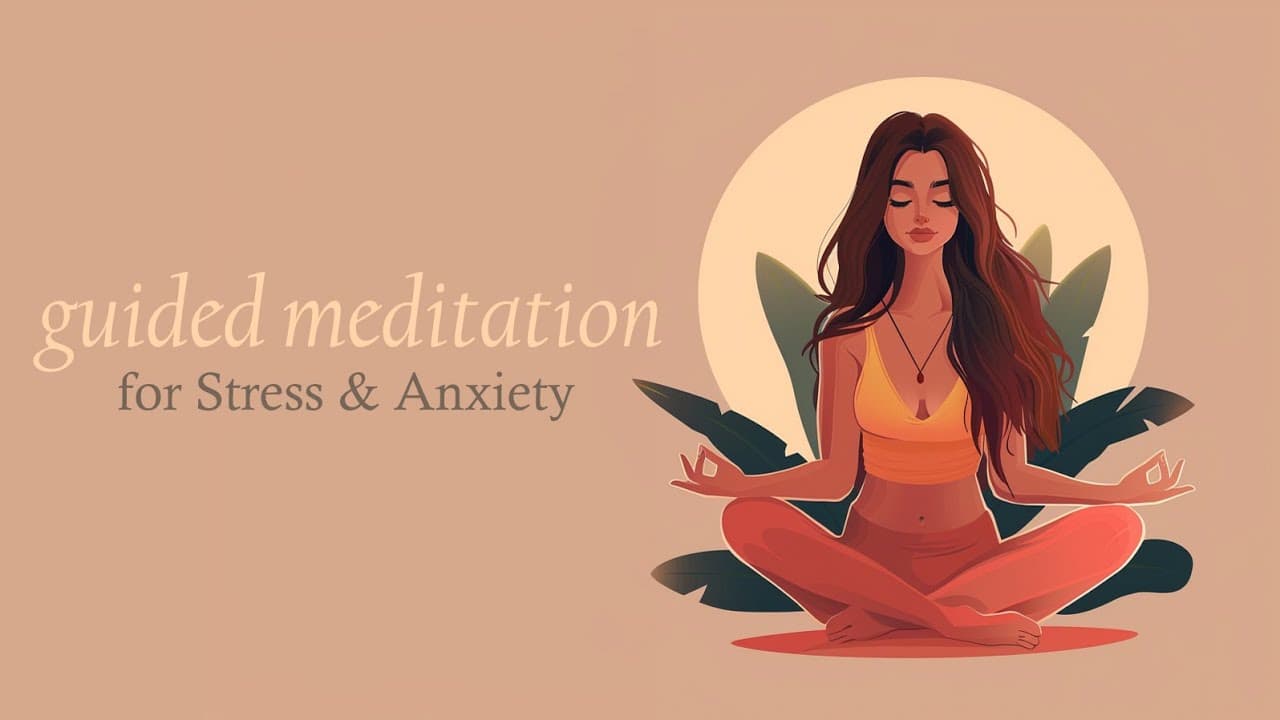
Use slow belly breathing while keeping the upper chest relatively still, then acknowledge stress and anxiety without judging or forcing them away. Affirm that you are safe, accept your emotions with compassion, and consider what they reveal about desired changes, boundaries, or new ways of being. Finish by moving gently and returning slowly to a seated position.
Transcript
welcome to this meditation for Stress and Anxiety to practice this I recommend that you get into a position where you are lying down flat on your back Place one hand on your upper chest and the other on your lower abdomen and softly close your beautiful eyes for now simply tune into your breathing and what does it feel like often when we're experie... Read More
Key Insights
- Upper-chest breathing is associated in the meditation with experiences of stress or anxiety because it can signal that the body may be in an unsafe situation. The practice counters this pattern by directing attention toward slower breathing that visibly moves the lower abdomen.
- Belly breathing works by allowing the abdomen to expand during each inhale and contract during each exhale. One hand rests on the belly to track this movement, while the hand on the upper chest provides feedback that the chest is remaining relatively calm and still.
- The central affirmation is that you are safe even though you feel stress and anxiety. Repeating this statement is paired with self-acceptance, including the recognition that difficult emotions are present and that it is okay to experience them without immediately trying to change them.
- Emotional acceptance means allowing stress and anxiety to be felt rather than forcing them away, chasing them away, ignoring them, or hiding from them. The meditation presents breathing through emotions and accepting their presence as a way of extending acceptance toward yourself.
- Self-compassion is a required attitude within the practice. Stress and anxiety are approached without judgment or attack, while kindness and acceptance guide the response. The meditation encourages recognizing that you have a right to feel whatever you feel rather than criticizing yourself for the emotion.
- Acceptance allows stress and anxiety to soften by giving them space to be experienced. The practice does not demand that the feelings disappear. Instead, it invites continued belly breathing, recognition of safety, and patient observation of whatever emotions remain present.
- Stress and anxiety can provide information about desired changes in life. The meditation encourages asking what the feelings are trying to communicate, where boundaries may be needed, how life could be improved, and how circumstances might ideally be different.
- The closing process is intentionally gradual and physical. Rolling the shoulders, wiggling the fingers and toes, turning onto one side, slowly sitting up, and taking time before opening the eyes help mark the transition from inward meditation back to the surrounding world.
Install to Summarize YouTube Videos and Get Transcripts
Explore YouTube Video Summarizer or Get YouTube Transcript Extractor
Questions & Answers
Q: How can I meditate when I feel stressed or anxious?
Lie flat on your back, place one hand on your upper chest and the other on your lower abdomen, and softly close your eyes. First notice how your breathing feels. Then slow it intentionally, allowing your belly to expand as you inhale and contract as you exhale. Keep the upper chest relatively calm and still while breathing and acknowledging that you are safe.
Q: How should I breathe during meditation for stress and anxiety?
Direct the breath toward the lower abdomen rather than keeping it mainly in the upper chest. Let the hand resting on your belly rise with every inhale and fall with every exhale. At the same time, aim to keep the hand on your upper chest relatively still. Continue slowly and only maintain the degree of chest stillness that feels good to you.
Q: What affirmations can I use for stress and anxiety?
Affirm that you are safe even though you feel stress and anxiety. Then remind yourself that you accept yourself, that it is okay to feel this way, and that you accept your emotions without trying to force them away. After repeating the affirmations, pause to notice how they made you feel, allowing any reaction to be present without judgment.
Q: Why does the meditation encourage accepting anxious feelings?
The practice presents acceptance as the way to move beyond difficult emotions. Trying to force stress and anxiety away, ignore them, chase them away, or hide from them can be released during the meditation. By feeling the emotions, breathing through them, and treating them with kindness, you practice accepting yourself and create an opportunity for the feelings to soften naturally.
Q: How can stress and anxiety reveal what needs to change?
Stress and anxiety can be treated as information about your life rather than only as feelings to remove. Ask what they may be trying to tell you, what changes you may need to make, and how you want things to be instead. The meditation also suggests considering where you are ready to set boundaries and how this knowledge could help improve your life.
Q: What role does self-compassion play in this meditation?
Self-compassion allows you to experience stress and anxiety without judging or attacking yourself. The practice asks you to offer the kindness and acceptance needed to let your emotions exist as they are. It also reinforces that you have every right to feel whatever you feel. This compassionate attitude supports the broader practice of accepting yourself while continuing to breathe slowly through discomfort.
Q: How can anxiety support creative thinking about my life?
The meditation encourages using stress and anxiety to clarify what you truly want. Once the feelings are accepted, you can ask how you wish things would be instead, what desires deserve more attention, and what new ways of being you might seek. In this sense, the emotions can prompt creative reflection about boundaries, improvements, and changes rather than being treated only as something unwanted.
Q: How should I finish a guided meditation safely and slowly?
Prepare to leave the practice gradually by rolling your shoulders and wiggling your fingers and toes. Let your body turn onto one side, then bring yourself very slowly into a seated position. Take your time before opening your eyes to the world around you. Finally, thank yourself for showing up, and remember that you can return to the practice whenever you need it.
Summary & Key Takeaways
-
Begin lying flat on your back with one hand on your upper chest and the other on your lower abdomen. Close your eyes, observe your natural breathing, and gradually shift toward slower belly breaths. Let the abdomen rise with each inhale and fall with each exhale while the upper chest stays relatively still.
-
Repeat affirmations that acknowledge both safety and difficult emotions: you are safe even while feeling stress and anxiety, and it is acceptable to feel this way. Instead of suppressing, ignoring, or chasing emotions away, breathe through them. Respond with kindness, compassion, acceptance, and freedom from judgment or self-attack.
-
Use stress and anxiety as prompts for reflection. Ask what these feelings may be communicating, what boundaries or life changes may be needed, and how you want circumstances to be instead. Conclude gradually by rolling your shoulders, moving your fingers and toes, turning onto your side, sitting up slowly, and opening your eyes.
Read in Other Languages (beta)
Share This Summary 📚
Summarize YouTube Videos and Get Video Transcripts with 1-Click
Try YouTube Summary with ChatGPT & Claude or YouTube Transcript Generator
Explore More Summaries from Great Meditation 📚

Summarize YouTube Videos and Get Video Transcripts with 1-Click
Try YouTube Summary with ChatGPT & Claude or YouTube Transcript Generator