How Does Journalism Shape Our Reality?
TL;DR
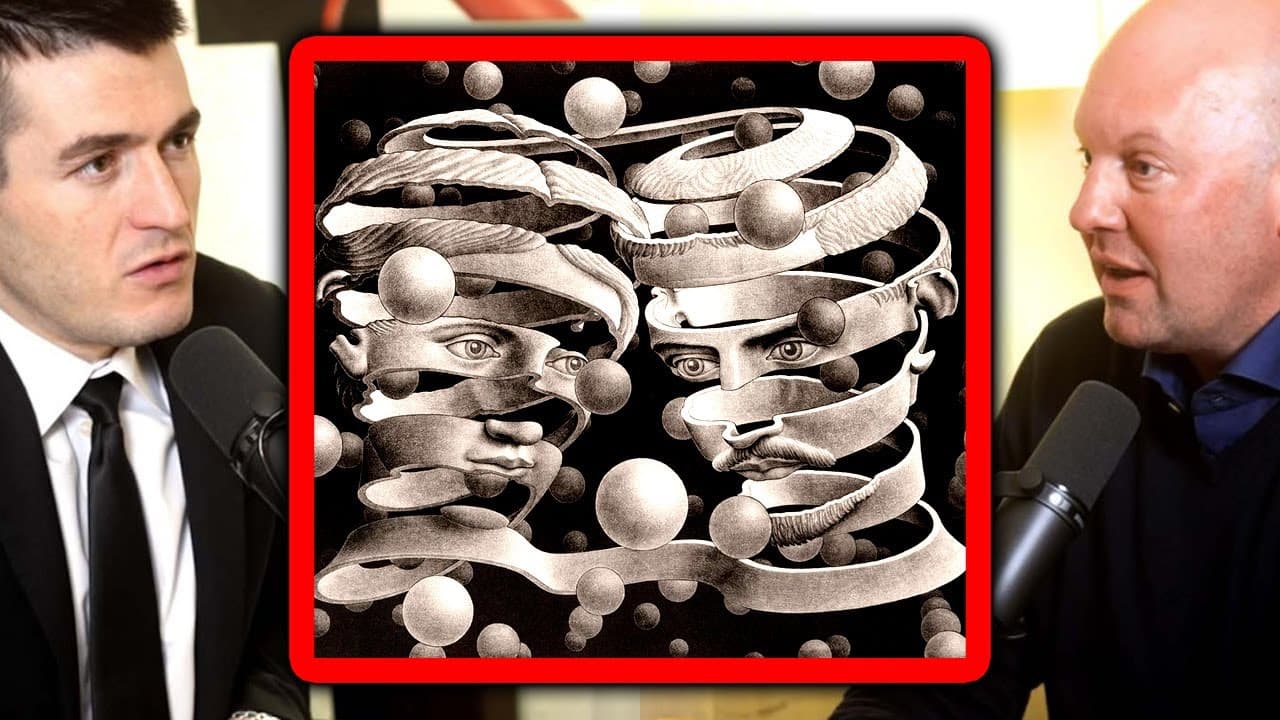
Journalism significantly influences our perception of reality, with changes in media affecting how events are understood. The rising role of large language models may redefine truth, adding complexity to institutional trust and shaping our future interactions with information.
Transcript
what would you say about the state of Journalism just on that topic today are we are we in a temporary kind of uh uh are we experiencing a a temporary problem in terms of the incentives in terms of the the the business model all that kind of stuff or is this like a decline of traditional journalism as we know it if I always think about the counterf... Read More
Key Insights
- ♻️ Media environment shapes the perception of reality and influences individual and societal behaviors.
- 🖐️ Trust in institutions has declined over the years, partially due to increased knowledge of operations, but the media environment has also played a role.
- 🥹 The integration of AI, particularly large language models, into daily life holds both promise and uncertainty.
- 🤗 The future of the AI industry may either be dominated by a few powerful companies or foster a decentralized open-source environment.
- 🔉 Changing the media landscape has the potential to alter reality perception and feedback loops.
- 🔉 Historical events would have been experienced differently in today's media environment.
- 🙈 The decline in trust in institutions can be seen as a result of increased knowledge rather than solely a media-related issue.
- 🎙️ More videos with Marc Andreessen:
Install to Summarize YouTube Videos and Get Transcripts
Explore YouTube Video Summarizer or Get YouTube Transcript Extractor
Questions & Answers
Q: Is the decline in trust in institutions related to the media environment or increased knowledge?
The decline in trust can be attributed to both factors. The media environment has allowed for more information to be disseminated, exposing shortcomings and leading to decreased trust. However, increased knowledge of institutions' operations also plays a role in shaping public perception.
Q: How would historical events have been interpreted in today's media environment?
Historical events would have been experienced differently due to the changing media landscape. The introduction of social media, cable news, and other platforms would have altered the public's perception and understanding of key figures and events.
Q: Will large language models (LLMs) like GPT-3 become the new mainstream media?
The integration of LLMs into daily life is uncertain. While they have the potential to provide real-time information and act as prompt generators, the desired form of AI in people's lives remains unknown.
Q: Who will dominate the AI industry in the future?
There are two potential scenarios. One suggests that a few giant companies will own and control the most advanced AI models, achieving regulatory capture and preventing competition. The other scenario suggests a world of open-source development, with numerous LLMs created by individuals and smaller organizations.
Summary & Key Takeaways
-
The media environment has a profound effect on how reality is experienced, and changing the media landscape would alter perceptions and feedback loops.
-
The collapse of trust in institutions since the 1970s can be attributed to increased knowledge of their operations, and it is uncertain whether better institutions and leaders would emerge in a different media environment.
-
The introduction of large language models (LLMs) and their ability to continuously learn and adapt prompts raises questions about the future integration of AI into daily life.
Read in Other Languages (beta)
Share This Summary 📚
Summarize YouTube Videos and Get Video Transcripts with 1-Click
Try YouTube Summary with ChatGPT & Claude or YouTube Transcript Generator
Explore More Summaries from Lex Clips 📚


Summarize YouTube Videos and Get Video Transcripts with 1-Click
Try YouTube Summary with ChatGPT & Claude or YouTube Transcript Generator