Top CES 2026 Tech Innovations: What to Know
TL;DR
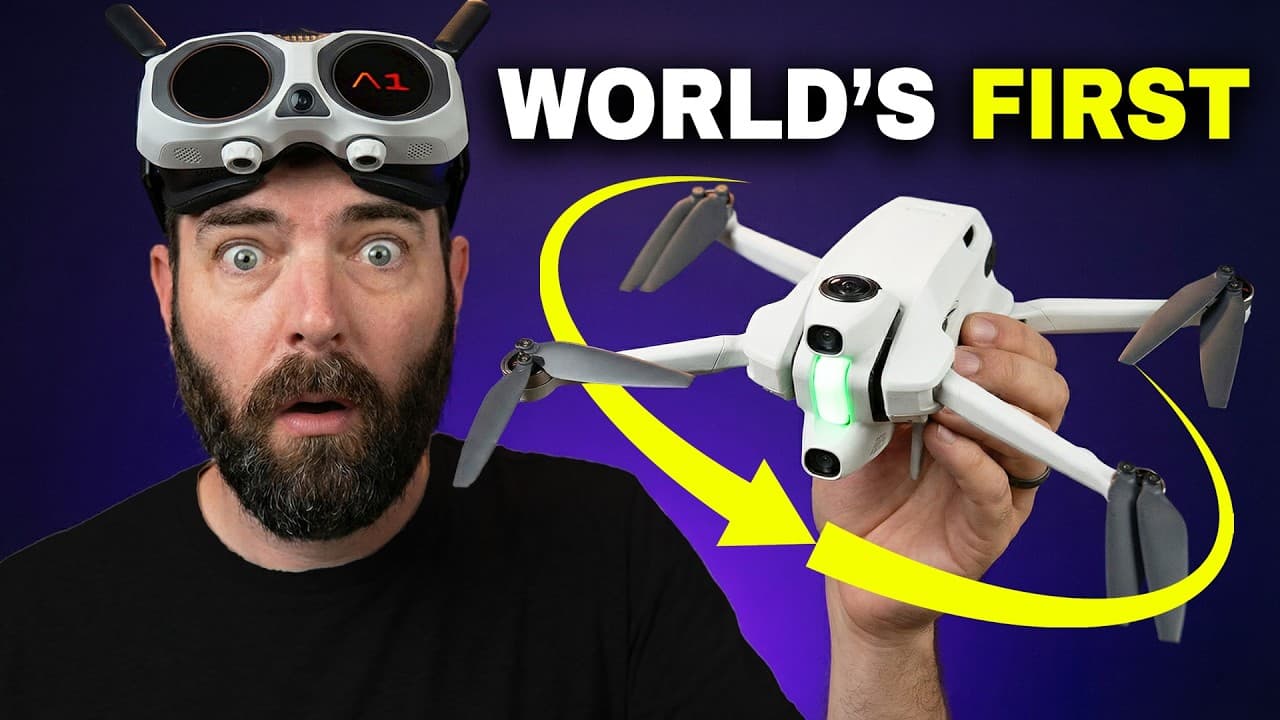
The standout CES 2026 innovations were the Anti-Gravity A1 8K 360° drone, XREAL 1S glasses with real-time 2D-to-3D conversion, the self-driving Strutt EV1 wheelchair, and Lenovo’s expandable laptop concept. The A1 weighs 249 grams, while Lenovo’s display grows from 16 inches to a 24-inch ultrawide. Read on for their features, limitations, prices, and the broader trends shaping CES technology.
Transcript
So, I just got back from CES 2026, and there was some super cool stuff. I found a drone that gives you a literal 360°ree bird's eyee view, AR glasses that turn any 2D game or movie into 3D, a wheelchair that drives itself like a Whimo, a laptop screen that literally grows, and a ton more. Can you fold my laundry? You think this one can fold my laun... Read More
Key Insights
- The Anti-Gravity A1 drone captures 8K 360° video, allowing users to choose shots in post-production.
- XREAL 1S glasses offer real-time 3D conversion for any 2D content, enhancing the gaming and viewing experience.
- The Strutt EV1 Autonomous Wheelchair maps environments and autonomously navigates to destinations.
- Lenovo's rollable laptop expands from a 16-inch to a 24-inch ultrawide display, enhancing gaming and editing.
- eVTOL aircraft, or flying cars, were prominent, with models like the Leo jet bike offering unique propulsion systems.
- Autonomous people movers like Whimo and Zuks are advancing, with Whimo leading in market presence.
- Humanoid robots are becoming more prevalent, though software limitations still hinder full functionality.
- Many CES 2026 innovations build on existing tech, offering incremental improvements rather than groundbreaking changes.
Install to Summarize YouTube Videos and Get Transcripts
Explore YouTube Video Summarizer or Get YouTube Transcript Extractor
Questions & Answers
Q: What were the top tech innovations at CES 2026?
Standouts included the Anti-Gravity A1 8K 360° drone, XREAL 1S glasses, the Strutt EV1 Autonomous Wheelchair, and Lenovo’s rollable laptop concept. Other prominent categories included eVTOL aircraft, autonomous people movers, and humanoid robots.
Q: How does the Anti-Gravity A1 drone work?
The Anti-Gravity A1 records everything in 8K 360° while the pilot concentrates on flying, then allows shots to be framed during post-production. It is controlled by pointing a grip controller in the desired direction and pulling the trigger, while its goggles let the pilot look around without changing the drone’s trajectory.
Q: How much does the Anti-Gravity A1 cost, and does it require FAA registration?
The A1 base package costs $1,600, while packages with more batteries and accessories can exceed $2,000. It weighs 249 grams, below the 250-gram limit cited in the transcript, so it does not require FAA registration to fly.
Q: What features do the XREAL 1S glasses offer?
The XREAL 1S can connect to a Switch, Steam Deck, phone, or laptop and create the impression of a 500-inch virtual display. Its X1 chip converts any 2D game, video, or other content into 3D in real time without requiring a special app.
Q: What are the XREAL 1S specifications and limitations?
The glasses have a 1200-pixel micro OLED display, a 120-hertz refresh rate, 700 nits of brightness, and a weight of 82 grams. They cost $450, but 3D mode produces extra heat, reduces the frame rate to around 30 frames per second, and does not yet feel completely immersive to the presenter.
Q: What makes the Strutt EV1 Autonomous Wheelchair different?
The Strutt EV1 maps its environment and can autonomously travel to a selected or spoken destination while avoiding people and obstacles. It uses LIDAR units, cameras, ultrasonic sensors, and time-of-flight sensors for 360-degree awareness, with manual, co-pilot, and fully autonomous modes.
Q: How does Lenovo’s rollable laptop concept work?
Lenovo’s concept expands from a standard 16-inch laptop display into a 24-inch ultrawide screen. Its rollable OLED panel uses a dual-motor tension system designed to keep the display taut and quiet during expansion.
Q: What broader technology trends emerged at CES 2026?
AR and AI smart glasses appeared throughout the event, while eVTOL aircraft, autonomous people movers, and humanoid robots were also prominent. Many products refined existing categories through incremental improvements, although concepts such as Lenovo’s expanding display suggested possible shifts in portable computing.
Summary & Key Takeaways
-
CES 2026 introduced the Anti-Gravity A1 drone, which records 360-degree video in 8K, allowing users to select shots later. This drone is lightweight and doesn't require FAA registration, making it accessible to hobbyists.
-
The XREAL 1S glasses stand out with their ability to convert any 2D content into 3D in real-time, providing an immersive experience for gamers and movie enthusiasts. The glasses are lightweight and feature a 1200 pixel micro OLED display.
-
Lenovo's rollable laptop concept expands from a standard 16-inch display to a 24-inch ultrawide, offering enhanced versatility for gamers and professionals. Although still a concept, it represents a potential shift in portable computing.
Read in Other Languages (beta)
Share This Summary 📚
Summarize YouTube Videos and Get Video Transcripts with 1-Click
Try YouTube Summary with ChatGPT & Claude or YouTube Transcript Generator
Explore More Summaries from Matt Wolfe 📚





Summarize YouTube Videos and Get Video Transcripts with 1-Click
Try YouTube Summary with ChatGPT & Claude or YouTube Transcript Generator