Why Did a Son Block His Mother’s Bank Access?
TL;DR
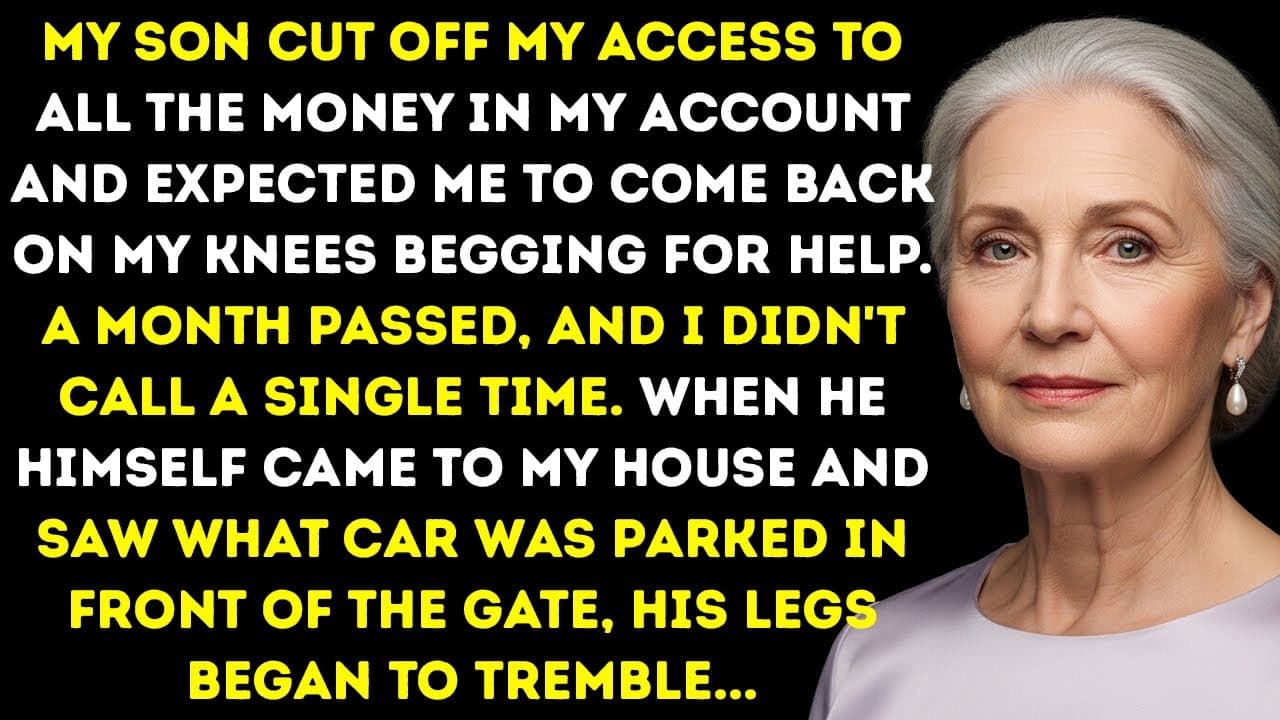
A mother refuses to beg after discovering that her son Julian deliberately blocked access to the bank account containing her money. Surviving on pantry staples, she recognizes a long pattern of neglect, humiliation, and financial exploitation, including an unpaid $12,000 contribution toward his house, and resolves not to give him the control he expects.
Transcript
My son Julian cut off my access to the bank account and expected me to come crawling back on my knees begging for help. A month passed and I did not call even once. When he finally drove over to my place and saw whose car was parked in front of the gate, his legs began to tremble. But let me tell you how this all started. I was standing in line at ... Read More
Key Insights
- The declined $143.20 grocery purchase is the moment the mother discovers she cannot access her own money. After two failed card attempts, she leaves a full cart behind and returns home humiliated, unable to buy food, laundry detergent, or blood-pressure medicine.
- Julian’s control of the account is possible because his mother agreed two years earlier to place everything in his name. He presented the arrangement as a convenience, but the bank confirms that only he, as the primary account holder, can now modify access.
- The mother’s refusal to call Julian is a deliberate rejection of the power dynamic he appears to want. She believes the restriction is intentional and that he expects desperation, humiliation, and pleading, so she chooses immediate hardship rather than giving him that satisfaction.
- The mother’s survival plan begins with the limited food already in her pantry: rice, beans, oil, and salt. Her confidence comes from having endured abandonment, poverty, exhausting housekeeping, double diner shifts, and sewing work while raising Julian alone and financing his education.
- Julian’s emotional withdrawal is reflected in increasingly rare visits, shorter calls, forgotten promises, and silence on Mother’s Day. His mother initially excuses these signs as stress or responsibility, but losing account access forces her to reinterpret them as evidence of sustained rejection and control.
- The Christmas watch illustrates the imbalance between the mother’s sacrifice and Julian’s contempt. She spends $300 after skipping meals, walking instead of taking the bus, and postponing a winter coat, only for Julian and his wife to laugh because they already own similar watches.
- Julian’s neglect during his mother’s illness contrasts sharply with Margaret’s kindness. While the mother spends five days with a high fever, Julian merely advises hot tea and rest, whereas a neighbor who barely knows her brings soup and medicine every morning.
- The unpaid $12,000 contribution toward Julian’s house represents the clearest financial warning before the account cutoff. His mother gives him savings intended for old age and emergencies after he promises repayment within six months, but three years pass without the return of any money.
Install to Summarize YouTube Videos and Get Transcripts
Explore YouTube Video Summarizer or Get YouTube Transcript Extractor
Questions & Answers
Q: Why did Julian’s mother lose access to her bank account?
Julian’s mother loses access because the account arrangement had been changed so that only Julian, the primary account holder, could make modifications. Two years earlier, he persuaded her to put everything in his name, supposedly to make financial matters easier. After her card is declined and her login fails, the bank confirms that her access has been modified.
Q: How did the mother discover that her account access was blocked?
She discovers the problem while attempting to pay $143.20 for groceries, including vegetables, chicken, laundry detergent, and blood-pressure medicine. Her card is declined twice, forcing her to abandon the full cart. At home, her banking login also fails. A bank representative then tells her that access has been modified and only the primary account holder can make changes.
Q: Why did the mother refuse to call Julian for help?
The mother nearly calls Julian, but concludes that the restriction is not an error. She believes he deliberately removed her access because he expects her to become desperate and beg him to restore it. Refusing to call becomes her way of resisting humiliation and denying him the power he appears to want over her food, medicine, and money.
Q: How did the mother plan to survive without account access?
She checks her pantry and finds rice, beans, a little oil, and salt, enough to survive for several days. She draws strength from hardships she has already endured, including being abandoned by Julian’s father, washing clothes until her hands bled, working double shifts at a diner, and sewing uniforms for additional money while raising her son alone.
Q: What warning signs showed that Julian was rejecting his mother?
The warning signs include visits becoming less frequent, calls becoming shorter and colder, broken promises, forgotten birthdays, and no acknowledgment on Mother’s Day. Julian also avoids eye contact and remains seated when she visits with his favorite chocolate cake. His wife says they are busy, while Julian offers only a vague gesture before returning to his phone.
Q: How did Julian treat his mother’s Christmas gift?
His mother saves for months and spends $300 on an elegant watch Julian wanted, sacrificing meals, bus rides, and a needed winter coat. When she delivers it on December 24, Julian opens it without meeting her eyes and gives only a dry thank-you. His wife says they already have three identical watches, and both of them laugh before sending her away.
Q: What happened when Julian’s mother became seriously ill?
Six months before the account cutoff, she develops a severe flu and spends five days in bed with a high fever, too weak even to get water. Julian answers her call with annoyance, tells her to drink hot tea and rest, and never checks again. Margaret, a neighbor she barely knows, instead brings soup and medicine every morning.
Q: How had Julian already benefited financially from his mother?
Julian’s mother gives him $12,000 from savings intended for her old age, emergencies, and personal security. He uses the money for the down payment on his house and promises to repay it within six months. Three years later, he has not returned any of it, despite her earlier trust and immediate willingness to support him.
Summary & Key Takeaways
-
A grocery purchase totaling $143.20 exposes the mother’s financial crisis when her card is declined twice. The bank then confirms that her account access has been modified and only Julian, the primary account holder, can make changes. She realizes that placing everything in her son’s name left her dangerously dependent on him.
-
Instead of calling Julian and pleading for help, the mother decides to survive with rice, beans, oil, and salt. Her refusal is rooted in a lifetime of endurance through abandonment, poverty, housekeeping, diner shifts, and sewing work. She recognizes that the account restriction is an intentional attempt to control and humiliate her.
-
Painful memories reveal an established pattern of rejection. Julian dismisses her visits, forgets her birthday, ignores her illness, mocks an expensive Christmas gift with his wife, and repeatedly refuses practical help. The deepest financial betrayal involves $12,000 she contributed toward his house, despite his unfulfilled promise to repay it within six months.
Read in Other Languages (beta)
Share This Summary 📚
Summarize YouTube Videos and Get Video Transcripts with 1-Click
Try YouTube Summary with ChatGPT & Claude or YouTube Transcript Generator
Explore More Summaries from SOLA Stories 📚





Summarize YouTube Videos and Get Video Transcripts with 1-Click
Try YouTube Summary with ChatGPT & Claude or YouTube Transcript Generator