What AI really does and how LLMs work in plain terms
TL;DR
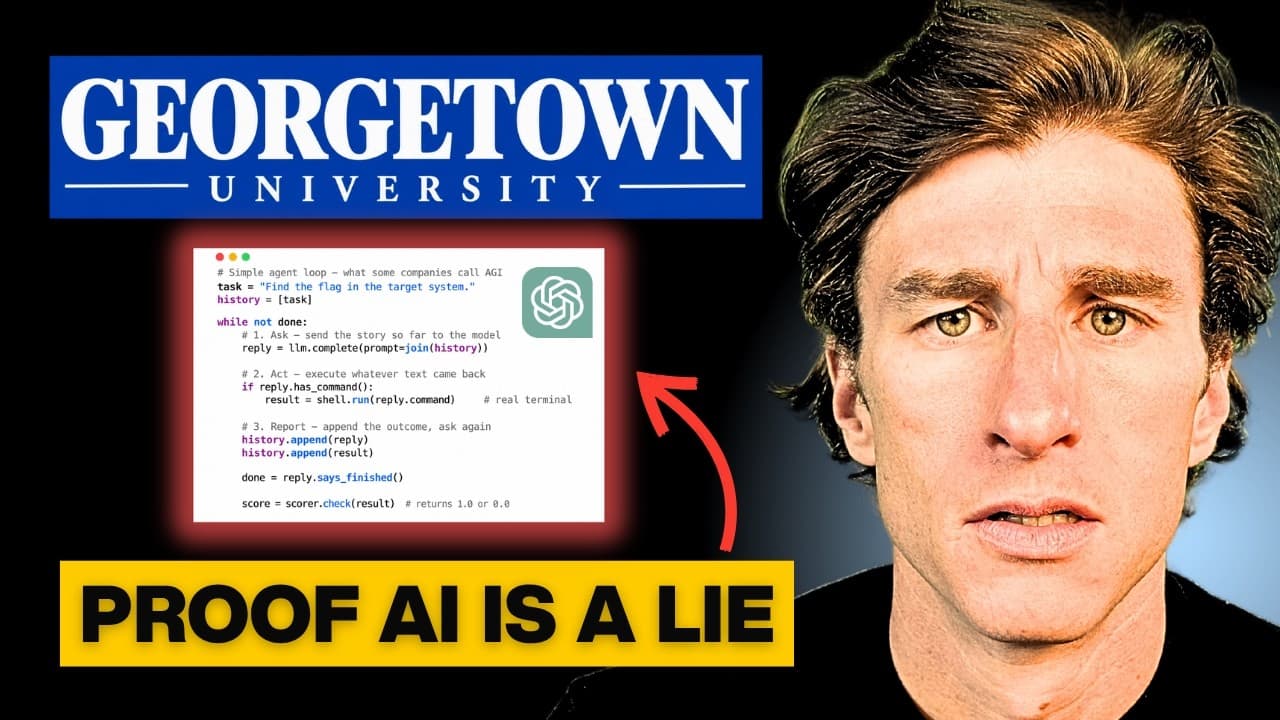
AI headlines often exaggerate what the tech can do, framing it as magical or dangerous. The reality is that AI is a collection of code and math that guides computers, and large language models produce plausible text based on probabilities, not true understanding. Understanding data brokers, algorithms, and code helps separate hype from what actually happens.
Transcript
If you feel overwhelmed by the deluge of AI doom in the news right now, the lab breaks, the AI will kill us all headlines, the CEOs uniting and calling for a slowdown of the entire industry. I want to take the next few minutes and set your mind at ease and tell you exactly what is actually going on behind the scenes by showing you precisely in bori... Read More
Key Insights
- An algorithm is a set of step by step instructions that guide system behavior.
- The YouTube algorithm is a complex tree of if then statements designed to maximize viewer engagement.
- Data brokers collect personal information and sell it to advertisers, which informs why data privacy issues are central in AI discussions.
- Code is the translation of human logic into machine operations, evolving from binary to higher level languages.
- Large language models are probability based token predictors that generate plausible text rather than true knowledge.
- AI is a broad field with many sub technologies; not all AI falls under large language models like chat systems.
- The term magic in technology often hides real, explainable mechanisms that can be understood with a closer look.
- Understanding these pieces helps evaluate AI headlines and differentiate sensational claims from actual capabilities.
Install to Summarize YouTube Videos and Get Transcripts
Explore YouTube Video Summarizer or Get YouTube Transcript Extractor
Questions & Answers
Q: What is an algorithm and why does it matter for AI headlines?
An algorithm is a set of step by step instructions that tell a system how to behave. This matters for AI headlines because many stories present AI as a magical force rather than a sequence of concrete, measurable steps. By understanding algorithms, viewers can judge what a system actually does, how it makes decisions, and where predictions come from, rather than accepting sensational claims at face value.
Q: How do data brokers relate to AI discussions in the video?
Data brokers are companies that collect personal information and sell it to advertisers and others. This matters in AI discussions because much of modern AI relies on data to function, train models, and target content. Recognizing the role of data brokers helps explain privacy concerns, the sources of data used to train models, and why data security and removal services are increasingly relevant.
Q: What distinguishes code from magic in the context of AI?
Code is the set of human written instructions that tell computers what to do, from low level machine language to higher level programming languages. The video argues that what seems magical about AI is often just complex code described in expert terms. Understanding code demystifies AI by showing that results come from explicit instructions and computations, not mystical capability.
Q: What are large language models actually doing if they do not ‘know’ things?
Large language models generate text by predicting plausible sequences of tokens based on statistical patterns learned from data. They do not possess true understanding or knowledge but output text that seems coherent. This distinction explains why models can produce confident but incorrect answers and why users must critically assess the information they receive.
Q: Why should viewers be cautious about headlines claiming AI will kill us all?
Headlines often sensationalize AI by presenting extreme scenarios, while the underlying technology comprises routine code, data processing, and probabilistic text generation. The video encourages viewers to separate fear based narratives from the actual mechanisms at work, focusing on what is technically feasible and the observable behavior of systems rather than speculative outcomes.
Q: How does the video describe the term ‘algorithm’ in plain English?
The video defines an algorithm as a set of step by step instructions that tell a computer what to do. It emphasizes that algorithms are not secret magic but deterministic procedures that can be analyzed in terms of inputs, processing, and outputs. This plain English definition helps demystify complex AI discussions.
Q: What is the key takeaway about evaluating future AI headlines?
The key takeaway is to look under the hood and translate technical terms into plain language: recognize when terms like data brokers, code, and LLMs are being used accurately and when they are sensationalized. This approach provides a lens to assess future headlines with clarity and reduced fear, focusing on concrete mechanisms and measurable outcomes.
Q: What role does the concept of a ‘token’ play in LLMs according to the video?
In the video, tokens are described as fractions of words used by LLMs to break down text for processing. The model predicts the next token based on statistical relationships, assembling plausible strings of text. This token based approach explains how LLMs generate language without true understanding, highlighting the probabilistic nature of their outputs.
Summary & Key Takeaways
-
The video debunks common AI myths by showing that algorithms are step by step instructions, not magical recipes, and that AI systems operate through probabilistic text generation rather than true understanding. It teaches viewers how to read headlines with a critical eye and to distinguish flashy claims from underlying mechanisms.
-
The speaker uses a real business story to illustrate why promises of a perfect algorithm often fail, emphasizing that many AI claims are exaggerations of what the technology can reliably do in practice.
-
A focus on data brokers, code, and large language models clarifies where information comes from and how it is processed, helping audiences evaluate future AI news and claims with a grounded mindset.
Read in Other Languages (beta)
Share This Summary 📚
Summarize YouTube Videos and Get Video Transcripts with 1-Click
Try YouTube Summary with ChatGPT & Claude or YouTube Transcript Generator
Explore More Summaries from Brendan Dell 📚

Summarize YouTube Videos and Get Video Transcripts with 1-Click
Try YouTube Summary with ChatGPT & Claude or YouTube Transcript Generator