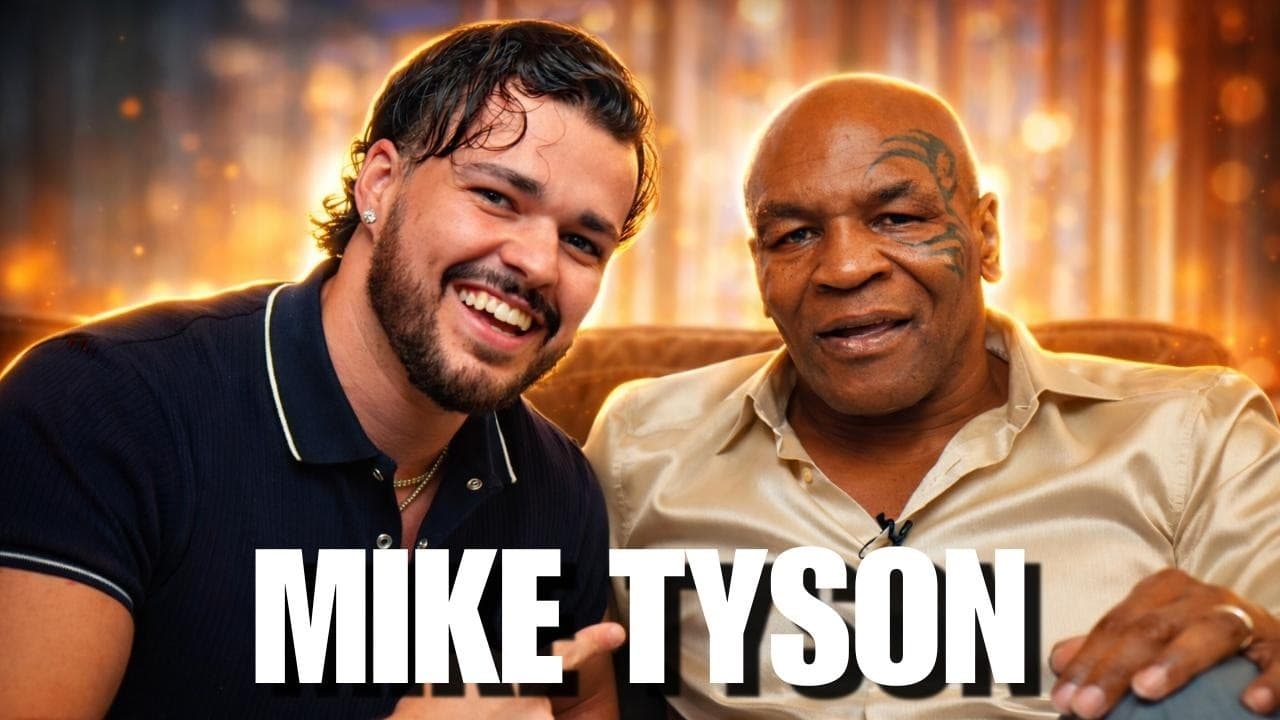
How Can Mike Tyson Help Revive Amateur Boxing?
TL;DR
Frequent competition gives young boxers the experience, discipline, pride, and identity needed to improve inside and outside the ring. Mike Tyson created his invitational after seeing determined young athletes who lacked regular fighting opportunities, and he wants American amateur boxing rebuilt through recurring events, international competition, cooperation, and a shared focus on helping children rather than promoting himself.
Transcript
What's up, guys? Mystic Zach here. Welcome back to episode 16 of Double Coverage. Today, I'm joined by the man who needs no introduction, the youngest heavyweight champion, the most ferocious to ever do it, Mr. Iron Mike Tyson. >> Why I didn't uh uh introduction? I wasn't prepared for it. >> I'm just actually facts. >> How you doing? >> Doing great... Read More
Key Insights
- The Mike Tyson Invitational originated from Tyson's visit to Richard Steele's Las Vegas gym, where the enthusiasm and determination of young fighters convinced him that their efforts deserved a wider audience and more opportunities for meaningful competition.
- Frequent competition is central to Tyson's development model because his own youth involved traveling from upstate New York to New York City, Rhode Island, and Boston for bouts, keeping young boxers active after school and on weekends.
- Modern amateur boxers often lack the extensive records Tyson remembers from earlier tournaments, where some competitors arrived with 75 or even 200 fights. He connects today's reduced activity with weaker performance, fewer awards, and boxing's uncertain Olympic position.
- Tyson's objective is to help children become better athletes and strengthen American boxing, not to run the amateur system or profit from it. He presents cooperation and service to young fighters as more important than ownership, status, or personal recognition.
- Regular boxing can create discipline by giving young people a constructive reason to train instead of engaging in crime. Tyson describes choosing to run and prepare because competition gave his daily decisions a clearer purpose and direction.
- Boxing can provide dignity and a positive identity because recognition made Tyson feel responsible to people who knew his name. After succeeding in amateur competition, he says he became too proud to steal because he did not want to disappoint others.
- Fighting larger opponents can become an advantage when a shorter boxer uses a lower target profile, speed, distance management, angles, and punching power. Tyson says determination and spirit usually matter more than size unless an opponent can simply overpower the smaller fighter.
- International amateur competition can give young fighters valuable recognition and experience across countries. Tyson says Roberto Duran offered to bring a team, and Tyson intends Panama to become the first international competition after he develops a team of his own.
- More videos with Floyd Mayweather:
Install to Summarize YouTube Videos and Get Transcripts
Explore YouTube Video Summarizer or Get YouTube Transcript Extractor
Questions & Answers
Q: Why did Mike Tyson create an amateur boxing invitational?
Mike Tyson created the invitational after visiting Richard Steele's gym in Las Vegas and observing the enthusiasm of the children training there. Some local fighters were inexperienced, while others were already skilled, but Tyson saw determination and will across the group. He believed these young athletes deserved to be seen and needed more opportunities to compete, improve, and earn medals or trophies.
Q: How does frequent competition help young boxers improve?
Frequent competition gives young boxers repeated experience under real pressure, which Tyson considers essential for improvement. During his youth, he regularly traveled from upstate New York to New York City, Rhode Island, and Boston to fight. The schedule kept him active after school and on weekends. He argues that repeated performance develops skill, discipline, confidence, and the ability to function against varied opponents.
Q: What problem does Mike Tyson see in amateur boxing today?
Tyson believes current amateur fighters do not compete often enough. He remembers tournaments where one boxer might have 200 fights and another might have 75, while some competitors now arrive with almost no fight experience. He associates this decline in activity with weaker results and fewer medals or trophies. He also views efforts to remove boxing from the Olympics as harmful to the sport's history.
Q: Does Mike Tyson want to control amateur boxing?
Tyson explicitly says he does not want to run amateur boxing or take control of the American system. His stated goal is to help children become better athletes and contribute to a stronger boxing establishment in America. He also says he does not want money from the effort. The initiative is presented as a cooperative project focused on young fighters rather than his authority or personal status.
Q: How did boxing change Mike Tyson's behavior and identity?
Boxing gave Tyson a sense of dignity, recognition, and responsibility that changed how he viewed himself. After winning amateur fights and becoming known by people in other countries, he felt that he had become somebody rather than remaining invisible. That pride discouraged him from stealing because he did not want to disappoint people who knew his name. Training also gave him a constructive alternative to criminal behavior.
Q: Why does Mike Tyson believe activity builds better fighters?
Tyson's view is that performance improves through repetition: the more a fighter competes, the better that fighter becomes. He supports this with his own career, noting that he fought 15 times in 1985 and became champion the next year at age 20. He also describes constant fighting as practical experience that develops discipline, commitment, and comfort with the realities of competition.
Q: How can a smaller boxer compete against bigger opponents?
Tyson says fighting depends more on spirit, determination, and will than on size, except when a larger opponent can simply overpower the smaller fighter. He treated his smaller stature as an advantage because he was lower, difficult to hit, and fast. His speed helped him close distance, while his punching power could leave larger opponents vulnerable. He preferred slower big fighters to fast opponents who were harder to catch.
Q: What international plans does Mike Tyson have for the invitational?
Tyson wants young fighters to gain international experience by competing against teams from other countries. He says Roberto Duran contacted him after hearing about the project and offered a team for competition. Tyson replied that he had not yet developed his own team, but promised that Duran's team would be first once it was ready. As a result, Panama is planned as the first international matchup.
Summary & Key Takeaways
-
Mike Tyson says the invitational began after he visited Richard Steele's gym in Las Vegas and saw enthusiastic children, including inexperienced local fighters with determination. Remembering the frequent amateur contests of his youth, he concluded that young athletes need more chances to compete, develop their abilities, and receive public support for their efforts.
-
Tyson contrasts his active development with the limited schedules of many current fighters. He fought 15 times in 1985 and became champion the following year at age 20. In his view, repetition builds experience and discipline, while success in amateur boxing can replace destructive behavior with pride, dignity, responsibility, and a positive identity.
-
The initiative is intended to strengthen young athletes, not place Tyson in control of amateur boxing or generate money for him. He wants recurring competitions in America and eventually international contests. Roberto Duran has already offered a Panamanian team, which Tyson hopes to face after developing his own team for the invitational program.
Read in Other Languages (beta)
Share This Summary 📚
Summarize YouTube Videos and Get Video Transcripts with 1-Click
Try YouTube Summary with ChatGPT & Claude or YouTube Transcript Generator
Explore More Summaries from DOUBLE COVERAGE PODCAST 📚





Summarize YouTube Videos and Get Video Transcripts with 1-Click
Try YouTube Summary with ChatGPT & Claude or YouTube Transcript Generator