How to Use Claude in 2026 for Better Results
TL;DR
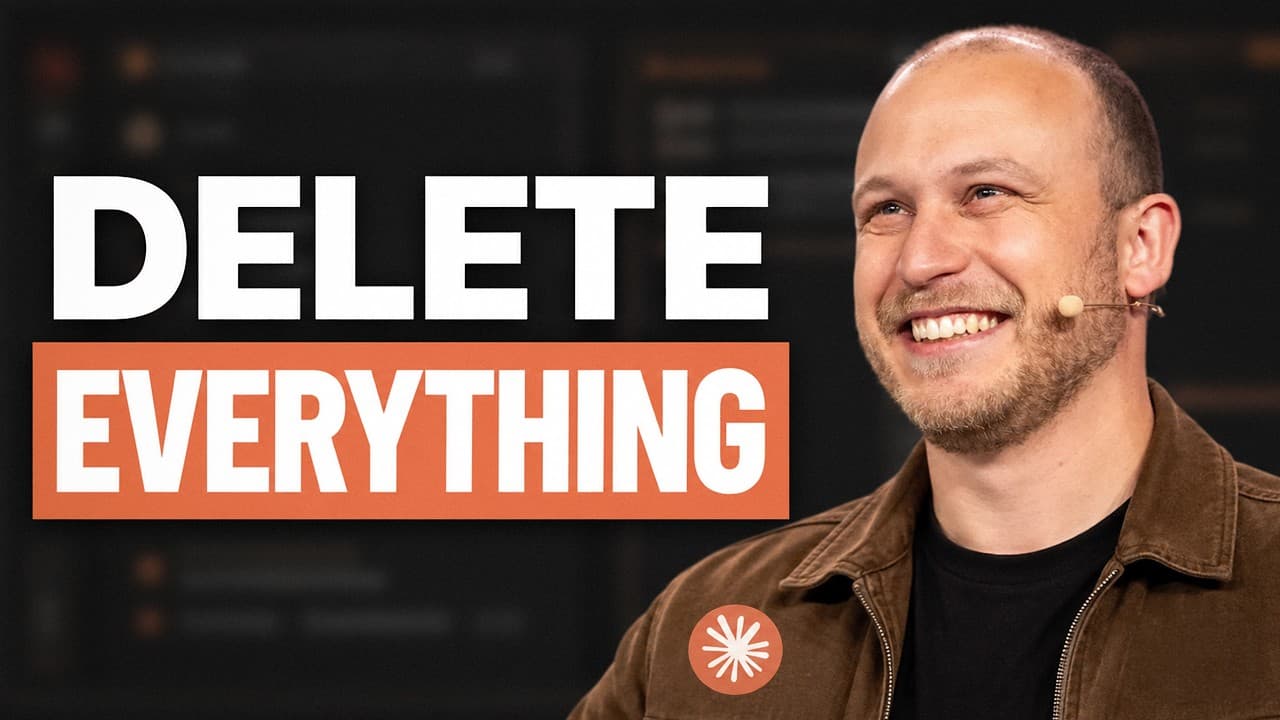
The core idea is to delete old prompts and memory to let Claude run leaner and smarter. Verify outputs by focusing on concrete specifications rather than micromanaging steps. UseClaude Code to push tasks and let the model handle execution, then review results for continual improvement. This approach emphasizes ablation and verification to optimize Claude performance in 2026.
Transcript
So, I've been ramping up the implementation of AI across my business. But before I spent tens of thousands of dollars on claude credits and developers, I wanted to work out what the new best system would be in 2026. So, instead of watching content creators, I went through over a 100 hours of official material from Anthropic, the creators of Claude ... Read More
Key Insights
- Ablation is a deliberate removal of non essential prompts and memory to improve Claude performance.
- Verification replaces micromanagement by specifying the desired output and letting Claude determine the approach.
- Claude Code can rewrite substantial code, with multiple agents, in much less time than manual effort.
- End goal orientation makes Claude more effective by prioritizing output success over prescribed steps.
- Claude can perform tasks beyond obvious capabilities, revealing hidden skills when challenged.
- Weekly tasks to test seemingly impossible prompts help uncover new functionalities.
- Over time, users shift to AI native workflows where Claude handles more autonomous tasks.
- The new practice of deletion and testing aligns with Anthropic’s internal ablation approach."],
- Q_and_A:[{
- question":"What is ablation in Claude usage and why is it recommended?","answer":"Ablation refers to removing old context, prompts, and memory to let the model operate with less prior instruction. The speaker argues that newer Claude models benefit from a lean setup, as excessive context can hinder performance. By testing without the previous lines every six months, you reveal more accurate behavior and better outputs that align with the current model capabilities."
- },{
- question":"How should you approach prompting Claude Code according to the video?","answer":"The recommended approach is to avoid overspecification and micromanagement. Instead, specify the desired output clearly and verify what constitutes a successful result in your mind. This shift allows Claude to determine the best path to the goal, leveraging its improved capabilities without being bogged down by step by step instructions."
- },{
- question":"What real world example demonstrates Claude Code's verification strengths?","answer":"A Bun case study shows Claude Code rewriting a 530,000 line codebase from Zigg to Rust in 11 days with a single engineer. The key is automatic verification at each step, enabling a complex rewrite to be production ready. This illustrates that end to end verification can outperform manual development timelines."
- },{
- question":"How does the video suggest you use Claude in daily workflows?","answer":"The speaker recommends challenging Claude with tasks you think it cannot do to reveal capabilities. You can have Claude operate on your behalf automatically, while you review outputs. This builds a more AI native workflow where Claude takes over repetitive or complex tasks, expanding the model’s role in daily operations."
- },{
- question":"What is the role of verification in Claude’s use?","answer":"Verification focuses on ensuring that the output meets the defined success criteria rather than dictating every interim step. By verifying results, you avoid bottlenecks and allow Claude to make higher level decisions, which often leads to better and faster outcomes than scripted prompts."
- },{
- question":"Why does the video emphasize testing once a week?","answer":"The idea is to push Claude to perform tasks that seem possible yet are challenging, which helps uncover hidden abilities the model possesses. Regular testing expands the range of tasks Claude can handle and keeps users aware of the model’s evolving capabilities."
- },{
- question":"What shift in the job market for engineers is implied by Claude Code’s capabilities?","answer":"With Claude able to rewrite large codebases and perform verification, the emphasis shifts from writing code to curating, overseeing, and verifying AI outputs. Engineers become more focused on governance and verification workflows rather than heavy manual coding, altering hiring and skill requirements."
- },{
- question":"What practical step does the video offer to get started with ablation in Claude?","answer":"The video offers a free ablation prompt you can copy into Claude. This prompt reads your current setup, asks questions about how you actually use Claude, and returns a lean version of instructions tailored to you. This practical tool helps initialize an ablation process quickly and effectively."
- }]}]} } } } } } } } } } } } } } } } } } } } } } } } } } } } } } } } } } } } } } } } } } } } } } } } } } } } } } } } } } } } } } } } } } } } } } } } } } } } } } } } } } } } } } } } } } } } } } } } } } } } } } } } } } } } } } } } } } } } } } } } } } } } } } } } } } } } } } } } } } } } } } } } } } } } } } } } } } } } } } } } } } } } } } } } } } } } } } } } } } } } } } } } }}}} }}}}}} }}}
Install to Summarize YouTube Videos and Get Transcripts
Explore YouTube Video Summarizer or Get YouTube Transcript Extractor
Questions & Answers
Q: A real search query question about the video (e.g. 'How to...', 'What is...', 'Why does...', 'When should...'). Question 1
Answer to question 1. Detailed, factual, at least 50 words. Standalone answer citable without additional context.
Q: Question 2
Answer 2. At least 50 words.
Q: Question 3
Answer 3. At least 50 words.
Q: Question 4
Answer 4. At least 50 words.
Q: Question 5
Answer 5. At least 50 words.
Q: Question 6
Answer 6. At least 50 words.
Q: Question 7
Answer 7. At least 50 words.
Q: Question 8
Answer 8. At least 50 words.
Summary & Key Takeaways
-
The video argues for a lean Claude setup by deleting Claude MD and other old prompts to let the model perform better with less context. It shares a practical ablation workflow and emphasizes testing new capabilities weekly to uncover hidden features. Verification is presented as more important than traditional step by step instructions.
-
It describes how Claude Code can rewrite large codebases quickly with automatic verification, illustrating a shift from manual coding to curating and overseeing AI output. The speaker stresses end goal orientation and challenging Claude to do tasks that seem hard, to reveal capabilities.
-
The narrator reinforces that Claude may have many untapped abilities, suggesting weekly tasks that push the model beyond conventional uses. It ends with encouragement to join a community for ongoing updates and a free ablation prompt.
Read in Other Languages (beta)
Share This Summary 📚
Summarize YouTube Videos and Get Video Transcripts with 1-Click
Try YouTube Summary with ChatGPT & Claude or YouTube Transcript Generator
Explore More Summaries from AI Edge 📚






Summarize YouTube Videos and Get Video Transcripts with 1-Click
Try YouTube Summary with ChatGPT & Claude or YouTube Transcript Generator