David Tepper on Nvidia, China Stocks, and the Fed
TL;DR
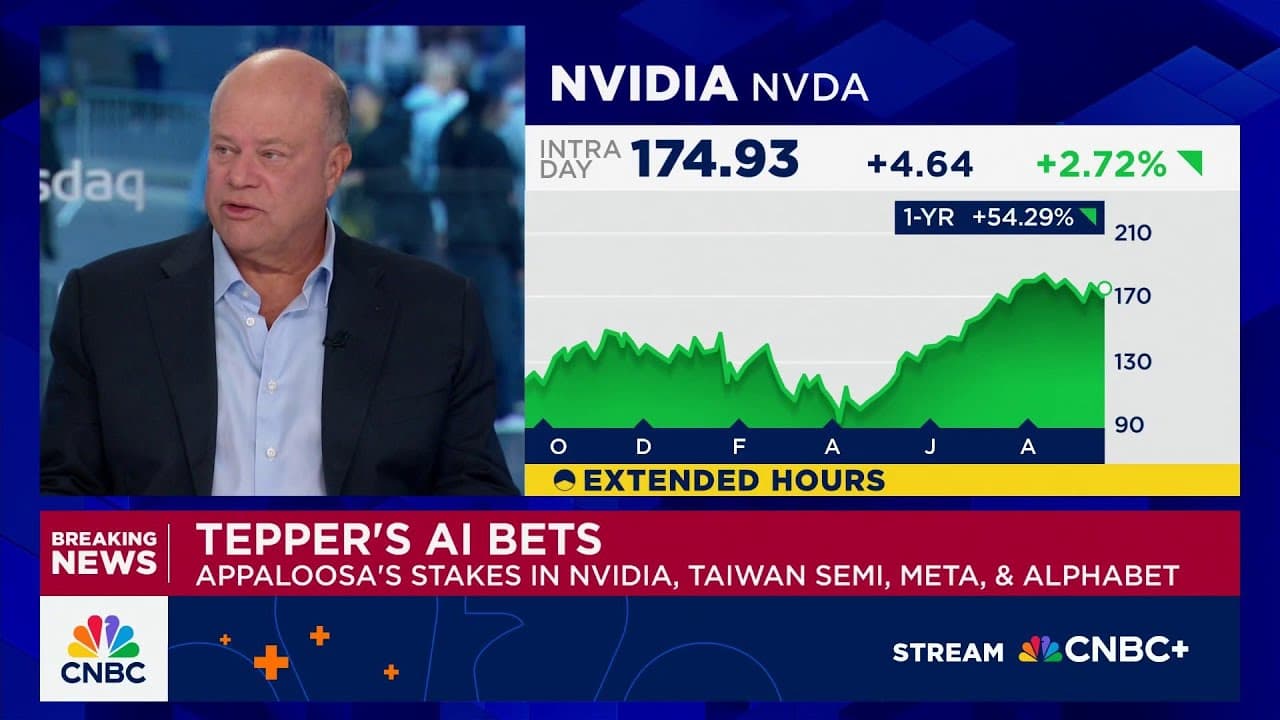
David Tepper says he owns Nvidia but trades it and keeps the position smaller than before. He sees Chinese stocks as still relatively cheap, at low teens earnings multiples versus single digits last year, but keeps his China position limited by non-economic concerns. He is still invested in the market because he will not fight the Fed.
Transcript
can push it so far, but you can't push it beyond that. And I think hopefully they understand that. So anyways. >> Update us on China. There's not a day doesn't go by when we don't say the president said China. But update on your call on have we replaced security concerns with economic concerns. Is that the right thing to do? Do you have long term w... Read More
Key Insights
- David Tepper owns Nvidia but does not hold it all the way. He goes back and forth, trading a little bit, and says Appaloosa has always had some Nvidia position but not the same size each time.
- Chinese stocks have moved on AI enthusiasm, but earnings multiples remain low. Tepper says they are in the low teens, versus single digits last year, which he still finds relatively interesting given growth rates.
- Tepper keeps his China position from getting too large because of other worries. He says that without those concerns, the valuations would be interesting, and he notes it is easy to hold only a small investment there.
- Chinese companies like Alibaba and Baidu are now making their own chips. Tepper says they may not match an H20-class Nvidia chip yet, but he thinks the move in these stocks has been good.
- Appaloosa's 13F filings show large holdings in energy names. Tepper says the firm was early there, and names VST and NRG as stocks it owns, alongside Nvidia and some other AI-related names.
- Tepper says he is miserable about having a good year because he still owns the market and dislikes the multiples. He argues he cannot fight the Fed, especially with markets pricing in roughly one to three more rate cuts.
- Credit spreads are very tight, which Tepper confirms. He suggests private credit probably contributes to this, and tight spreads mean there is little cushion in credit if conditions change.
- Tepper notes that China's excess savings remain huge because they have not been spent or invested. He mentions a figure of about $7 trillion above normal trend, though he says he does not know whether it is accurate.
Install to Summarize YouTube Videos and Get Transcripts
Explore YouTube Video Summarizer or Get YouTube Transcript Extractor
Questions & Answers
Q: Does David Tepper own Nvidia stock?
Yes. Tepper says he owns Nvidia but has not held it all the way through. He goes back and forth, trading a little bit around the position. Appaloosa has always had some Nvidia position, though it has not always been the same size, and he also says the firm owns some other AI-related stocks.
Q: Why does David Tepper limit his China exposure?
Tepper says other worries keep his China position from becoming too large. He says that if you did not have those other concerns, Chinese stocks would look interesting on earnings and valuation. Because of those concerns, he says it is easy to hold a small investment there but not to have too much of the book in China.
Q: How cheap are Chinese stocks according to Tepper?
Tepper says the earnings multiple has risen from single digits last year to the low teens now. He argues that given the growth rate and the multiples, Chinese stocks are still at relatively interesting levels. He adds that as multiples climb from eight times to 13 times, further gains become harder to achieve.
Q: Which energy stocks does Tepper's fund own?
Tepper says Appaloosa is big in energy names and was pretty early there. When pressed on the 13F filings, he named VST and NRG as stocks the firm owns. He did not say whether they are good or bad right now, and said he owns these stocks partly because of how they move with the Fed.
Q: Why does Tepper say he cannot avoid owning the market?
Tepper says he is having a good year but is miserable because he still owns the market and does not love the multiples. His reasoning is that he is never fighting the Fed, especially when the market expects about one to three more rate cuts before year end, which makes it tough not to own stocks.
Q: What does Tepper say about credit spreads?
Asked about credit spreads being incredibly tight, Tepper agrees that they are very tight, and says he is an old credit guy. He suggests private credit probably contributes to this. The interviewer notes that tight spreads mean there is no macro warning signal but also not much cushion in credit.
Q: What is Tepper's bull case on China's savings?
Tepper says the bull case includes China's excess savings, which he describes as still humongous because people have not spent or invested them. He mentions a figure of about $7 trillion of excess savings versus a normal trend, but cautions that he does not know whether that number is true or not.
Q: What does Tepper mean by the punchbowl still being there?
Tepper uses the punchbowl as a metaphor for easy monetary policy. He says you have to stay for some of the party because the punchbowl has not been taken away yet. He warns that when central banks do take it away, conditions get tougher, and that markets do not always give much warning.
Summary & Key Takeaways
-
David Tepper discusses his Nvidia exposure, saying he owns it but trades around the position and has never kept it at a constant size. He also says Appaloosa owns other AI-related names, and points to energy holdings such as VST and NRG in the firm's 13F filings.
-
On China, Tepper says stocks have rallied as the country shows similar AI drivers, with Alibaba and Baidu making chips. Earnings multiples have risen from single digits to the low teens, still relatively low, but non-economic concerns keep his position from growing too large.
-
Tepper describes a difficult market where valuations are high but he cannot fight the Fed. He stays invested because easing continues, credit spreads are tight, and the punchbowl has not yet been taken away, though he notes that removal would make conditions much tougher.
Read in Other Languages (beta)
Share This Summary 📚
Summarize YouTube Videos and Get Video Transcripts with 1-Click
Try YouTube Summary with ChatGPT & Claude or YouTube Transcript Generator
Explore More Summaries from CNBC Television 📚
Summarize YouTube Videos and Get Video Transcripts with 1-Click
Try YouTube Summary with ChatGPT & Claude or YouTube Transcript Generator