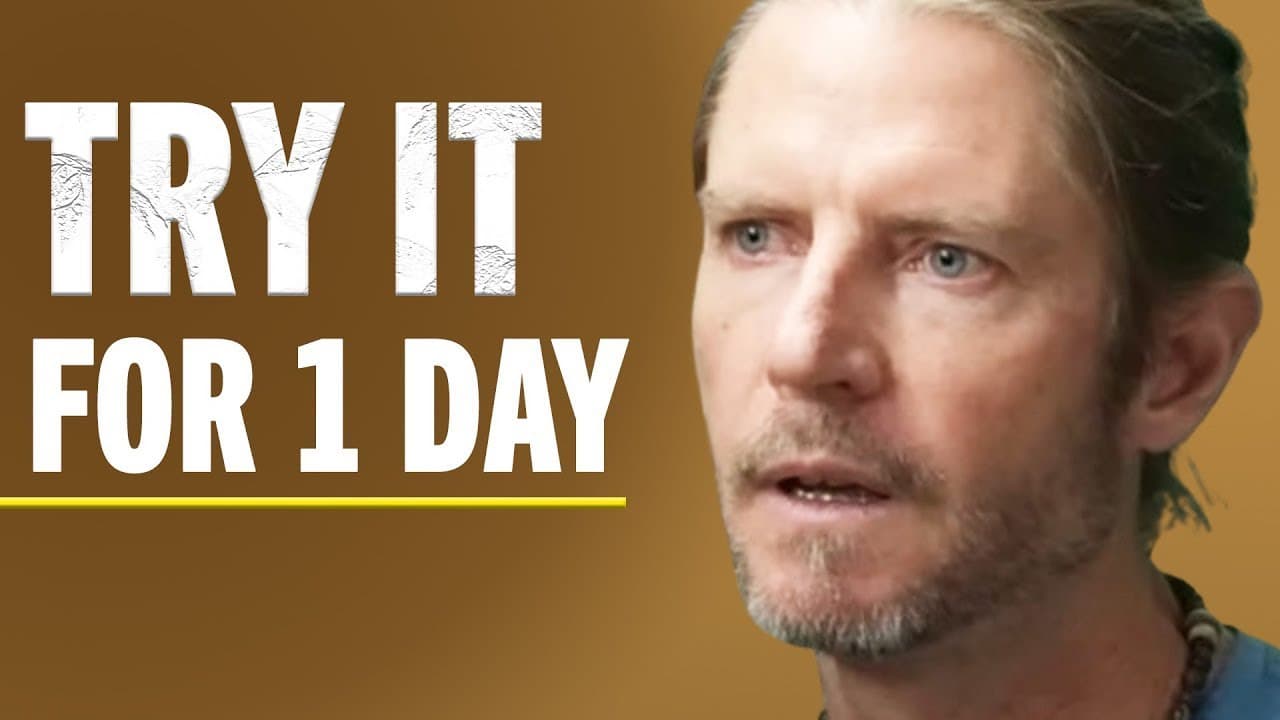
Lawrence Van Lingen on Healing Pain Through the Nervous System
TL;DR
Pain and poor movement often start in the nervous system, not the injured spot. Lawrence Van Lingen treats the nervous system as a whole, using breathing to create a pause between stimulus and response. Trauma pulls the body into flexion and guarding, while extension-based movement such as running helps people open up. Lifestyle, prolonged sitting and dysregulated nervous systems explain why so many would-be runners struggle with pain.
Transcript
habits are really really hard to change um extraordinarily hard to change and like I say you know PE we're Riders on an elephant our nervous system kind of dictates what's going on and I I say to people I'm not actually treating you I'm treating your nervous system which is your rational brain you know we're having a conversation but your nervous s... Read More
Key Insights
- The nervous system dictates most habits, behaviors and movement patterns, which is why habits are extremely hard to change. Lawrence Van Lingen compares people to riders on an elephant and says he treats the nervous system rather than the person's rational brain.
- Breathing is a major entry point for change because it creates a space between stimulus and response. That pause lets people make decisions instead of reacting on autopilot, and many of his clients describe it as waking up and becoming self-aware.
- A drowning person cannot think or act rationally, while a trained lifeguard stays secure and thinks clearly in the same water. The goal of nervous system work is to shift people from the drowning state toward the lifeguard state.
- A tailbone injury can change how the whole body moves. Pain tightens the pelvic floor and causes splinting and guarding, which affects breathing, the central nervous system and gait. This reduces extension in each step and creates asymmetry.
- Trauma of any kind, emotional or physical, pushes the body toward flexion and a fetal, protective position. Van Lingen says flexion is where people hold their deepest traumas and fears, so his work is largely extension-based.
- Humans likely evolved to run, but genetic predisposition varies. Natural runners tend to have light foot bone structure and long Achilles tendons, while others may be better adapted to standing and agricultural life, with bigger calves and feet.
- Running injuries are common mainly because of lifestyle and nervous system state. People sit in flexion for long periods, and many carry accumulated trauma and dysregulated nervous systems that change the timing of how they move and stand.
- Effective treatment works upstream and treats the human as a system rather than reducing them to parts. Head position is an example: if the top of the neck is not balanced and stacked, no joint in the body will stack properly.
Install to Summarize YouTube Videos and Get Transcripts
Explore YouTube Video Summarizer or Get YouTube Transcript Extractor
Questions & Answers
Q: Why are habits so hard to change?
Habits are extremely hard to change because the nervous system, not the rational brain, usually dictates behavior. Lawrence Van Lingen describes people as riders on an elephant: we can have a rational conversation, but the nervous system largely controls habits, behaviors and even how we talk, leaving us on autopilot. That is why he says he treats the nervous system rather than the person's thinking mind.
Q: How does breathing help regulate the nervous system?
Breathing is a major entry point for changing nervous system state because it creates a space between a stimulus and the response. In that pause, a person can make decisions instead of reacting automatically. Van Lingen says many people he works with suddenly become self-aware through this process, realizing they had been asleep or on autopilot and not in charge of their lives.
Q: What is the drowning person versus lifeguard analogy for stress?
A drowning person cannot think, make decisions or behave rationally because they are in survival mode. A lifeguard is in the same environment but is trained and feels secure, so they can think clearly and stay in control. Van Lingen uses this comparison to describe the aim of nervous system work: moving people out of the panicked, reactive state and toward the calm, capable lifeguard state.
Q: How can a tailbone injury affect the way you walk and run?
Falling on the tailbone, or coccyx, typically tightens the pelvic floor and causes the body to splint and guard against pain. This reduces extension in the gait because people avoid taking big steps forward, changes muscle firing patterns and creates asymmetry. A tight pelvic floor also affects breathing and the central nervous system. Van Lingen described a water polo player who fell snowboarding, became asymmetrical and then complained of a knee problem.
Q: How does trauma get stored in the body?
Any trauma, whether emotional or physical, tends to push a person into a fetal, flexed position. Van Lingen explains that flexion is where people hold their deepest traumas and fears, putting them in a protective, guarded state. Like a dog with its tail between its legs, a traumatized person may lose confidence, balance and movement quality. His approach is extension-based, using movement like running to open up and get out of that guarded state.
Q: Are humans born to run?
From an evolutionary standpoint, Van Lingen believes humans evolved to run and that running is an integral part of human design. However, genetic predisposition varies. Natural runners often have light bone structure in their feet and long Achilles tendons, while others may have adapted to agriculture and standing, with bigger calves and feet. He says all healthy humans should be able to run, while respecting that some people cannot.
Q: Why do so many runners get injured or have pain?
Van Lingen gives a small evolutionary reason: humans have been upright on two legs for a relatively brief time and have not fully shed their primate shape. The two bigger reasons are lifestyle and the nervous system. People sit a lot in flexion, and many have accumulated trauma and dysregulated nervous systems. The nervous system influences the timing of movement, how people stand and how they feel, and that is where the problem lies.
Q: Why should pain be treated upstream instead of at the symptom?
Working reactively with humans does not work, Van Lingen says, because if the first assumption in a chain of logic is wrong, everything after it is also wrong. Treatment should be as fundamental and upstream as possible, looking at the person as a whole system. Head position is an example: the head is heavy, and if the top of the neck is not balanced and stacked, no joint in the body will stack properly.
Summary & Key Takeaways
-
Lawrence Van Lingen explains that the nervous system drives habits, posture and movement, so he treats the nervous system rather than just symptoms. Breathing creates a pause between stimulus and response, helping people leave autopilot, become self-aware and choose how they react to external events instead of feeling like victims.
-
Trauma is stored in the body and changes how people move. A tailbone injury can tighten the pelvic floor, alter breathing and gait, and create asymmetry. Any trauma pushes the body into flexion and a protective fetal posture, so Van Lingen favors extension-based movement such as running to open people up.
-
Humans likely evolved to run, though some are genetically more suited than others. Running pain is widespread because of sitting, lifestyle and dysregulated nervous systems. Van Lingen argues for upstream, whole-system treatment rather than reductionist care, using head and neck alignment as an example that affects every joint below.
Read in Other Languages (beta)
Share This Summary 📚
Summarize YouTube Videos and Get Video Transcripts with 1-Click
Try YouTube Summary with ChatGPT & Claude or YouTube Transcript Generator
Explore More Summaries from Dr Rangan Chatterjee 📚





Summarize YouTube Videos and Get Video Transcripts with 1-Click
Try YouTube Summary with ChatGPT & Claude or YouTube Transcript Generator