How to Build a Repeatable Organic Social Show
TL;DR
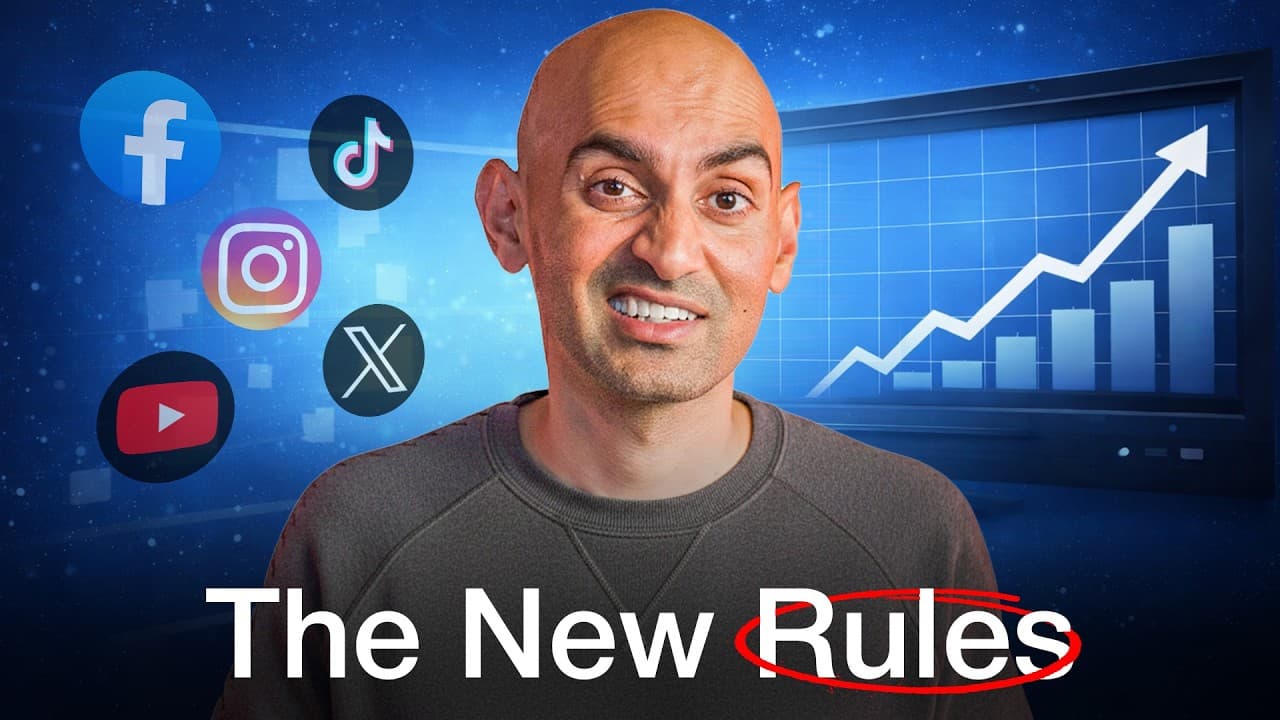
Treat organic social media as a TV network by creating recognizable, repeatable shows instead of publishing unrelated posts on one brand account. A consistent format, theme, cast, and easy-to-reuse set can build viewing habits, clarify the account for audiences and algorithms, lower dependence on increasingly expensive ads, and support a more effective paid strategy.
Transcript
Most brands are quietly giving up on organic social media. The data backs it up. 64% of marketers are cutting their organic budgets and shifting everything into paid ads instead. But here's what they're missing. The brands that are winning organically aren't posting more content. They're playing a completely different game. They figured out that so... Read More
Key Insights
- Organic social media is losing budget because marketers lack confidence in its reach and measurable return. Only 19% of marketers are increasing organic social budgets, 70% are keeping them unchanged, and 64% are decreasing organic investment while directing more money toward paid advertising.
- Audience attention is still abundant on major social platforms. Monthly usage reaches 35 hours on TikTok, 29 hours on Facebook, and 28 hours on YouTube, so the central problem is not audience absence but a brand's inability to earn algorithmic distribution and viewer attention.
- Paid advertising is a costly dependency when it becomes a brand's only visibility strategy. The transcript argues that ad costs rise each year, causing customer acquisition costs to climb and margins to shrink, while brands remain unable to own an audience or build a loyal following.
- Modern purchase journeys are built from multiple interactions rather than a single persuasive post. The cited figure is 94.4% for purchase journeys involving multiple touch points, including search, social platforms, websites, stores, reviews, and marketplaces where customers repeatedly encounter and evaluate a brand.
- Traditional brand content is easy for overwhelmed audiences to ignore because it frequently looks like marketing. The transcript states that 59% of people have deleted or ignored an important message after mistaking it for an advertisement, illustrating the risk of obvious promotional presentation.
- A social account works better as a programming network than as a random content feed. Mixing products, company culture, memes, education, and promotions can confuse both the algorithm and viewers, while a clearly defined show establishes consistent expectations and helps audiences form viewing habits.
- Repeatable social shows are built from four recurring elements: a familiar format, a unifying theme, recognizable characters, and a dependable set. The content and individual moments can change, but these stable components make each episode immediately identifiable and allow production to continue consistently.
- Dedicated show accounts can extend a brand's content network after a format proves successful. Emmy Eats created Ramen on the Street, which generated 5–15 million monthly views across platforms, while Built Rewards' Roomies gained 150,000 organic followers across TikTok and Instagram.
Install to Summarize YouTube Videos and Get Transcripts
Explore YouTube Video Summarizer or Get YouTube Transcript Extractor
Questions & Answers
Q: Why are brands reducing organic social media budgets?
Brands are reducing organic budgets because many marketers believe organic reach has become unreliable and cannot confidently determine whether it produces a return. Only 19% of marketers are increasing organic social budgets, while 70% are maintaining them and 64% are decreasing organic investment. Many respond by buying visibility through advertising, even though this increases their dependence on paid distribution.
Q: How should brands approach organic social media now?
Brands should approach organic social media as a TV network rather than a feed of unrelated posts. The recommended strategy is to select one repeatable concept, develop it into an episodic show, publish it consistently, and create a dedicated account when it succeeds. This gives audiences a recognizable experience and gives the algorithm a clearer understanding of the account's subject and intended viewers.
Q: What are the four elements of a repeatable social show?
A repeatable social show needs a recurring format, recurring theme, recurring characters, and recurring set. The format makes episodes feel familiar, the theme connects their stories, the characters provide trusted and expected faces, and the set enables reliable production. Together, these elements help viewers recognize the content quickly and understand the value or experience they are about to receive.
Q: Why does mixing many content types hurt a social account?
Mixing product posts, behind-the-scenes material, company culture, memes, education, and promotions on one account can confuse both the algorithm and the audience. The algorithm may struggle to determine what the account covers and who should receive its content. Viewers also lack a consistent expectation, making it harder for them to recognize a format and develop a regular watching habit.
Q: How does a recurring format build audience habits?
A recurring format gives every episode a familiar structure even when the specific content changes. Repeated settings, characters, themes, and hook patterns allow viewers to identify the show within seconds and anticipate what they will receive. Because people repeatedly use platforms such as Instagram, YouTube, and Facebook, recognizable programming can turn recurring platform activity into a habit of watching a particular brand's show.
Q: What makes a social media show scalable?
A social media show becomes scalable when its core format can be filmed repeatedly without difficult setup. A dependable location, such as a coffee shop counter, park bench, studio desk, or car, avoids recurring bookings, complex logistics, and waits for suitable conditions. Consistent characters, structure, theme, and production setting then make it practical to create new episodes week after week.
Q: What results did branded social shows achieve?
Ramen on the Street, a separate TikTok and Instagram concept from Emmy Eats, generated 5–15 million views per month across platforms. Built Rewards' mockumentary Roomies produced individual episodes with more than 500,000 views and built 150,000 organic followers across TikTok and Instagram. The Cheese Store of Beverly Hills also turned episodic content into visits from customers traveling from around the world.
Q: Why should brands combine organic and paid social strategies?
Organic social should support paid advertising rather than be treated as an unrelated activity. The transcript states that winning organically makes advertisements more effective, while depending exclusively on paid reach exposes brands to rising advertising costs, higher customer acquisition costs, and shrinking margins. A recognized organic presence also develops an audience that knows the brand, reducing complete dependence on purchased visibility to remain noticeable.
Summary & Key Takeaways
-
Organic social media still has access to substantial audience attention, but many marketers are reducing investment because reach feels limited and return on investment is difficult to measure. Moving entirely toward paid advertising creates dependence on purchased visibility while acquisition costs rise, margins shrink, and brands fail to build an audience they own.
-
The traditional approach of mixing product photos, promotions, giveaways, quotes, memes, and educational posts is no longer effective. Purchase journeys involve multiple touch points, and audiences are overwhelmed by content that resembles advertising. Brands need recognizable programming that gives viewers a clear reason to notice, remember, and repeatedly watch their content across platforms.
-
A scalable social show combines a recurring format, central theme, recognizable characters, and repeatable set. Brands such as Emmy Eats, Built Rewards, and the Cheese Store of Beverly Hills demonstrate how episodic concepts can generate views, followers, and customer visits. Successful formats can eventually become dedicated accounts within a broader content network.
Read in Other Languages (beta)
Share This Summary 📚
Summarize YouTube Videos and Get Video Transcripts with 1-Click
Try YouTube Summary with ChatGPT & Claude or YouTube Transcript Generator
Explore More Summaries from Neil Patel 📚
Summarize YouTube Videos and Get Video Transcripts with 1-Click
Try YouTube Summary with ChatGPT & Claude or YouTube Transcript Generator