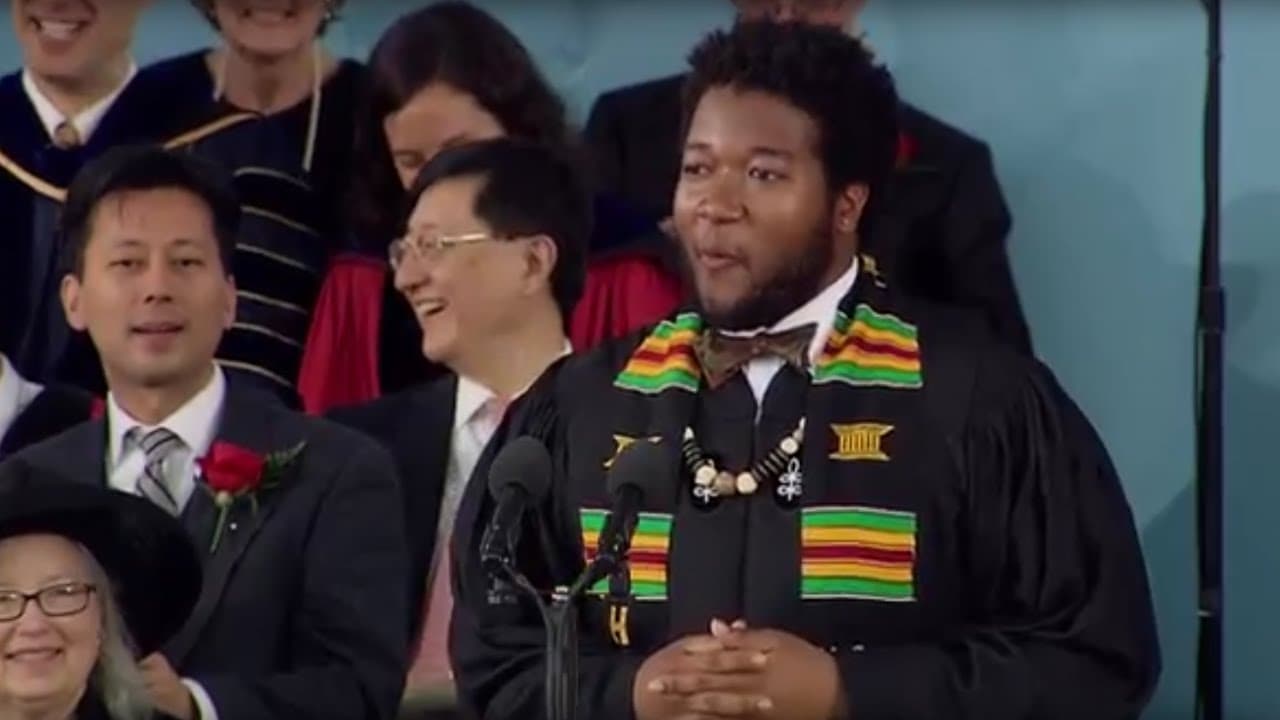
Undergraduate Speaker Joshuah Campbell | Harvard Commencement 2016
TL;DR
To live authentically without apologies, embrace your imperfections and prioritize play over perfection. Recognize that your unique qualities make you who you are, and let go of excessive self-doubt and apologies. By doing so, you open yourself up to meaningful experiences and genuine connections with others.
Transcript
senior English address sorry not sorry candidate for the degree of Bachelor of Arts Joshua Brian Campbell when I was 4 years old I whacked my brother hard in the forearm with a red plastic wiffle ball bat and I was really really sorry he is 13 years my senior 18 at the time so we didn't roughhouse that much but it still surprised me that he took th... Read More
Key Insights
- 💠 Childhood experiences can shape our perception of personal responsibility and the impact of our actions.
- 🥺 Society's emphasis on perfection and competition can lead individuals to apologize excessively and doubt their own self-worth.
- 🌍 Authenticity can be challenging to navigate in a performance-based world, especially for marginalized individuals.
- 🖐️ Play is essential for personal growth, vulnerability, and experiencing the pleasures and pains of life.
- 🌍 Accepting and embracing imperfections is crucial for personal development and contributing to the world.
- 🥺 Prioritizing play and embracing imperfections can lead to meaningful collaboration and self-discovery.
- 🖐️ Society's perception of success often neglects the importance of authenticity and play.
Install to Summarize YouTube Videos and Get Transcripts
Explore YouTube Video Summarizer or Get YouTube Transcript Extractor
Questions & Answers
Q: How did the speaker's childhood incident impact their perspective on responsibility and apologies?
The speaker initially believed they were to blame for their brother's cancer, but their mother's reassurance helped them understand it was a blessing in disguise and not their fault.
Q: What does the speaker struggle with regarding authenticity and performance?
As an artist and person of color, the speaker grapples with maintaining authenticity while navigating the expectations and stereotypes associated with their identities.
Q: According to the speaker, what is the connection between play and living authentically?
The speaker believes that play allows vulnerability and meaningful collaboration, enabling individuals to accept both the joys and necessary challenges of life.
Q: How does the speaker suggest embracing flaws and imperfections?
The speaker urges everyone to take themselves less seriously and prioritize play, recognizing that imperfections are what make individuals unique and contribute to the world.
Summary
In this speech, Joshua Brian Campbell reflects on his childhood experience of accidentally causing harm to his brother and how he learned that it wasn't his fault. He then discusses his journey of constantly apologizing and trying to be a perfect version of himself, and how it has hindered his authenticity. He emphasizes the importance of embracing imperfections, finding strength in vulnerability, and the role of play in living a fulfilling life.
Questions & Answers
Q: What childhood experience did the speaker have that led him to feel sorry?
When the speaker was four years old, he accidentally hit his brother with a wiffle ball bat, causing him significant pain. It turned out that the trauma from this incident awakened a tumor in his brother's arm, leading to a diagnosis of osteosarcoma.
Q: How did the speaker initially feel about the incident with his brother?
The speaker initially felt deeply sorry for what had happened, believing that he had caused harm to his brother. He recalls thinking that he had made a terrible mistake and that he was to blame.
Q: What did the speaker eventually learn about the incident with his brother?
The speaker eventually learned that the cancer his brother had was not his fault. His mother explained to him that what he did was actually a blessing in disguise. This led him to realize that he had unknowingly played a role in his brother's diagnosis being discovered and treated.
Q: How has the speaker's constant apologizing affected his life?
The speaker admits that he has developed an unhealthy habit of constantly apologizing for who he is. He feels the need to apologize for being annoying, taking up space, and even for the potential boredom caused by his speech. This constant apologizing has prevented him from embracing his true self.
Q: Why does the speaker believe it is important to live without apology?
The speaker believes that living without apology is a crucial aspect of being authentic. He argues that embracing imperfections and accepting oneself fully is necessary to appreciate the beauty of our differences. Living without apology allows us to express ourselves freely and connect with others in meaningful ways.
Q: How does the speaker view the relationship between performing and living authentically?
The speaker sees performing as a form of self-exploration where he feels the most like himself. He believes that being on stage allows him to be in a state of play, which is essential for creativity and adaptability. He wants to embody this sense of playfulness and authenticity in everyday life.
Q: What does the speaker believe is the force that keeps human beings creative and adaptive?
According to the speaker, the force that keeps human beings creative and adaptive is play. He suggests that losing this sense of play can lead to burnout and a loss of vitality. Embracing playfulness allows us to approach life with curiosity, vulnerability, and a willingness to collaborate.
Q: What does the speaker think we can learn from being vulnerable and embracing imperfections?
The speaker believes that being vulnerable and embracing imperfections can lead to meaningful collaborations and personal growth. He suggests that by being open and receptive to both the pleasures and necessary pains of life, we can fully engage with the world around us and discover new opportunities.
Q: How does the speaker encourage others to embrace their authentic selves?
The speaker encourages others to find the courage to live without apology and embrace their authentic selves. He acknowledges the challenges of self-doubt but emphasizes the importance of having friends who support and push us to step out of our shadows. He advocates for openly correcting ourselves when we feel the urge to apologize unnecessarily.
Q: What does the speaker see as the essence of play and its impact on life?
The speaker sees play as an essential aspect of life. He believes that it allows us to experience joy, tap into our true selves, and approach life with a sense of ferocity and abandon. By valuing play, we can unlock our full potential, laugh at ourselves, and appreciate the transformative power of embracing life's uncertainties.
Takeaways
In this speech, Joshua Brian Campbell reflects on the journey of living authentically without constantly apologizing. He shares his personal experiences, from accidentally causing harm as a child to realizing the importance of embracing imperfections. Campbell encourages others to embrace their authentic selves, prioritize playfulness, and let go of the need for perfection. He highlights that by doing so, individuals can connect with others on a deeper level, explore their true potential, and find joy in the transformative power of life's uncertainties.
Summary & Key Takeaways
-
The speaker recounts a childhood incident where they accidentally worsened their brother's cancer, but later realized it wasn't their fault.
-
They discuss their tendency to excessively apologize and strive for perfection, particularly in the competitive environment of Harvard.
-
The speaker reflects on the importance of authenticity and play, both as an artist and as a person of color navigating a hostile world.
Read in Other Languages (beta)
Share This Summary 📚
Summarize YouTube Videos and Get Video Transcripts with 1-Click
Try YouTube Summary with ChatGPT & Claude or YouTube Transcript Generator
Explore More Summaries from Harvard University 📚




Summarize YouTube Videos and Get Video Transcripts with 1-Click
Try YouTube Summary with ChatGPT & Claude or YouTube Transcript Generator