Products
Features
YouTube Video Summarizer
Summarize YouTube videos
Web & PDF Highlighter
Highlight web pages & PDFs
Chat with PDF
Ask any PDF questions with AI
Ask AI Clone
Chat with your highlights & memories
Audio Transcriber
Transcribe audio files to text
Glasp Reader
Read and highlight articles
Kindle Highlight Export
Export your Kindle highlights
Idea Hatch
Hatch ideas from your highlights
Integrations
Obsidian Plugin
Notion Integration
Pocket Integration
Instapaper Integration
Medium Integration
Readwise Integration
Snipd Integration
Hypothesis Integration
Apps & Extensions
Chrome Extension
Safari Extension
Edge Add-ons
Firefox Add-ons
iOS App
Android App
Discover
Discover
Ideas
Discover new ideas and insights
Articles
Curated articles and insights
Books
Book recommendations by great minds
Posts
Essays and notes from readers
Quotes
Inspiring quotes collection
Videos
Curated videos and summaries
Explore Glasp
Glasp Newsletter
Weekly insights and updates
Glasp Talk
Interview series with great minds
Glasp Blog
Latest news and articles
Glasp Use Cases
Learn how others use Glasp
Build & Support
Glasp API
Access Glasp's API for developers
MCP Connector
Connect Glasp to Claude & ChatGPT
Community
Glasp Reddit Community
Students
Student discount and benefits
FAQs
Frequently Asked Questions
AboutPricing
DashboardLog inSign up

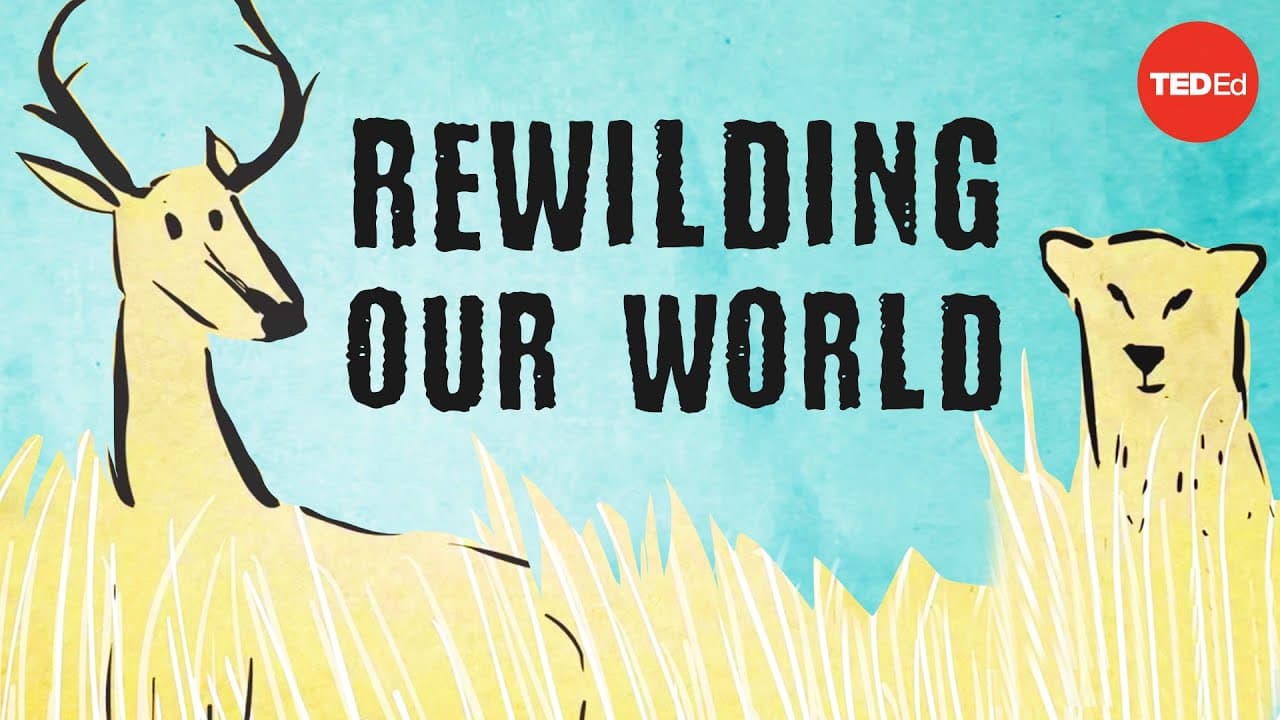
From the top of the food chain down: Rewilding our world - George Monbiot
773.4K views
•
March 13, 2014
by
TED-Ed
YouTube video player
From the top of the food chain down: Rewilding our world - George Monbiot

TL;DR

Megafauna once roamed Earth, extinct due to human hunting, but rewilding efforts aim to restore lost species and reshape ecosystems.

Transcript

We all know about the dinosaurs that once roamed the planet, but long after they went extinct, great beasts we call the megafauna lived on every continent. In the Americas, ground sloths the size of elephants pulled down trees with their claws. Saber-toothed cats the size of brown bears hunted in packs, but they were no match for short-faced bears,... Read More

Key Insights

  • 🍻 Megafauna extinction linked to human hunting.
  • 🛄 Rewilding aims to restore lost species and reshape ecosystems.
  • ❓ Trophic cascades triggered by reintroduced species benefit entire ecosystems.
  • 🧑‍🌾 Abandoned farms can be repurposed to facilitate rewilding efforts.
  • ❓ Rewilding emphasizes the importance of consent and collaboration with local communities.
  • 😚 Marine reserves and reintroduction efforts can resurrect lost ecological dynamics.
  • 🤞 Rewilding offers hope for reversing ecological damage and fostering biodiversity.

Install to Summarize YouTube Videos and Get Transcripts

Explore YouTube Video Summarizer or Get YouTube Transcript Extractor

Questions & Answers

Q: What led to the extinction of megafauna like ground sloths and saber-toothed cats?

Human hunting played a significant role in driving megafauna species, such as ground sloths and saber-toothed cats, to extinction as they were hunted for various purposes like food and safety.

Q: How are rewilding efforts aiming to restore lost species impacting ecosystems?

Rewilding efforts, such as reintroducing wolves to Yellowstone National Park, are reshaping ecosystems by triggering trophic cascades that benefit flora and fauna, showcasing the importance of keystone species in maintaining biodiversity.

Q: What is the significance of reestablishing lost species through rewilding?

Rewilding not only aims to restore lost species like bears and bison but also fosters hope in ecological restoration, showcasing that positive ecological change is possible with human intervention and conservation efforts.

Q: How can abandoned farms contribute to rewilding and ecosystem restoration?

Abandoned farms can play a crucial role in rewilding efforts by allowing natural forests to regenerate and serve as habitats for reintroduced species like bears, wolves, and bison, promoting biodiversity and ecosystem health.

Summary & Key Takeaways

  • Giant megafauna, like ground sloths and saber-toothed cats, roamed Earth post-dinosaurs.

  • Human hunters drove many megafauna species to extinction.

  • Rewilding efforts involve restoring lost species like wolves to reshape ecosystems.


Read in Other Languages (beta)

English

Share This Summary 📚

Summarize YouTube Videos and Get Video Transcripts with 1-Click

Download browser extensions on:

Try YouTube Summary with ChatGPT & Claude or YouTube Transcript Generator

Explore More Summaries from TED-Ed 📚
What is schizophrenia? - Anees Bahji thumbnail
What is schizophrenia? - Anees Bahji
TED-Ed
How to build a fictional world - Kate Messner thumbnail
How to build a fictional world - Kate Messner
TED-Ed
Can you solve the pirate riddle? - Alex Gendler thumbnail
Can you solve the pirate riddle? - Alex Gendler
TED-Ed
A glimpse of teenage life in ancient Rome - Ray Laurence thumbnail
A glimpse of teenage life in ancient Rome - Ray Laurence
TED-Ed
If superpowers were real: Immortality - Joy Lin thumbnail
If superpowers were real: Immortality - Joy Lin
TED-Ed
How does the stock market work? - Oliver Elfenbaum thumbnail
How does the stock market work? - Oliver Elfenbaum
TED-Ed

Summarize YouTube Videos and Get Video Transcripts with 1-Click

Download browser extensions on:

Try YouTube Summary with ChatGPT & Claude or YouTube Transcript Generator

Apps & Extensions

  • Chrome Extension
  • Safari Extension
  • Edge Add-ons
  • Firefox Add-ons
  • iOS App
  • Android App

Key Features

  • YouTube Video Summarizer
  • Web & PDF Summarizer
  • Web & PDF Highlighter
  • Chat with PDF
  • Ask AI Clone
  • Audio Transcriber
  • Glasp Reader
  • Kindle Highlight Export
  • Idea Hatch

Integrations

  • Obsidian Plugin
  • Notion Integration
  • Pocket Integration
  • Instapaper Integration
  • Medium Integration
  • Readwise Integration
  • Snipd Integration
  • Hypothesis Integration

More Features

  • APIs
  • MCP Connector
  • Blog & Post
  • Embed Links
  • Image Highlight
  • Personality Test
  • Quote Shots

Company

  • About us
  • Blog
  • Community
  • FAQs
  • Job Board
  • Newsletter
  • Pricing
Terms

•

Privacy

•

Guidelines

© 2026 Glasp Inc. All rights reserved.