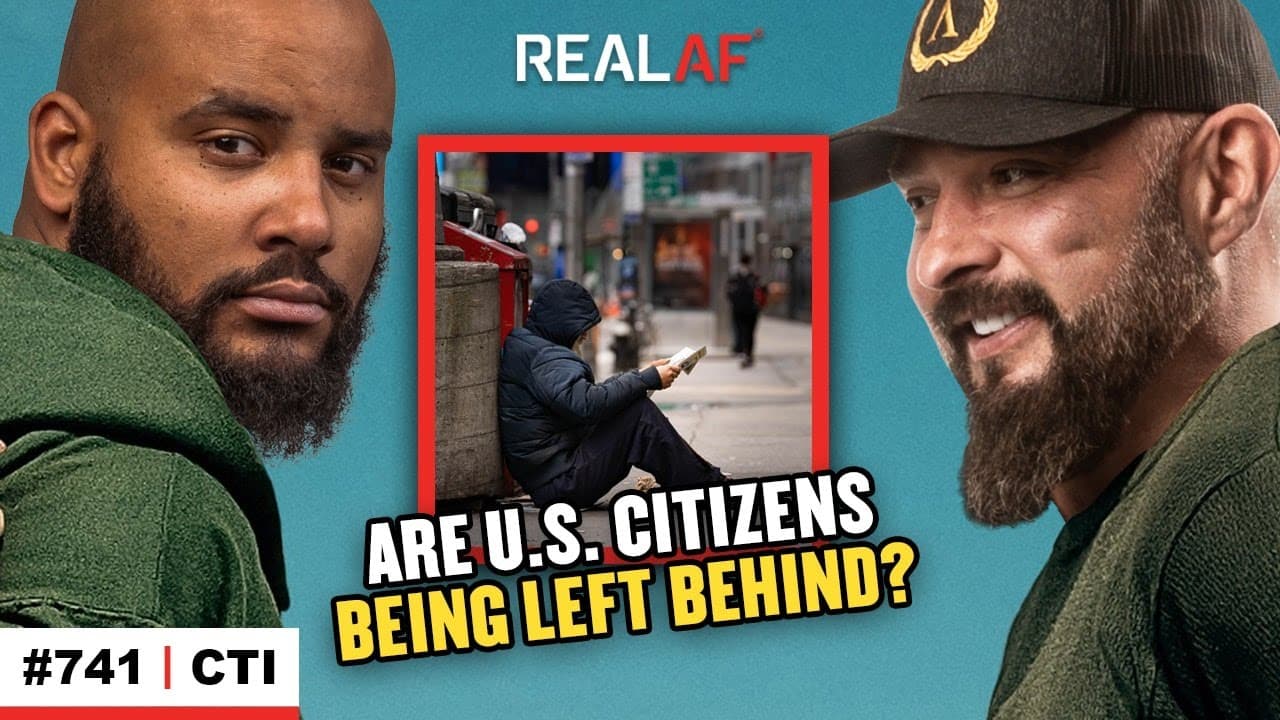
How Does the Migrant Crisis Affect Americans?
TL;DR
The migrant crisis is significantly impacting American citizens, with political leaders accused of prioritizing new voters over current citizens. This has led to debates about voter ID laws and the rights of citizens versus non-citizens. The discussion highlights a growing divide between political promises and the actual service to the public, raising concerns about national identity and governance.
Transcript
Democrats slam popular voter ID bill is racist and xenophobic they understand that they have not served the public they understand that the public has figured out that they are not serving the public and their solution isn't to change policy that serves the public their solution is to say well too bad we'll import new voters and you guys who come f... Read More
Key Insights
- Migrant crisis is seen as a tool by some political leaders to gain new voters.
- Voter ID laws are a contentious issue, with some labeling them as racist.
- The public feels underserved by current policies and political actions.
- There's a perception that non-citizens are being given more rights than citizens.
- The discussion reflects a broader discontent with political leadership.
- The 75 Hard program is mentioned as a transformative mental toughness challenge.
- Concerns about media censorship and the importance of sharing uncensored messages.
- The podcast emphasizes self-reliance and creating the American dream.
Install to Summarize YouTube Videos and Get Transcripts
Explore YouTube Video Summarizer or Get YouTube Transcript Extractor
Questions & Answers
Q: How does the migrant crisis affect American citizens?
The migrant crisis affects American citizens by creating a perception that political leaders prioritize new voters over current citizens. This has led to debates about voter ID laws and concerns about the rights of citizens versus non-citizens. It reflects a broader discontent with political leadership and governance.
Q: What are the arguments against voter ID laws?
Arguments against voter ID laws include claims that they are racist and xenophobic, likening them to historical exclusion laws. Critics argue that these laws disproportionately affect minorities and low-income individuals who may find it difficult to obtain identification, thus restricting their voting rights.
Q: What is the 75 Hard program?
The 75 Hard program is described as a transformative mental toughness challenge designed to improve discipline and mental fortitude. It includes strict daily tasks such as exercise, diet adherence, and personal development activities, aiming to create lasting positive change in participants' lives.
Q: Why is there a concern about media censorship?
There is concern about media censorship because it limits the dissemination of uncensored messages and perspectives, potentially skewing public perception. The podcast emphasizes the importance of sharing unfiltered information to foster informed discussions and challenge prevailing narratives.
Q: How does the podcast view political leadership?
The podcast expresses discontent with political leadership, accusing leaders of failing to serve the public and prioritizing their interests. It highlights a growing divide between political promises and actions, advocating for governance that prioritizes citizens' rights and addresses national issues effectively.
Q: What is the significance of self-reliance in the podcast?
Self-reliance is emphasized as crucial for creating the American dream and achieving personal success. The podcast encourages individuals to take control of their lives, make informed decisions, and actively participate in shaping their future, rather than relying on external entities for solutions.
Q: Why is there a debate about national identity?
The debate about national identity arises from concerns that non-citizens are being given more rights than American citizens. This perception fuels discussions about what it means to be an American and how policies should reflect and protect the interests of current citizens over new arrivals.
Q: How does the podcast address the issue of governance?
The podcast addresses governance by criticizing current political actions and advocating for a change that prioritizes citizens' rights. It calls for leaders to be accountable and responsive to the public's needs, emphasizing the importance of effective governance in addressing national challenges.
Summary & Key Takeaways
-
The migrant crisis is impacting Americans as political leaders are accused of importing new voters instead of serving current citizens. This has led to debates over voter ID laws, with some labeling them as racist. The public feels underserved by policies, raising concerns about national identity and governance.
-
The podcast discusses the 75 Hard program as a transformative mental toughness challenge. It emphasizes the importance of self-reliance, creating the American dream, and the role of media in shaping public perception. Concerns about censorship and the need for uncensored messages are highlighted.
-
A broader discontent with political leadership is evident, reflecting a growing divide between political promises and actual service to the public. The discussion underscores the need for a change in governance to prioritize citizens' rights and address national issues effectively.
Read in Other Languages (beta)
Share This Summary 📚
Summarize YouTube Videos and Get Video Transcripts with 1-Click
Try YouTube Summary with ChatGPT & Claude or YouTube Transcript Generator
Explore More Summaries from Andy Frisella 📚




Summarize YouTube Videos and Get Video Transcripts with 1-Click
Try YouTube Summary with ChatGPT & Claude or YouTube Transcript Generator