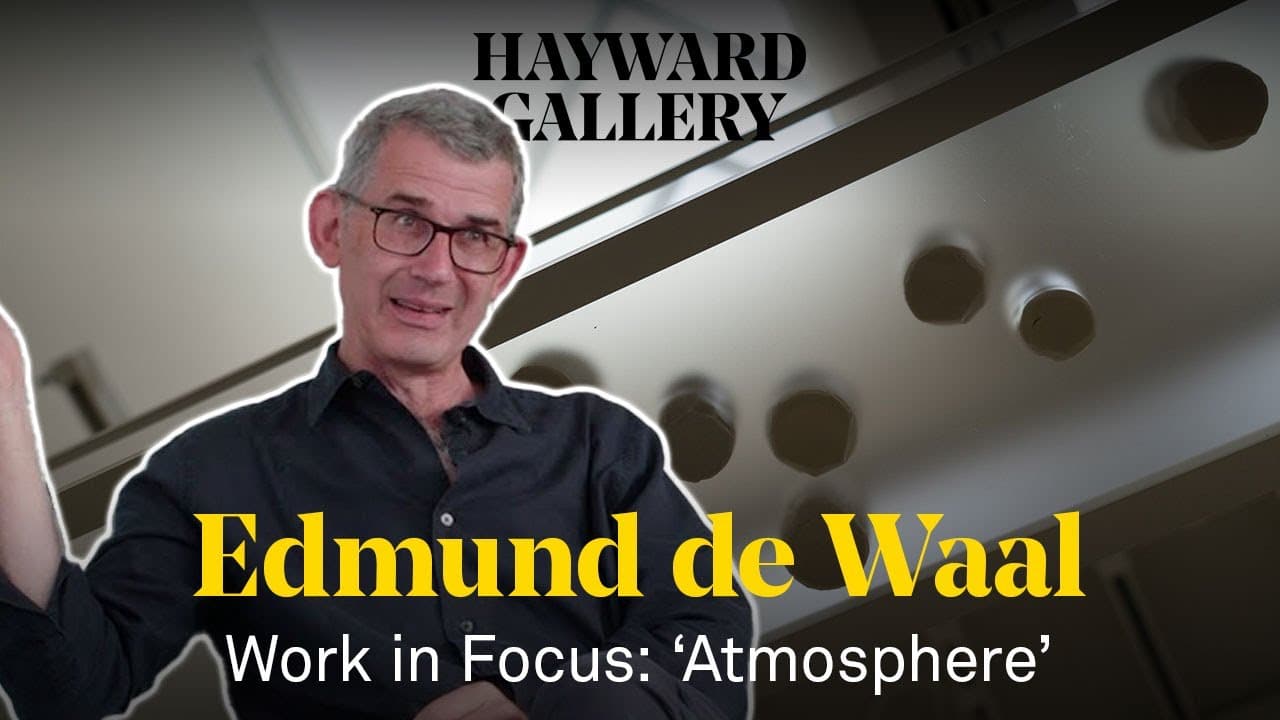
Edmund de Waal unveils his installation, 'Atmosphere' | Hayward Gallery
TL;DR
The artist creates porcelain vessels, placing them in atmospheric spaces to interact with light, shadows, and viewers.
Transcript
what I do is to make porcelain vessels and then find places to put them find find spaces in the treens on shelves and cupboards up in the air so I'm interested in in the making and I'm interested in the placing and how those two things sort of talk to each other how that space works if you're dealing with porcelain of course you're dealing with lig... Read More
Key Insights
- 🙂 The artist's exploration of light and shadow through porcelain vessels creates a captivating visual experience.
- 👱 Collaboration with engineers is crucial in overcoming structural challenges when suspending artwork in the air.
- 😒 The use of different opacities of glass in the vessels adds depth and dimension to the artwork.
- 🎑 Naming the artwork "atmosphere" evokes contemplation of environmental themes and encourages a reflective viewing experience.
- 🧑🏭 The artist's personal connection to vitrines and the act of pausing objects reflects an emotional resonance in the artwork.
- 👾 By placing porcelain vessels in various spaces, the artist invites viewers to engage with the artwork in a dynamic and immersive way.
- 🙂 The interplay of light, shadow, and structural elements enhances the overall visual impact of the artwork.
Install to Summarize YouTube Videos and Get Transcripts
Explore YouTube Video Summarizer or Get YouTube Transcript Extractor
Questions & Answers
Q: How does the artist approach the placement of porcelain vessels in different spaces?
The artist carefully selects locations for the porcelain vessels, considering how light will interact with them and how viewers will perceive them in the given space. By placing them in treens, on shelves, and in the air, the artist creates an immersive experience that invites contemplation.
Q: What inspired the artist to use different opacities of glass in the vessels?
The artist draws inspiration from the changing qualities of light and shadows, experimenting with various types of glass to create different levels of opacity in the vessels. This manipulation of materials adds depth and dimension to the artwork, enhancing the viewer's experience.
Q: How does the artist navigate the structural challenges of suspending porcelain vessels in the air?
The artist collaborates with engineers to address the technical aspects of hanging the vessels, using steel wire and grids to support them. Through a process of iteration and testing, the artist achieves a balance between the structural elements and the aesthetic appeal of the artwork.
Q: What significance does the term "atmosphere" hold in the artist's practice?
The artist associates the term "atmosphere" with the contemplation of clouds, weather, and light, reflecting on the climate emergency and the act of looking up into the air. By naming the artwork "atmosphere," the artist invites viewers to engage with environmental themes and encourages a slower, more reflective experience of the art.
Summary & Key Takeaways
-
The artist creates porcelain vessels and strategically places them in various spaces to explore the interplay of light and shadow.
-
Experimenting with different opacities of glass, the vessels change appearance as light shifts, creating a dynamic visual experience.
-
The use of steel wire to suspend the vessels in the air adds a sense of presence and engagement with the surrounding environment.
Read in Other Languages (beta)
Share This Summary 📚
Summarize YouTube Videos and Get Video Transcripts with 1-Click
Try YouTube Summary with ChatGPT & Claude or YouTube Transcript Generator
Explore More Summaries from Southbank Centre 📚




Summarize YouTube Videos and Get Video Transcripts with 1-Click
Try YouTube Summary with ChatGPT & Claude or YouTube Transcript Generator