How Is Anduril Building AI Systems for Defense?
TL;DR
Anduril aims to modernize defense with autonomous systems, artificial intelligence, and lower-cost development that could save taxpayers hundreds of billions of dollars while building a large business. Palmer Luckey expects near-term humanoid robots to operate existing equipment, but argues that humans must retain responsibility for lethal decisions rather than outsourcing violence to machines.
Transcript
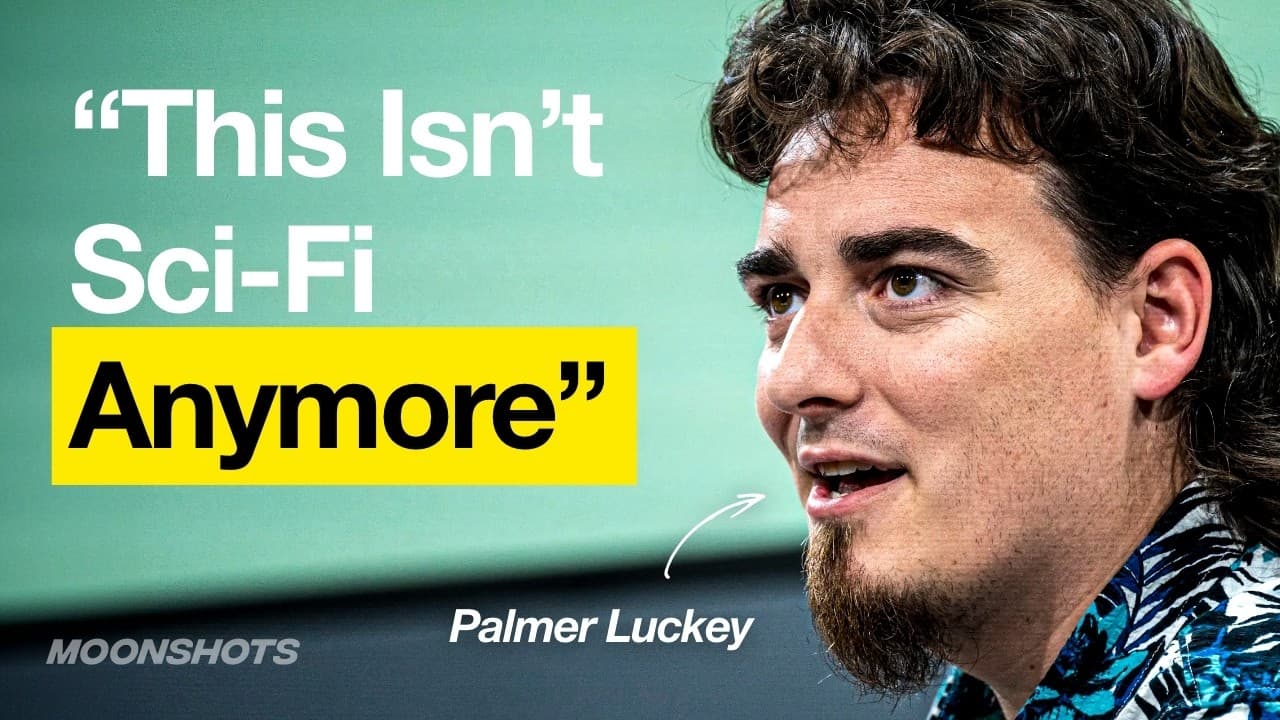
hi my name is Palmer lucky and I build Killer Robots Palmer Lucky Tech Prodigy and defense disruptor shaping the future of AI and Military Tech you must have a thousand different ideas what's your Calculus for filtering these we don't have time for business as usual we don't have money for business as usual we have to try something I think you're g... Read More
Key Insights
- Humanoid robots are likely to enter defense through routine equipment operation before direct combat. Luckey expects early machines to have limited physical ability, comparable to an 85-year-old person, but enough mobility to walk around facilities, push buttons, and operate existing staffed systems.
- Existing military platforms can potentially gain robotic operation without being completely redesigned. A humanoid machine could enter an older vehicle, close its door, and use controls originally designed for people, providing a near-term role for limited robots while more capable autonomous systems continue developing.
- Human responsibility for lethal force must not be outsourced to machines. Luckey argues that decisions to kill should remain morally weighty for people, indicating that greater military autonomy should not eliminate human accountability for violence or its consequences.
- Military exoskeletons face a difficult engineering tradeoff because they combine superhuman machinery with a vulnerable human body. Luckey believes remotely piloted or autonomous robots are more likely to handle demanding military work, while exoskeletons may be better suited to consumer and civilian mobility assistance.
- Oculus started from personal enthusiasm for gaming rather than a formal plan to maximize global impact. Luckey asked what would follow conventional games and concluded that virtual reality represented the final step, then persuaded investors to finance what initially felt like his full-time hobby.
- The Oculus sale was driven by research funding as well as acquisition value. Luckey says Mark Zuckerberg promised at least $1 billion per year for 10 years of virtual reality research, while the eventual investment reached $60 billion and Facebook later changed its name to Meta.
- Anduril's stated mission is to revolutionize defense while saving taxpayers hundreds of billions of dollars by building a company that makes tens of billions. The company specializes in autonomous systems and artificial intelligence and had secured substantial defense contracts by 2025, according to the description.
- Founders Fund was the only fund participating in Anduril's first financing round. Luckey valued its earlier $1 million institutional investment in Oculus and its continued willingness to engage with him after his departure from Facebook, when many other people stopped answering his messages.
Install to Summarize YouTube Videos and Get Transcripts
Explore YouTube Video Summarizer or Get YouTube Transcript Extractor
Questions & Answers
Q: How could humanoid robots first be used in defense?
Humanoid robots could first perform routine operational work rather than act as robotic special forces. Palmer Luckey describes limited machines that can walk slowly through staffed facilities, push buttons, and operate systems such as surface-to-air missile defenses or missile silos. Their humanlike form could also let them enter existing vehicles and use controls designed for people without requiring every platform to be rebuilt immediately.
Q: Why might militaries use humanoid robots with existing equipment?
Humanoid robots could operate equipment and vehicles that were originally designed around the human body. Luckey suggests that a robot might walk into an older platform, close the door, and use its existing controls. This approach could provide a near-term application for limited robotic systems because it would reduce the need to automate or redesign every legacy platform before introducing robotic operation.
Q: Will humanoid military robots initially serve as combat troops?
Luckey does not expect the first defense humanoids to serve as robotic special forces that enter buildings and fight. He predicts much more modest physical capability, comparable to an 85-year-old person, with enough movement to perform repetitive tasks and operate existing systems. These early roles would address jobs where human personnel currently spend long periods monitoring equipment or pushing controls.
Q: Why does Palmer Luckey oppose giving machines responsibility for killing?
Luckey argues that people must avoid outsourcing responsibility for violence to machines or robotics. If lethal force is used, he believes the decision and its moral burden must remain with humans. His position distinguishes using artificial intelligence and autonomous systems for defense tasks from allowing machines to remove human accountability for killing or distance people entirely from the consequences of violence.
Q: Why are autonomous robots more practical than military exoskeletons?
Luckey says an exoskeleton must perform demanding mechanical work while wrapping powerful machinery around a human body, making the system harder and potentially more dangerous to build. A remotely piloted or autonomous robot does not need to protect a person inside the machine. He therefore expects fully robotic systems to become more practical for military jobs that require superhuman physical performance.
Q: Where could exoskeleton technology be used instead of combat?
Luckey expects exoskeletons to have stronger prospects in consumer and civilian applications than in military operations. The discussion identifies mobility assistance as one example, including systems for children who need help walking and elderly adults. These applications use the technology to support human movement rather than combining a person with a machine intended to perform dangerous, superhuman military tasks.
Q: Why did Palmer Luckey agree to sell Oculus to Facebook?
Luckey says the decisive factor was not simply the difference between a $1 billion offer and the later $2.2 billion offer. Mark Zuckerberg committed to investing at least $1 billion per year in virtual reality research for 10 years. Luckey calculated that independently raising comparable research funding would require major revenue, repeated financing rounds, dilution, and reduced control, making Facebook's commitment compelling.
Q: What is Anduril's mission in the defense industry?
Luckey defines Anduril's mission as revolutionizing defense and saving taxpayers hundreds of billions of dollars while building a company capable of making tens of billions. The description identifies its technical focus as autonomous systems and artificial intelligence for military applications. Luckey also presents the company as a response to slow, expensive business-as-usual approaches that he believes defense development can no longer afford.
Summary & Key Takeaways
-
Palmer Luckey expects early military humanoid robots to perform routine physical tasks rather than fight like robotic special forces. Limited machines could walk through existing facilities, push buttons, operate staffed missile systems, or enter older vehicles, allowing defense organizations to use current platforms without immediately redesigning every system for autonomy.
-
Luckey argues that military exoskeletons are less practical than remotely piloted or autonomous robots. A machine designed for superhuman performance becomes harder and more dangerous to build when it must wrap around a human body. He expects exoskeletons to find stronger uses in civilian assistance, including helping children and elderly adults walk.
-
Oculus began as Luckey's passion-driven attempt to advance gaming toward virtual reality. He accepted Facebook's offer after Mark Zuckerberg committed at least $1 billion annually to VR research for 10 years. After leaving Facebook, Luckey founded Anduril to revolutionize defense, reduce taxpayer costs, build autonomous systems, and prove he was not a one-hit entrepreneur.
Read in Other Languages (beta)
Share This Summary 📚
Summarize YouTube Videos and Get Video Transcripts with 1-Click
Try YouTube Summary with ChatGPT & Claude or YouTube Transcript Generator
Explore More Summaries from Peter H. Diamandis 📚



Summarize YouTube Videos and Get Video Transcripts with 1-Click
Try YouTube Summary with ChatGPT & Claude or YouTube Transcript Generator