What Hitler’s Rise Teaches About Human Nature
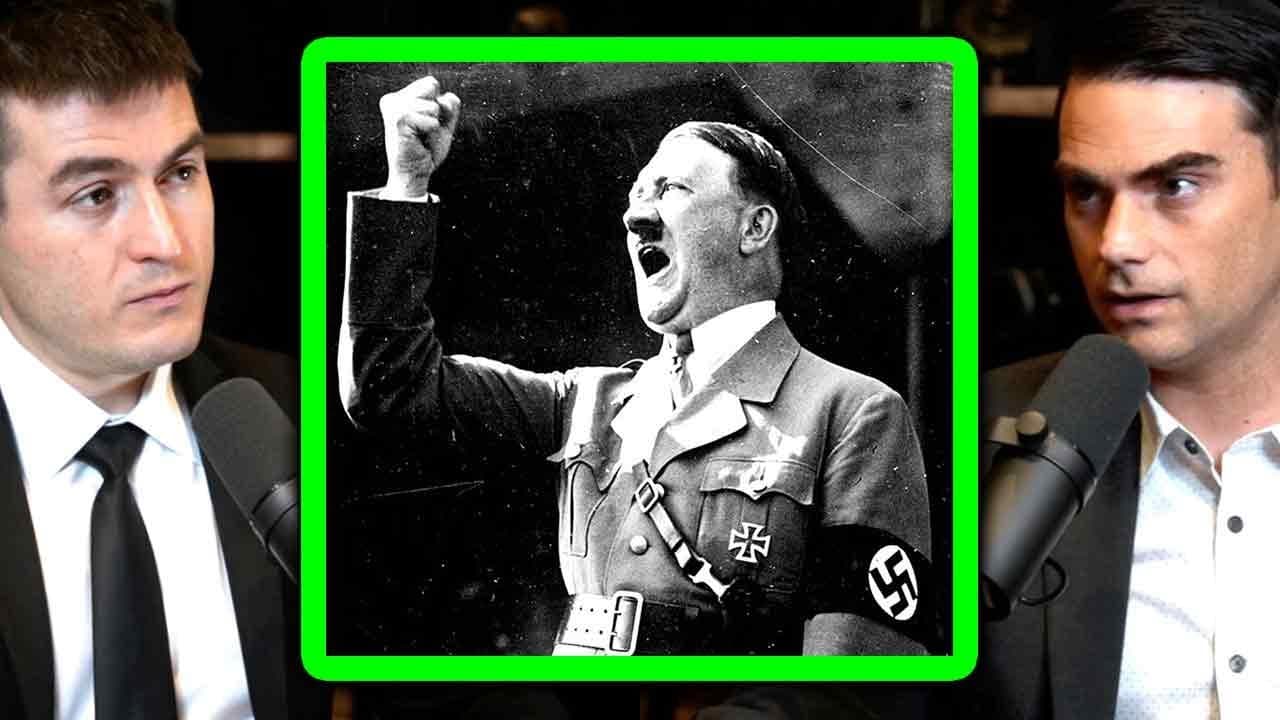
TL;DR
Hitler's ascent in Nazi Germany highlights the dangers of centralized power and radical political ideologies. The conflict between Communists and Nazis showcases how precarious democracy can be and serves as a reminder that evil exists within every individual, necessitating constant self-reflection and caution in political choices.
Transcript
what is the fact that Hitler took power teaching about human nature when you look back at the history of the 20th century what what do you learn from that time I mean there are a bunch of lessons to Hitler taking power the the first thing I think people ought to recognize about Hitler taking power is that the power had been centralized in the gover... Read More
Key Insights
- 😮 The concentration of power in the government before Hitler's rise allowed for an easy transition into dictatorship.
- 🥺 The struggle between extreme political ideologies, such as Communism and Nazism, can lead to radical sentiment and pave the way for dangerous leaders.
- 😈 Individuals who support evil or radical leaders often justify their actions by believing their cause is a lesser evil compared to the alternatives.
- 🥰 The history of Nazi Germany reminds us that evil can exist in any individual's heart, and it is crucial to remain cautious and self-reflective in political decision-making.
- 😈 Recognizing the potential for evil in oneself is necessary for avoiding participation in or support for atrocities.
- 🙃 Switching sides in history requires immense mental strength and is a rarity among individuals.
- 🥹 The importance of holding heterodox opinions and being willing to admit mistakes.
- 🎙️ More videos with Ben Shapiro:
Install to Summarize YouTube Videos and Get Transcripts
Explore YouTube Video Summarizer or Get YouTube Transcript Extractor
Questions & Answers
Q: How did Hitler come to power in Germany?
Hitler was elected as Chancellor after the collapse of the Weimar Republic, which had already centralized power and paved the way for his rise.
Q: Were the Communists a threat to take power in Germany as well?
Yes, the Communists were a serious force in pre-Nazi Germany, but their actions were not as extreme as the atrocities committed by the Communists in Soviet Russia.
Q: How does the history of Nazi Germany teach us about the breakdown of a democracy into fascism?
The collapse of the Weimar Republic and the rise of Hitler highlight the dangers of radical sentiment and how a democracy can be led into complete fascism and eventually genocide.
Q: What role did Franz von Papen play in Hitler's rise to power?
Franz von Papen, the second-to-last Chancellor before Hitler, initially supported Hitler, believing he could be used to prevent the Communists from taking power. However, Hitler later turned against Papen and his friends.
Summary & Key Takeaways
-
The power in Germany had already been centralized before Hitler took it, with the collapse of the Weimar Republic and the power being held by the Chancellor.
-
The struggle between the Reds and the Browns (Communists and Nazis) in pre-Nazi Germany led to radical sentiment and paved the way for Hitler's election.
-
The presence of the Communists in Germany at the time posed a potential threat of atrocity, although not on the same level as the Nazis.
Read in Other Languages (beta)
Share This Summary 📚
Summarize YouTube Videos and Get Video Transcripts with 1-Click
Try YouTube Summary with ChatGPT & Claude or YouTube Transcript Generator
Explore More Summaries from Lex Clips 📚




Summarize YouTube Videos and Get Video Transcripts with 1-Click
Try YouTube Summary with ChatGPT & Claude or YouTube Transcript Generator