How to hide in a live stream like a pro?
TL;DR
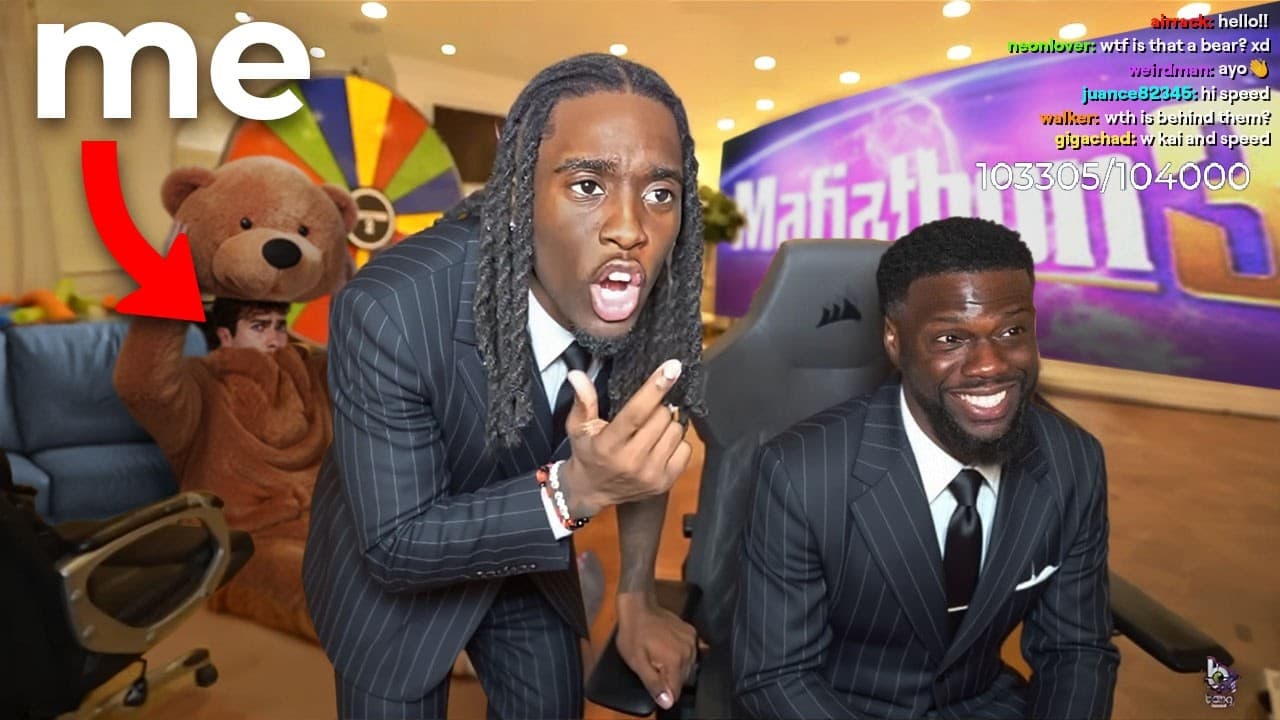
The video shows Airrack disguising as FaZe Banks and Kai to hide in plain sight during giant livestreams. The strategy relies on multiple doppelgangers, real-time chat distractions, and quick disguise changes to avoid detection. It demonstrates phase based planning and viewer interaction to keep the stunt convincing.
Transcript
This is me hiding in the background of Kaisenat's live stream. Hi, Eric. Along with some of the biggest streamers in the entire world. You guys know the deal. If Jack calls me out, they get a point. But if I go undetected, I get a point. If I win, all you have to do is subscribe. But if I lose, I will do whatever the top comment of this video says.... Read More
Key Insights
- Airrack uses a phased plan to confuse onlookers and chat by deploying many lookalikes.
- The disguise level extends to personal items and mannerisms to maximize believability.
- Distractions are orchestrated with red herrings and crowd movement to draw attention away from the real concealment.
- Chat reactions determine success, guiding when to switch or reveal.
- Hiding in plain sight requires fast, discreet movements and easily breakable routines.
- The stakes rise with each additional streamer and audience watching.
- The finale leverages a high profile stream to maximize visibility and risk.
- Reactions from participants and viewers provide feedback on the effectiveness of the ruse.
Install to Summarize YouTube Videos and Get Transcripts
Explore YouTube Video Summarizer or Get YouTube Transcript Extractor
Questions & Answers
Q: A real search query question about the video (e.g. 'How to...', 'What is...', 'Why does...', 'When should...'). Question 1
Airrack demonstrates a staged disguise plan organized into phases, using dozens of lookalikes to create the illusion of many people while one person remains hidden. He coordinates with cameramen, uses real time chat checks to judge plausibility, and relies on crowd dynamics to mask his movements across multiple streams and rooms.
Q: Question 2
The disguises extend beyond clothing to facial hair, voice parity, and body language, with attention paid to small details like underwear choices and accessories. This level of replication aims to fool even close observers, and it requires careful observation of the target identities to achieve convincing impersonation.
Q: Question 3
Phase one relies on distraction through decoys and red herrings to pull attention away from the real hiding spot. Phase two attempts a direct impersonation by stepping into a stream or a room that viewers expect to see the real person in, testing whether the crowd notices the fusion of lookalike and original.
Q: Question 4
The strategy hinges on constant monitoring of chat and live reactions, allowing quick pivots if the audience begins to doubt the impostors. This creates a feedback loop where confidence in the disguise dictates whether to continue the ruse or pivot to another hiding location.
Q: Question 5
The video highlights how large scale livestreams create opportunities for creative stunts because the sheer number of viewers increases the chance of misidentification. It also shows how a well-timed reveal can amplify suspense and engagement, turning the moment into a spectacle for the crowd.
Q: Question 6
The narrative follows the protagonist as they juggle multiple streams, ensuring each moment is synchronized with the others. It requires precise timing for appearance, movement, and camera angles so that the overall deception remains seamless across different platforms and audiences.
Q: Question 7
Audience behavior plays a crucial role; their expectations influence how they perceive lookalikes. If viewers are primed to see certain personalities, the disguise gains strength; if not, the deception may crumble, revealing how perception can be easily steered by context and attention.
Q: Question 8
The finale underscores the risk and reward of high visibility stunts, showing that even with elaborate disguises, a single moment of doubt can unravel the plan. It also demonstrates how creators balance entertainment value with the practical challenges of executing such a deception on a live stage.
Summary & Key Takeaways
-
Airrack stages a multi phase disguise plan in a large live party setting, using doppelgangers and distractions to stay unseen. The effort peaks during a FaZe Banks party, testing how crowds and chats react to lookalikes. The finale features Kai Sonat’s stream as a high visibility backdrop.
-
Disguises are meticulously matched to real people, including clothes, facial hair, and even underwear, illustrating the level of detail required for a convincing impersonation. The narrative follows the tension as watchers try to detect the impostor and the protagonist adapts in real time.
-
The video blends staged comedy with crowd psychology, showing how social cues and chat dynamics influence perception. It emphasizes planning, timing, and rapid changes to maintain cover while navigating multiple streams and public figures.
Read in Other Languages (beta)
Share This Summary 📚
Summarize YouTube Videos and Get Video Transcripts with 1-Click
Try YouTube Summary with ChatGPT & Claude or YouTube Transcript Generator
Explore More Summaries from Airrack 📚


Summarize YouTube Videos and Get Video Transcripts with 1-Click
Try YouTube Summary with ChatGPT & Claude or YouTube Transcript Generator