How to Plan a 7-Day Workout for Fat Loss
TL;DR
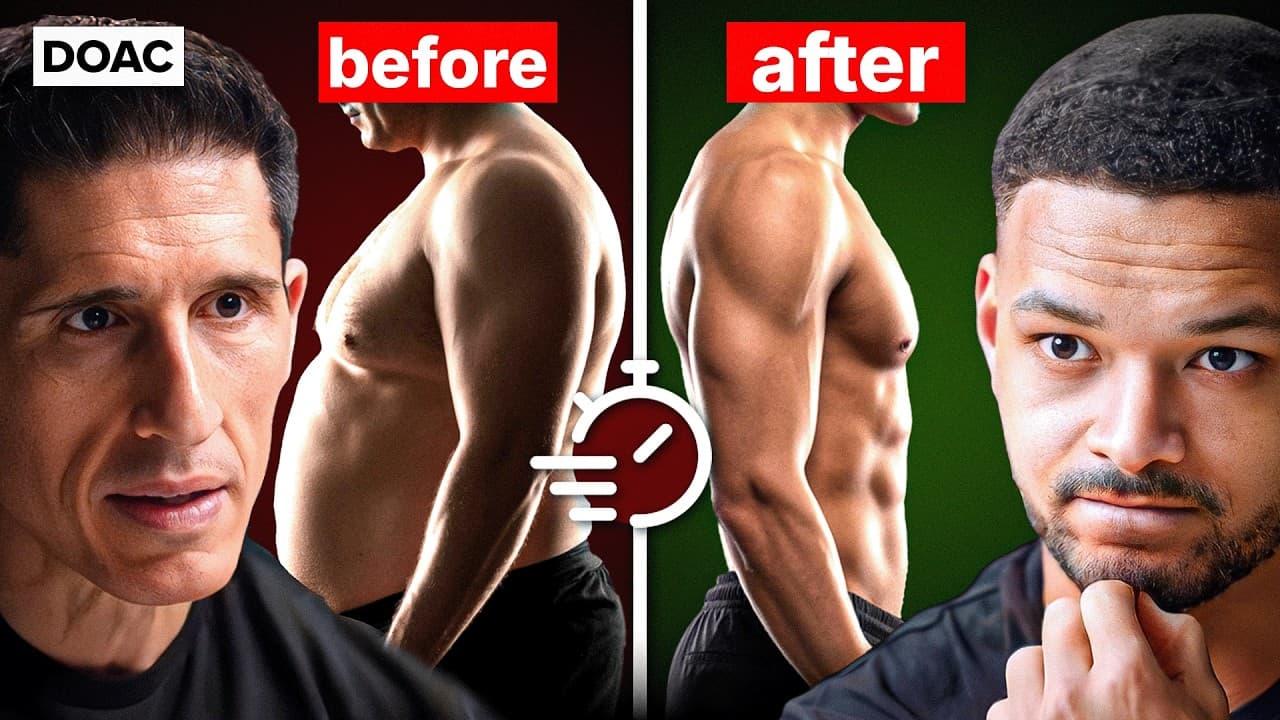
Use separate push, leg, and pull strength sessions, place conditioning between them, and reserve one day for recovery. Saturday can support fat loss with more conditioning or muscle growth with a compound-focused total-body workout, while weekly volume and training frequency should be adjusted according to strength progress and individual recovery.
Transcript
So, what do you do then? If if I were saying to you, I want to have a comprehensive workout and you are designing my 7-day workout plan. What would you give me to do? One of the best ways to train is with an upper lower split or with a push pull leg split. And again, if you were to do a push pull legs, I would I would then have to have you include ... Read More
Key Insights
- A push, pull, and legs split organizes muscles by shared movement functions. Chest, shoulders, and triceps belong together because they push resistance away, while pull exercises such as pull-downs, curls, and rows bring resistance toward the body.
- The proposed weekly structure is push on Monday, conditioning on Tuesday, legs on Wednesday, conditioning on Thursday, and pull on Friday. Saturday is flexible, and Sunday is reserved as a break from full training.
- Leg training is designed to cover the quads, hamstrings, and glutes in one workout. Combining anterior and posterior lower-body work allows the major leg muscles to be trained together before another recovery or conditioning day.
- Saturday training depends on the primary goal. Conditioning is favored when fat loss and overall fitness are priorities, while a total-body strength session is useful when gaining strength and building muscle matter more.
- A Saturday total-body workout should emphasize large compound movements that involve many muscles. Because pull training occurs on Friday, Saturday can reduce pulling volume or change from vertical pulls to horizontal rows to shift the focus.
- Weekly volume for a muscle group can fall around 9–16 sets. If chest is trained only once and each exercise uses three sets, approximately three chest exercises place the workout near the lower end of that weekly range.
- Direct arm volume can account for work performed during compound exercises. Bench pressing already trains the triceps, so the push session may need only one direct triceps exercise, such as a lying triceps extension.
- Recovery requirements differ among people and among muscles within the same person. Rising strength and enthusiasm to train a muscle can indicate adequate recovery, creating an opportunity to experiment carefully with more frequent stimulation.
Install to Summarize YouTube Videos and Get Transcripts
Explore YouTube Video Summarizer or Get YouTube Transcript Extractor
Questions & Answers
Q: How should I structure a 7-day workout week?
A suggested week begins with a push workout on Monday, followed by conditioning on Tuesday. Wednesday is a complete leg session, Thursday returns to conditioning, and Friday is a pull workout. Saturday functions as a flexible day for total-body lifting or more conditioning, depending on the goal. Sunday should be a break from full training rather than another demanding workout.
Q: What muscles are trained during a push workout?
A push workout trains muscles that share the function of pushing resistance away from the body. The main groups discussed are the chest, shoulders, and triceps. Bench presses, push-ups, triceps push-downs, lying triceps extensions, and shoulder movements fit this category because their concentric action involves pushing the body or an external weight away.
Q: What should a complete leg workout include?
A complete leg workout should address both the anterior and posterior portions of the lower body. In the proposed Wednesday session, that means training the quads, hamstrings, and glutes together. This structure covers the major lower-body muscle groups within one workout and leaves Thursday available for conditioning rather than another weight-training session.
Q: When should cardio be added to a weekly strength plan?
Conditioning can be scheduled on Tuesday and Thursday, between the primary push, leg, and pull workouts. It may also be performed after strength work, but the priority activity should come first because the activity performed second may suffer. If building muscle is the main goal, lift first. If fat loss and conditioning are emphasized, Saturday can also be used for conditioning.
Q: Should Saturday be a workout or recovery day?
Saturday is presented as a flexible day rather than a fixed requirement. For someone prioritizing strength and muscle growth, it can hold a total-body workout built around large compound movements. For someone focused more heavily on fat loss and overall conditioning, it can become another conditioning day. The choice should reflect the person's goal and ability to recover.
Q: How can I train total body after a Friday pull workout?
A Saturday total-body session can still follow Friday's pull workout if pulling stress is reduced or redirected. The workout should use large compound exercises that involve many muscles, but it should avoid simply repeating the prior session. For example, after Friday's vertical pulling exercises, Saturday can place more emphasis on horizontal pulling movements such as seated or bent-over rows.
Q: How many weekly sets should I do for each muscle group?
The discussion suggests roughly 9–16 sets across the week for a muscle group. If chest receives only one dedicated workout and each exercise contains three sets, about three chest exercises would reach approximately nine sets. If another chest movement appears in Saturday's total-body session, Monday does not need to contain all of the week's chest volume.
Q: How do I know whether a muscle has recovered enough to train again?
Recovery varies between people and can also differ from one muscle group to another within the same person. Useful signs include increasing the weights used, gaining strength on the lift, and feeling excited or ready to train that muscle. When those signs are present, a person can experiment with training the muscle more frequently while continuing to monitor progress and recovery.
Summary & Key Takeaways
-
A practical weekly split places push training on Monday, conditioning on Tuesday, legs on Wednesday, conditioning on Thursday, and pull training on Friday. Saturday serves as a flexible day for either total-body strength work or additional conditioning, while Sunday provides a genuine break from full training to support recovery.
-
Push training groups the chest, shoulders, and triceps because they share the function of moving resistance away from the body. Pull training includes movements that bring resistance toward the body. Leg training covers the quads, hamstrings, and glutes, allowing the major lower-body areas to be addressed together in one session.
-
Training volume, frequency, and exercise selection should reflect recovery and personal goals. A muscle group may receive roughly 9–16 weekly sets, with indirect work counted when relevant. Increasing strength and feeling ready to train can indicate adequate recovery, while Saturday training can add frequency without simply repeating Friday's pull session.
Read in Other Languages (beta)
Share This Summary 📚
Summarize YouTube Videos and Get Video Transcripts with 1-Click
Try YouTube Summary with ChatGPT & Claude or YouTube Transcript Generator
Explore More Summaries from The Diary Of A CEO Clips 📚





Summarize YouTube Videos and Get Video Transcripts with 1-Click
Try YouTube Summary with ChatGPT & Claude or YouTube Transcript Generator