How to automate content creation at scale for YouTube
TL;DR
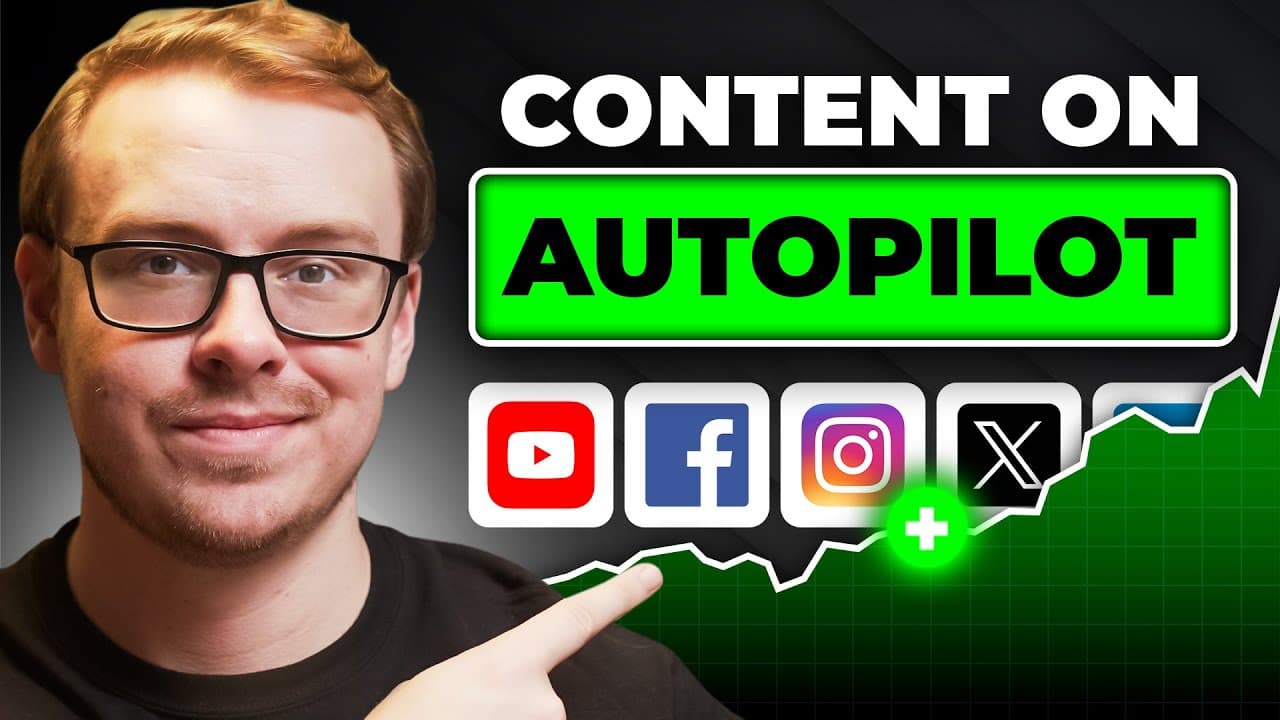
Automating content creation is possible by using a mother platform like YouTube, turning long videos into written content, and distributing across platforms. Build a repeatable system: decide the mother platform, transcribe and extract best parts, repurpose into posts, and create short clips with automation tools while outsourcing where needed.
Transcript
What if I told you that you could automate 99% of content creation, you can actually make it better than what you're making it right now and it would still be your authentic voice. Sounds too good to be true, right? Well, I'm living proof that it works. I only have to work one hour a week on my channel and I make hundreds of thousands of dollars ev... Read More
Key Insights
- The mother platform concept designates YouTube as the core hub around which all other content is organized and repurposed, enabling efficient cross platform distribution.
- The workflow starts with a long YouTube video, then generates a transcript which is mined for the best parts, forming the basis for written posts, emails, and social content.
- Reposting the core content to platforms like X, LinkedIn, and Facebook is essential; longer videos may need segmentation to fit platform limits while maintaining message integrity.
- Short form clip creation is critical for reach; automated tools like Opus can identify clipable moments and generate posts for multiple platforms.
- A well designed system defines what steps are automated, what is AI assisted, and what requires human oversight, allowing the creator to scale without sacrificing quality.
- The only indispensable step is recording the original YouTube video, with others potentially outsourced to maintain ongoing channel activity.
- Authenticity is preserved by using bullet point outlines and conversational delivery, rather than word for word scripts, while still enabling scripted teleprompters if desired.
- The process is feedback driven: successful pieces inform future video ideas and content formats, creating a self reinforcing loop for growth and monetization.
Install to Summarize YouTube Videos and Get Transcripts
Explore YouTube Video Summarizer or Get YouTube Transcript Extractor
Questions & Answers
Q: A real search query question about the video (e.g. 'How to...', 'What is...', 'Why does...', 'When should...'). Question 1
How can I start automating content creation using YouTube as the central hub and still keep my authentic voice? The answer is to begin with a single mother platform, YouTube, and produce long form videos that capture your ideas in a natural, conversational style. After recording, obtain a transcript, either via a transcript feature or an AI tool, and pull out the strongest moments. These moments become the material for written posts, emails, and social media captions. By creating a repeatable process that links recording, transcription, and repurposing, you build a scalable system that maintains authenticity while reducing manual workload. This approach also supports creation of short clips for multiple platforms, which can boost reach and engagement without compromising your core message.
Q: Question 2
What is the role of transcription in this automation system and how should you use it effectively? Transcription converts spoken content into text that can be analyzed for valuable sections. By extracting the best parts, you create material that can be repurposed into newsletters, social posts, and LinkedIn articles. The transcription step serves as a bridge between long form video and written or micro content, enabling a feedback loop where audience interest guides future video topics and formats. Properly formatting and editing the transcript ensures readability and utility across platforms.
Q: Question 3
How does posting the same content across multiple platforms multiply reach and engagement? Reposting leverages each platform’s native format preferences and audience behavior. Long videos can be segmented to fit platform limits, while the core message remains intact. Short clips reach new viewers on platforms like Instagram, TikTok, and YouTube Shorts, increasing exposure without creating entirely new content from scratch. The strategy relies on repurposing, not duplicating, and on tailoring the message to each platform’s strengths while preserving the original voice.
Q: Question 4
What is the purpose of creating short form clips and how should you manage them? Short form clips are designed to capture attention quickly and drive traffic back to the main content. They should highlight compelling moments, tips, or demonstrations from the long video. If you cannot hire a clipper, tools like Opus can automate clip selection, saving time and cost. Use these clips across social networks to test what resonates with audiences, then refine longer videos based on performance data to maximize impact.
Q: Question 5
How do you build a system that runs while you sleep and scales over time? Build a documented process with clear ownership for each step: recording, transcription, extraction of best parts, writing posts, and posting. Determine which steps can be automated with AI and which require human review. Outsource roles where feasible, such as clip creation or editing, to reduce hands on time. Regularly review performance metrics to adjust content formats and topics, ensuring growth continues without micromanagement.
Q: Question 6
What authenticity techniques help content sound like the creator while using automation? Use bullet point outlines and natural talking flow instead of reading word for word. A teleprompter can be used for scripted sections, but the core video should feel like a conversation with a friend. Consistency in tone and POV helps preserve authenticity even when parts are generated through AI tools or assembled from transcripts.
Q: Question 7
What is the writer’s secret weapon and how does it improve content quality? The writer’s secret weapon is transforming spoken content into polished written pieces that retain voice and clarity. By extracting best parts and rewriting them for newsletters or social posts, you deliver value in multiple formats without losing the original intent. This approach enables efficient content loops where audience feedback informs future content and formats, improving overall quality and relevance.
Q: Question 8
What should beginners focus on versus scaling strategy for growth? Beginners should focus on creating a solid YouTube video that conveys their core message and records consistently. Once a reliable workflow exists, shift to scaling by automating repetitive steps, repurposing content to other platforms, and collecting feedback to refine topics. Balancing initial learning with a scalable system accelerates growth without sacrificing authenticity or audience trust.
Summary & Key Takeaways
-
A central hub approach uses YouTube as the mother platform and leverages transcriptions to generate written content, social posts, and newsletters, creating a scalable content engine.
-
A strong system links recording, transcription, content extraction, and cross platform posting, enabling sleep mode content generation and consistent publishing without losing authentic voice.
-
The strategy emphasizes authentic educational content, remixing long videos into short clips, and using AI tools to automate steps while preserving human oversight for quality and relevance.
Read in Other Languages (beta)
Share This Summary 📚
Summarize YouTube Videos and Get Video Transcripts with 1-Click
Try YouTube Summary with ChatGPT & Claude or YouTube Transcript Generator
Explore More Summaries from Shane Hummus 📚

Summarize YouTube Videos and Get Video Transcripts with 1-Click
Try YouTube Summary with ChatGPT & Claude or YouTube Transcript Generator