How to Build Sustainable Habits with Small Changes
TL;DR
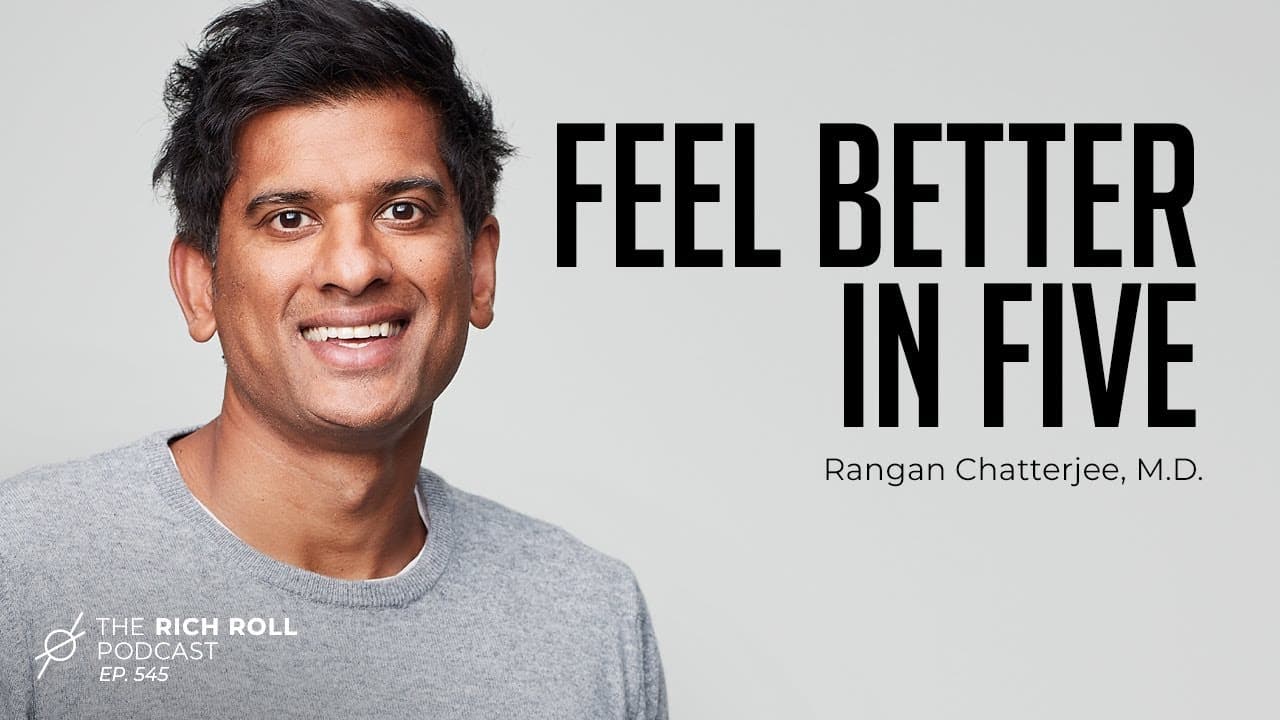
Lasting lifestyle change comes from adopting small, simple, digestible habits rather than dramatic overhauls, an approach Dr. Rangan Chatterjee details in his book 'Feel Better In 5.' The conversation also weighs the acute versus chronic health consequences of the pandemic, warning that isolation, lost human touch, and reduced connection carry mental-health costs that are harder to measure than daily case counts.
Transcript
hey everybody welcome to the podcast my name is rich roll i am your host and today returning for his third appearance on the show is my friend dr rangan chatterjee rangan is one of the uk's most high profile pioneers in functional integrative medicine he's also a fellow swim run fanatic and this is a really fun conversation beyond his medical pract... Read More
Key Insights
- Sustainable lifestyle change is built by adopting small, simple, and very digestible habits rather than large, dramatic overhauls, which is the central premise of Dr. Rangan Chatterjee's book 'Feel Better In 5.'
- People's reaction to the pandemic is highly individual: asking ten people how they feel about the world can yield five, six, or ten different answers depending on their personal situation and circumstances.
- The pandemic created opposite experiences for different people. Some used it as a chance to re-evaluate their lives and reconnect with family, while others faced financial hardship, job loss, or the death of a loved one.
- The media a person consumes shapes their mental state. Intentionally consuming lots of mainstream media may worsen anxiety or stress, while shutting it off can improve well-being but risks detachment from reality.
- Health problems have both an acute side and a chronic side. Western medicine excels at acute issues like pneumonia but the chronic consequences of lifestyle are harder to see and measure, an analogy that applies directly to the pandemic.
- The chronic consequences of the pandemic, such as isolation, resentment, and strained relationships, are not being factored into decision-making because authorities measure easily quantifiable daily death rates rather than harder-to-measure long-term harm.
- Human touch is critical for the emotional brain, based on Professor Francis McGlone's research. Many people have missed out on the signals received from being touched by another human during lockdown.
- Humans are social beings designed to be together and thrive in community, raising concern that children receiving subconscious messages to be wary of others may suffer developmental impacts three to five years later.
Install to Summarize YouTube Videos and Get Transcripts
Explore YouTube Video Summarizer or Get YouTube Transcript Extractor
Questions & Answers
Q: How can I make habit change easier and more sustainable?
According to Dr. Rangan Chatterjee, sustainable lifestyle change comes from adopting small, very simple, and digestible habits rather than large, dramatic overhauls. This is the primary focus of his book 'Feel Better In 5,' which is built around the idea that forging sustainable change is achieved through small incremental changes. The approach makes new habits easy to start and maintain over time instead of relying on willpower for major transformations.
Q: What is 'Feel Better In 5' about?
'Feel Better In 5' is Dr. Rangan Chatterjee's latest book, released in the United States at the time of this conversation. It is all about adopting small and very simple, digestible habits to forge sustainable lifestyle change. The book emphasizes the power of making small incremental changes rather than attempting dramatic overhauls, offering a practical framework for building better daily habits and improving overall well-being.
Q: Why do people react so differently to the pandemic?
Chatterjee explains that reactions are so individual that talking to ten different people can yield five, six, or even ten different answers about how they feel. The difference depends on each person's situation. For some, the pandemic offered a chance to re-evaluate their lives and reconnect with family, while others faced worry, financial hardship, potential job loss, or losing a family member or close friend to illness.
Q: What is the difference between acute and chronic health consequences?
Chatterjee draws an analogy that health problems have an acute side and a chronic side. Western medicine performs beautifully at acute problems like pneumonia, but the chronic consequences of the lifestyles we lead are harder to see and measure. He applies the same framework to the pandemic: there is an acute consequence and a chronic one, and the chronic side, such as isolation and strained relationships, is not being factored into decision-making.
Q: Why is human touch important for mental health?
Chatterjee references Professor Francis McGlone's research on human touch, noting how important it is for our emotional brain and the signals we receive when touched by another human. During lockdown, many people missed out on this contact. As social beings designed to be together and thrive in community, the lack of face-to-face connection and physical touch contributes to feelings of isolation and mounting mental-health strain.
Q: How is the pandemic affecting children's development?
Chatterjee expresses deep concern about children. He worries that at a very formative part of their lives, children are receiving a subconscious message that they must be wary of others and cannot get too close. He questions what the impact will be in three, four, or five years' time, given that humans are social beings designed to thrive in community, and fears lasting developmental harm from reduced connection.
Q: What mental health effects is the pandemic causing?
Chatterjee reports that anxiety, stress-related problems, and suicides are all going up, and that the mental-health consequences are huge with impacts yet to be fully seen. He has heard tragic stories not only from patients but within his friend and family networks, related not to the virus itself but to how people are now living. Loneliness, resentment, and strained relationships are building as face-to-face connection disappears.
Q: How does media consumption affect well-being during the pandemic?
Chatterjee suggests that the media a person consumes plays a significant role in their mental state. If you intentionally consume lots of mainstream media, you may struggle with anxiety or stress about the state of the world. Conversely, if you shut yourself off, you can sometimes feel really good in yourself, but you risk becoming detached from what is actually going on out there, making it a challenging balance to navigate.
Summary & Key Takeaways
-
The episode centers on habit change and the power of small incremental changes, drawing on Dr. Rangan Chatterjee's latest book 'Feel Better In 5,' which advocates adopting small, simple, digestible habits to forge sustainable lifestyle change rather than attempting sweeping transformations.
-
Chatterjee describes how the pandemic has been experienced very individually. For some it offered a chance to reset priorities and reconnect with family, while for others it brought worry, financial hardship, job loss, and the grief of losing loved ones they could not properly mourn.
-
The conversation emphasizes the distinction between acute and chronic consequences. Chatterjee warns that isolation, lost human touch, strained relationships, and rising anxiety and suicide are chronic harms harder to measure than daily death rates, and he voices deep concern about the long-term impact on children.
Read in Other Languages (beta)
Share This Summary 📚
Summarize YouTube Videos and Get Video Transcripts with 1-Click
Try YouTube Summary with ChatGPT & Claude or YouTube Transcript Generator
Explore More Summaries from Rich Roll 📚



Summarize YouTube Videos and Get Video Transcripts with 1-Click
Try YouTube Summary with ChatGPT & Claude or YouTube Transcript Generator