What Causes Wine Legs in a Glass of Wine?
TL;DR
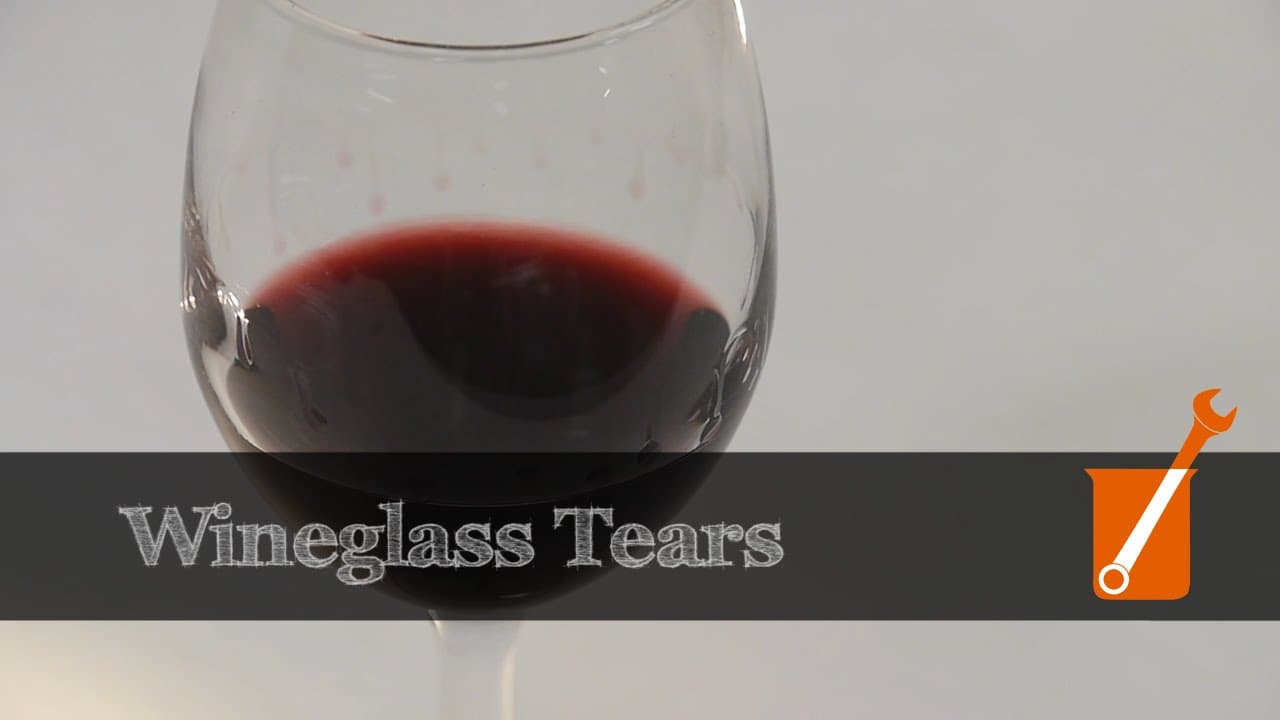
Wine legs, or tears in a glass, are caused by the Marangoni effect, where differences in surface tension between water and ethanol lead to rivulets forming on the glass's inside surface. As ethanol evaporates faster than water, it creates a richer water film that pulls itself upward, resulting in the characteristic falling droplets. Factors like temperature and cleanliness of the glass have a more significant impact on wine leg formation than the wine's alcohol content.
Transcript
you may have heard about or seen for yourself the tears in a wine glass sometimes called the wines legs and if you have a wine glass you can swirl it around to distribute the wine on the inside of the glass and you'll see that the film quickly forms these channels rivulets is the technical term and some people claim that you can tell something abou... Read More
Key Insights
- 🍷 Wine legs in glasses are a result of the Marangoni effect caused by surface tension differences.
- 🚣 The Marangoni effect is demonstrated in various scenarios beyond wine, like soap boat propulsion and convection currents.
- 🥵 Technical applications like heat pipes use the Marangoni effect for efficient heat transfer.
- 🍷 Factors like glass temperature, air temperature, humidity, and glass cleanliness affect wine leg formation more than alcohol content.
Install to Summarize YouTube Videos and Get Transcripts
Explore YouTube Video Summarizer or Get YouTube Transcript Extractor
Questions & Answers
Q: What creates the tears or legs in a wine glass?
The tears in wine glasses are a result of the Marangoni effect, caused by surface tension differences between water and ethanol in the wine during swirling and evaporation.
Q: Can wine legs indicate the alcohol content of the wine?
While there is a kernel of truth to this claim, factors like glass temperature, air temperature, humidity, and glass cleanliness have a more significant impact on wine leg formation than alcohol content.
Q: How is the Marangoni effect demonstrated in non-wine-related situations?
The Marangoni effect is seen in soap boat propulsion, convection currents in water beakers, and even in technical applications like heat pipes using surface tension for fluid movement.
Q: How can the Marangoni effect be utilized in practical applications?
The Marangoni effect can be harnessed in heat pipes by using surface tension to move fluids, providing efficient heat transfer in devices like computers.
Summary & Key Takeaways
-
Wine legs (tears) in a glass are not indicative of wine quality but result from the Marangoni effect.
-
Surface tension and evaporation of water and ethanol in wine create rivulets in wine glasses.
-
The Marangoni effect has technical implications like in heat pipes and soap boat propulsion.
Read in Other Languages (beta)
Share This Summary 📚
Summarize YouTube Videos and Get Video Transcripts with 1-Click
Try YouTube Summary with ChatGPT & Claude or YouTube Transcript Generator
Explore More Summaries from Applied Science 📚

Summarize YouTube Videos and Get Video Transcripts with 1-Click
Try YouTube Summary with ChatGPT & Claude or YouTube Transcript Generator