How to Create Effective Habits That Stick
TL;DR
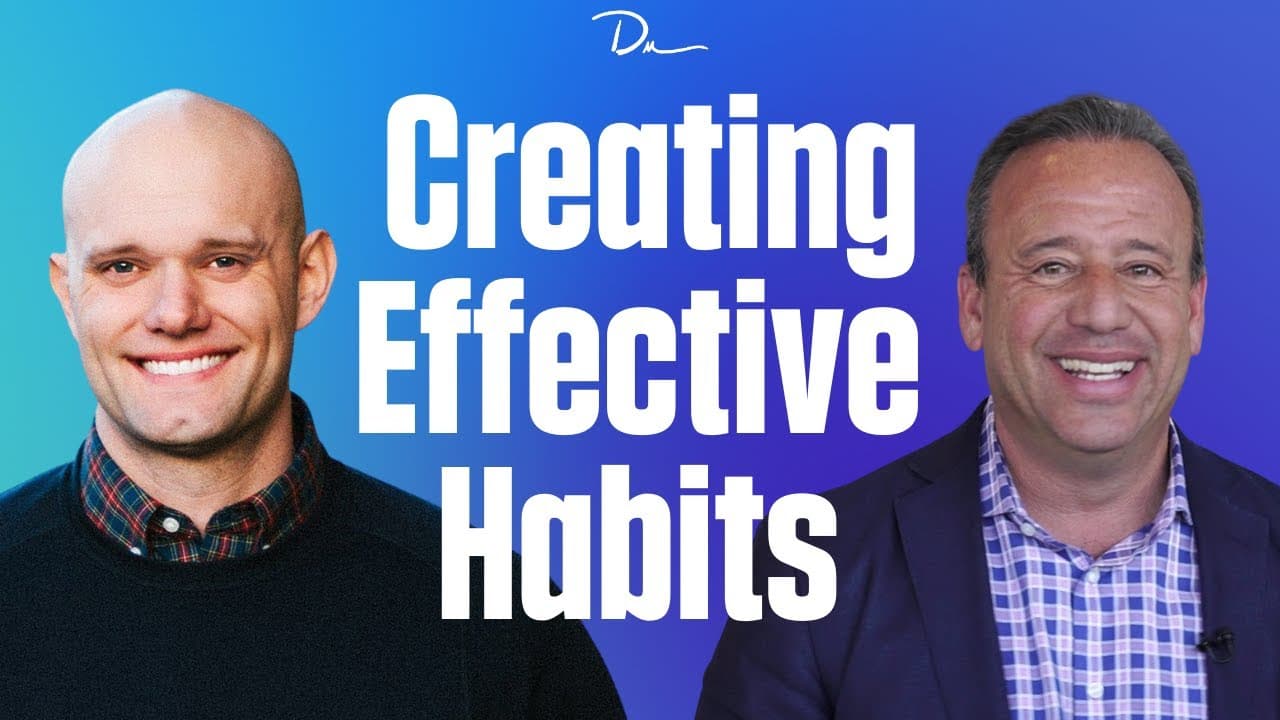
To create effective habits, start with self-awareness and develop clear implementation intentions by specifying when and where you'll perform the new behavior. Consistency is key; each action reinforces your desired identity, casting votes for the person you want to become. Focus on removing obstacles rather than just increasing effort for sustainable change.
Transcript
can you explain to me your philosophy of how a habit is formed from the conscious practice right the repetitive nature of consistency into the subconscious uh whichever way that means to you sure and then even if you believe like i do into a quantum memory of the unconscious competency that you've actually inherited habits that you know maybe from ... Read More
Key Insights
- Habit formation begins with self-awareness, allowing individuals to consciously influence their behavior rather than passively adapting to environmental changes.
- Clarity, not motivation, is the key to successful habit formation. Clear, specific plans increase the likelihood of following through on new habits.
- Behavior change can be approached by removing obstacles rather than increasing effort, similar to straightening a bent hose for better water flow.
- Habits are more about identity than outcomes. Each action taken is a vote for the type of person one wants to become.
- Implementation intentions involve specifying when and where a behavior will occur, enhancing the probability of habit adoption.
- The 'two-minute rule' suggests starting new habits with actions that can be completed in two minutes, making them easier to adopt.
- Habits provide evidence of one's identity, reinforcing the belief in being a particular type of person, such as studious or active.
- Aligning habits with personal identity rather than focusing solely on outcomes can lead to more sustainable and meaningful behavior change.
- More videos with David Meltzer:
Install to Summarize YouTube Videos and Get Transcripts
Explore YouTube Video Summarizer or Get YouTube Transcript Extractor
Questions & Answers
Q: What is the initial step in forming a habit according to James Clear?
The initial step in forming a habit, according to James Clear, is self-awareness. This involves recognizing the behaviors or changes one wants to make and understanding the motivations behind them. Self-awareness allows individuals to consciously influence their actions rather than passively adapting to changes in their environment.
Q: How does James Clear suggest overcoming obstacles in habit formation?
James Clear suggests overcoming obstacles in habit formation by removing them rather than increasing effort. This approach is likened to straightening a bent hose to allow water to flow naturally, rather than cranking up the pressure. By clearing obstacles, habits can form more naturally and with less resistance.
Q: What role does clarity play in habit formation?
Clarity plays a critical role in habit formation by providing a clear and specific plan for when and where a behavior will occur. This specificity increases the likelihood of following through with new habits, as it removes ambiguity and provides a concrete framework for action, making it easier to adopt and maintain new behaviors.
Q: How do habits relate to personal identity according to the discussion?
According to the discussion, habits are closely tied to personal identity. Each action taken is considered a vote for the type of person one wants to become. By aligning habits with identity rather than just focusing on outcomes, individuals reinforce their self-perception and make behavior changes more sustainable and meaningful.
Q: What is the 'two-minute rule' mentioned by James Clear?
The 'two-minute rule' is a strategy suggested by James Clear to make habit formation easier. It involves starting new habits with actions that can be completed in two minutes or less. This approach lowers the barrier to entry, making it easier to begin and maintain new habits by reducing initial resistance and effort.
Q: Why does James Clear emphasize the importance of implementation intentions?
James Clear emphasizes the importance of implementation intentions because they involve specifying the exact time and place a behavior will occur. This specificity increases the likelihood of habit adoption by providing a clear plan, reducing ambiguity, and creating a structured approach to behavior change, making it easier to follow through.
Q: How can habits provide evidence of one's identity?
Habits provide evidence of one's identity by reinforcing the belief in being a particular type of person. For example, consistently studying or exercising casts votes for being studious or active. Over time, these repeated actions build evidence that supports one's self-perception and identity, making behavior change more enduring.
Q: What is the main reason habits matter according to James Clear?
According to James Clear, the main reason habits matter is that they reshape one's sense of self. While habits can lead to desired outcomes, their true value lies in providing evidence of the type of person one believes they are, thus reinforcing identity and making behavior change more meaningful and sustainable.
Summary & Key Takeaways
-
James Clear emphasizes the importance of self-awareness in habit formation, highlighting how deliberate practice and clear intentions can lead to successful behavior change.
-
Clarity in planning, such as using implementation intentions, can significantly increase the likelihood of adopting new habits by removing obstacles and reducing friction.
-
Habits are crucial for shaping one's identity, with each repeated action serving as a vote for the type of person one aspires to be, rather than just achieving specific outcomes.
Read in Other Languages (beta)
Share This Summary 📚
Summarize YouTube Videos and Get Video Transcripts with 1-Click
Try YouTube Summary with ChatGPT & Claude or YouTube Transcript Generator
Explore More Summaries from David Meltzer 📚

Summarize YouTube Videos and Get Video Transcripts with 1-Click
Try YouTube Summary with ChatGPT & Claude or YouTube Transcript Generator