What Is Lean Six Sigma and Its Benefits?
TL;DR
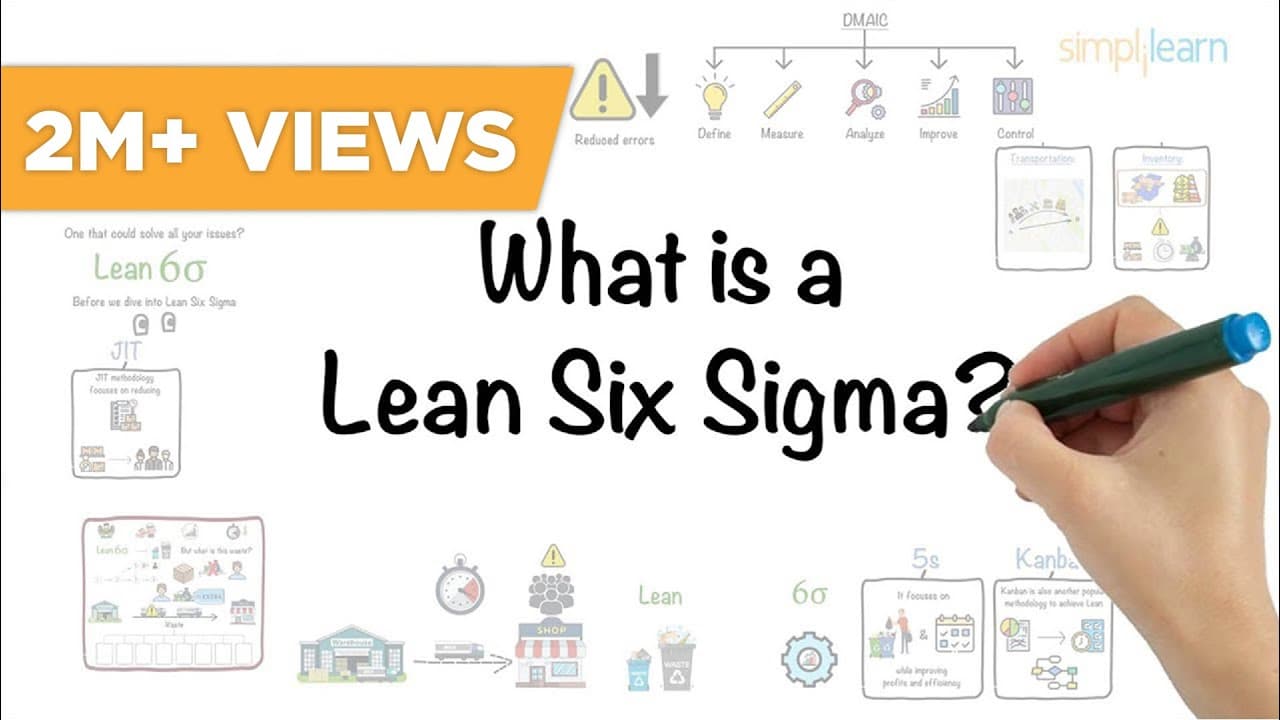
Lean Six Sigma merges Lean's waste reduction with Six Sigma's process improvement to enhance efficiency. It identifies eight types of waste and employs methods like DMAIC for refining processes. By adopting this methodology, businesses can boost profits, standardize operations, and improve customer satisfaction.
Transcript
imagine you're the manager of a supermarket chain you've noticed that two things need your immediate attention the first issue is how to handle the different kinds of waste that you encounter at your supermarket the next one requires you to address the supply chain issues at the supermarket which are causing delays to the morning delivery of milk l... Read More
Key Insights
- Lean Six Sigma combines Lean's waste reduction and Six Sigma's process improvement to address business inefficiencies.
- Lean focuses on eliminating waste, which is any non-value-adding step in a process, categorized into eight types.
- The eight types of waste include transportation, inventory, motion, waiting, over-production, over-processing, defects, and underutilized skills.
- Popular Lean methodologies like JIT, 5S, and Kanban help in optimizing waste management and improving efficiency.
- Six Sigma uses tools like DMAIC (Define, Measure, Analyze, Improve, Control) to enhance process quality and reduce defects.
- DMAIC methodology helps identify and rectify inefficiencies in processes, leading to improved delivery and customer satisfaction.
- Implementing Lean Six Sigma can lead to increased profits, standardized processes, reduced errors, and enhanced employee development.
- Lean Six Sigma provides value to customers by ensuring efficient processes and high-quality products or services.
Install to Summarize YouTube Videos and Get Transcripts
Explore YouTube Video Summarizer or Get YouTube Transcript Extractor
Questions & Answers
Q: What are the main components of Lean Six Sigma?
Lean Six Sigma combines the principles of Lean, which focuses on waste reduction, with Six Sigma, which emphasizes process improvement and defect reduction. The main components include identifying and eliminating non-value-adding processes, enhancing process quality, and using methodologies like DMAIC to achieve these goals.
Q: How does Lean Six Sigma address waste in processes?
Lean Six Sigma addresses waste by identifying non-value-adding steps in processes and categorizing them into eight types: transportation, inventory, motion, waiting, over-production, over-processing, defects, and underutilized skills. By using Lean methodologies, businesses can optimize their processes to reduce these wastes.
Q: What is the DMAIC methodology in Six Sigma?
DMAIC stands for Define, Measure, Analyze, Improve, and Control. It is a structured methodology used in Six Sigma to improve existing processes by identifying inefficiencies, measuring current performance, analyzing root causes, implementing improvements, and controlling the process to sustain gains.
Q: What benefits can businesses gain from implementing Lean Six Sigma?
Businesses implementing Lean Six Sigma can experience increased profits, streamlined and standardized processes, reduced errors, and enhanced employee development. Additionally, it provides value to customers by ensuring efficient processes and high-quality products or services, leading to improved customer satisfaction and retention.
Q: How does Lean Six Sigma improve supply chain efficiency?
Lean Six Sigma improves supply chain efficiency by using tools like DMAIC to identify bottlenecks and inefficiencies. By analyzing and optimizing delivery routes and processes, businesses can reduce delivery times, minimize waste, and improve overall supply chain performance, leading to enhanced customer satisfaction.
Q: What role do methodologies like JIT and Kanban play in Lean?
Methodologies like JIT (Just-In-Time) and Kanban play crucial roles in Lean by optimizing waste management. JIT focuses on reducing production and response times, while Kanban provides a visual method to manage tasks and workflows, helping to identify and address process inefficiencies effectively.
Q: What is considered waste in Lean methodology?
In Lean methodology, waste is any step or action in a process that does not add value to the customer. This can include unnecessary transportation, excess inventory, wasted motion, waiting times, over-production, over-processing, defects, and underutilization of skills, all of which can be minimized for efficiency.
Q: How does Lean Six Sigma enhance customer value?
Lean Six Sigma enhances customer value by ensuring efficient processes that deliver high-quality products or services. By reducing waste and improving process quality, businesses can offer better products at lower costs, leading to increased customer satisfaction and loyalty, thereby providing greater value to customers.
Summary & Key Takeaways
-
Lean Six Sigma is a combined methodology that addresses waste reduction and process improvement by integrating Lean and Six Sigma principles. Lean focuses on eliminating non-value-adding steps, while Six Sigma aims to improve process quality and reduce defects.
-
The eight types of waste identified by Lean include transportation, inventory, motion, waiting, over-production, over-processing, defects, and underutilized skills. Lean methodologies like JIT, 5S, and Kanban help manage these wastes effectively.
-
Six Sigma's DMAIC framework is central to process improvement, involving the phases of Define, Measure, Analyze, Improve, and Control. Implementing Lean Six Sigma can lead to increased profits, standardized processes, and enhanced customer value.
Read in Other Languages (beta)
Share This Summary 📚
Summarize YouTube Videos and Get Video Transcripts with 1-Click
Try YouTube Summary with ChatGPT & Claude or YouTube Transcript Generator
Explore More Summaries from Simplilearn 📚





Summarize YouTube Videos and Get Video Transcripts with 1-Click
Try YouTube Summary with ChatGPT & Claude or YouTube Transcript Generator