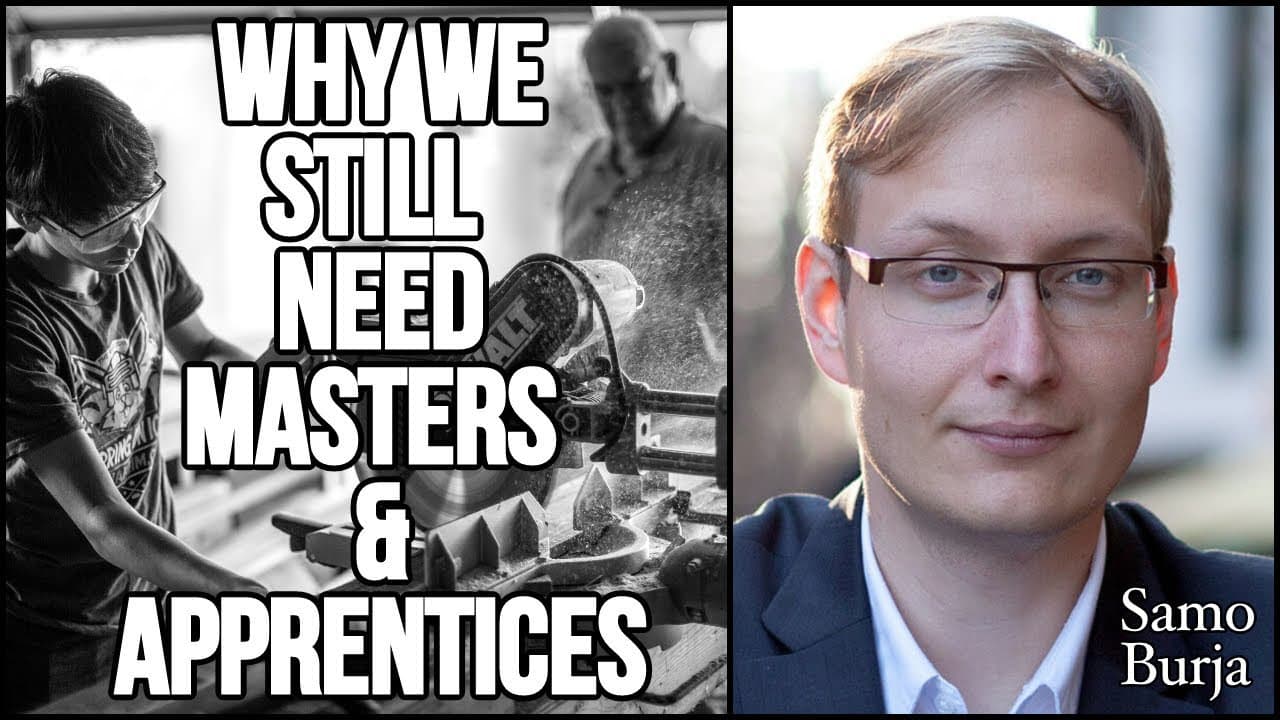
Why We Still Need Masters & Apprentices
TL;DR
We still need masters and apprentices because personal mentorship transfers implicit knowledge that books and classroom instruction can miss. Medieval Scholastic students recorded teachers’ words, refined manuscripts with them, and could spend four or eight years observing how they explained ideas. Samuel Berea argues that this collaborative relationship surpasses the modern university experience; read on to see how it turns teaching into shared knowledge creation.
Transcript
scholastics were the scholars of medieval Europe they would study Latin medicine theology mathematics they were rightfully criticized by first Renaissance and then enlightenment era thinkers today they are all but forgotten but what did they get right in my opinion the key thing they understood was the transfer of implicit knowledge from a senior t... Read More
Key Insights
- 🌍 Scholastics in medieval Europe emphasized mentorship and personalized interaction for knowledge transfer.
- 🧑🎓 Students would write down teachers' words and edit manuscripts to deepen their understanding of concepts.
- 🧑🎓 The Scholastic model highlights the value of collaborative knowledge creation between teacher and student.
- 🧑🎓 Personalized mentorship fosters a deeper connection and understanding between teacher and student.
- 🎓 This approach to education surpasses the modern university experience in terms of individualized learning and knowledge acquisition.
- 🥰 Rediscovering the art of mentorship could lead to a more enriching educational experience.
- ❓ Society could benefit from more apprenticeships and mentorship programs to enhance knowledge transfer.
Install to Summarize YouTube Videos and Get Transcripts
Explore YouTube Video Summarizer or Get YouTube Transcript Extractor
Questions & Answers
Q: Why do we still need masters and apprentices?
Samuel Berea argues that apprenticeship transfers implicit knowledge through sustained personal interaction between a senior teacher and a student. An apprentice can observe gestures, expressions, speech, and the teacher’s reactions to ideas, details that books and classroom instruction may not preserve.
Q: What did the Scholastics of medieval Europe get right?
According to Berea, their key insight was the transfer of implicit knowledge from a senior teacher to an apprentice. Their educational model centered on personal interaction, writing down a teacher’s thoughts, and revising the resulting text together.
Q: How did Scholastic students learn from their teachers?
Students commonly wrote down their teachers’ thoughts and spoken words. They would then return to the teacher, edit the text together, and try to produce a better manuscript.
Q: How were most European books produced in the Scholastic model?
Berea says most European books were written down by students or others through dictation rather than authored directly by the teachers themselves. Students could refine these records with the teacher to ensure that the ideas were understood correctly.
Q: What implicit knowledge can an apprentice gain through direct observation?
An apprentice can notice a teacher’s hand movements, facial expressions, movement through space, pronunciation, and which ideas excite or bore them. The interaction can also help the student judge whether the teacher is speaking literally or metaphorically, using allusion, persuading rhetorically, or laying out facts.
Q: How long might this master-apprentice education continue?
Berea asks listeners to imagine learning this way for four or eight years. During that period, the teacher could critically review every essay or book the apprentice produced to check whether the teacher’s thoughts were understood correctly.
Q: Why does Berea think apprenticeship can surpass the modern university experience?
He describes true education as a personal matter between a teacher and a student who collaboratively create knowledge within the student. Although he does not call apprenticeship the best possible education, he considers it a strong model that surpasses the modern university experience.
Q: What would education need to change to revive mentorship?
Berea argues that people must learn to teach as individuals rather than primarily through classroom environments. Instead of depositing knowledge into books alone, society would need to rediscover mentorship and make greater use of both apprentices and masters.
Summary & Key Takeaways
-
Scholastics in medieval Europe focused on mentorship, transferring implicit knowledge from teacher to apprentice.
-
Students would write down their teachers' words, editing manuscripts to better understand concepts.
-
This personalized education method emphasizes collaboration and knowledge creation, highlighting the importance of mentorship.
Read in Other Languages (beta)
Share This Summary 📚
Summarize YouTube Videos and Get Video Transcripts with 1-Click
Try YouTube Summary with ChatGPT & Claude or YouTube Transcript Generator
Explore More Summaries from Samo Burja 📚



Summarize YouTube Videos and Get Video Transcripts with 1-Click
Try YouTube Summary with ChatGPT & Claude or YouTube Transcript Generator