How Does Open Computer Revolutionize AI Sandboxing?
TL;DR
Open Computer is developing a sandboxing layer for AI agents, focusing on long-running, persistent compute environments. Unlike traditional ephemeral sandboxes, Open Computer aims to provide elasticity and persistence, allowing agents to scale and retain state across sessions. Their approach leverages QEMU hypervisors for flexibility and is open source, encouraging community contributions.
Transcript
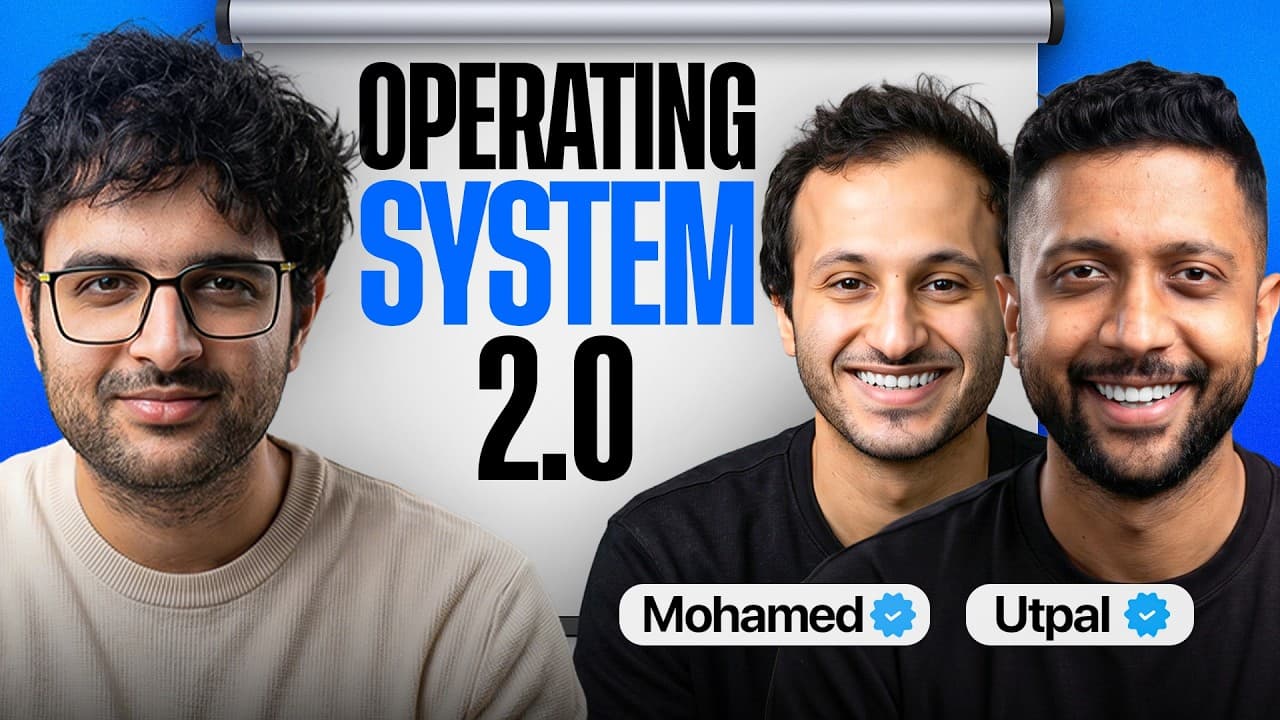
All right, hi everyone. Welcome to a new pod. Today we have Utpal and Muhammad. They're the co-founders of Open Computer. They're trying to build the sandboxing layer for AI agents. You might have seen a bunch of companies around these, you know, around this specific niche pop up. So, we'll talk about how they're trying to grow this market, how thi... Read More
Key Insights
- Open Computer is creating a sandboxing layer for AI agents, focusing on long-term compute needs.
- Unlike traditional sandboxes, Open Computer offers persistent environments that retain state across sessions.
- The platform uses QEMU hypervisors, which allow for flexible resource allocation and migration between VMs.
- Open Computer supports elasticity, enabling dynamic scaling of resources as needed by the agents.
- The founders have a background in infrastructure and developer tools, previously working on Terraform automation.
- Open Computer is open source, encouraging community contributions and self-hosting options.
- Their market strategy includes content marketing and leveraging curiosity from early adopters.
- The company is exploring on-premises deployment to overcome limitations of current cloud providers.
Install to Summarize YouTube Videos and Get Transcripts
Explore YouTube Video Summarizer or Get YouTube Transcript Extractor
Questions & Answers
Q: How does Open Computer differ from traditional sandboxing solutions?
Open Computer differs from traditional sandboxing solutions by focusing on long-running, persistent compute environments rather than ephemeral tasks. Their platform allows AI agents to retain state across sessions and dynamically scale resources. This is achieved through the use of QEMU hypervisors, which provide flexibility in resource allocation and workload migration, making it suitable for evolving AI needs.
Q: What makes Open Computer's sandboxing solution unique?
Open Computer's sandboxing solution is unique because it offers persistent environments that retain state and support elasticity. Unlike traditional sandboxes that are typically ephemeral, Open Computer allows AI agents to run long-term tasks with the ability to scale resources dynamically. This is facilitated by QEMU hypervisors, which enable efficient resource management and workload migration.
Q: Why did Open Computer choose QEMU hypervisors for their platform?
Open Computer chose QEMU hypervisors for their platform because they provide flexibility in resource allocation and support workload migration between VMs. This allows for dynamic scaling and persistence of AI agent environments, which are essential for long-running tasks. QEMU's capabilities align with Open Computer's goal of creating a robust and efficient sandboxing solution for AI workloads.
Q: What are the main use cases for Open Computer's sandboxing platform?
The main use cases for Open Computer's sandboxing platform include long-running AI tasks that require persistent environments and dynamic resource scaling. This includes applications in software factories, internal agents, and long-horizon reinforcement learning tasks. The platform's ability to retain state and scale resources makes it suitable for complex and evolving AI workloads.
Q: How does Open Computer ensure persistence in their sandboxing environments?
Open Computer ensures persistence in their sandboxing environments by allowing AI agents to retain state across sessions. This is achieved through a combination of memory snapshots and disk retention, enabling tasks to resume from where they left off. The platform's use of QEMU hypervisors facilitates this persistence, making it suitable for long-term AI workloads that require consistent state management.
Q: What is the significance of Open Computer being open source?
The significance of Open Computer being open source lies in its encouragement of community contributions and transparency. By being open source, the platform allows developers to explore, modify, and improve the codebase, fostering innovation and collaboration. It also provides self-hosting options, enabling organizations to deploy the solution on their preferred infrastructure and customize it to their specific needs.
Q: How does Open Computer's elasticity feature benefit AI workloads?
Open Computer's elasticity feature benefits AI workloads by allowing dynamic scaling of resources based on demand. This means that AI agents can adjust their compute resources in real-time, optimizing performance and cost-efficiency. The elasticity feature ensures that agents are neither over-provisioned nor under-resourced, providing an ideal environment for complex and variable AI tasks.
Q: What challenges does Open Computer face in the sandboxing market?
Open Computer faces challenges in the sandboxing market due to its competitive nature and the need to differentiate from existing solutions. The company must address the evolving needs of AI agents, which require innovative features like persistence and elasticity. Additionally, Open Computer is exploring on-premises deployment to overcome limitations of current cloud providers, which involves technical and logistical complexities.
Summary & Key Takeaways
-
Open Computer is developing a sandboxing layer for AI agents that supports long-running and persistent compute environments. Unlike traditional ephemeral sandboxes, their platform allows for state retention across sessions and dynamic resource scaling. This approach leverages QEMU hypervisors, providing flexibility and efficiency for AI workloads. The company is open source, inviting community contributions and self-hosting options.
-
The founders of Open Computer have a strong background in infrastructure and developer tools, having previously worked on Terraform automation. Their current focus is on creating a sandboxing solution that addresses the evolving needs of AI agents, which require more persistent and elastic compute resources. Their strategy includes content marketing and engaging with early adopters.
-
Open Computer's approach to sandboxing differs from traditional models by offering persistent environments and elasticity. By using QEMU hypervisors, they enable efficient resource allocation and workload migration. The company is exploring on-premises deployment to address the limitations of existing cloud providers, and they welcome community involvement through their open source model.
Read in Other Languages (beta)
Share This Summary 📚
Summarize YouTube Videos and Get Video Transcripts with 1-Click
Try YouTube Summary with ChatGPT & Claude or YouTube Transcript Generator
Explore More Summaries from 100xDevs 📚

Summarize YouTube Videos and Get Video Transcripts with 1-Click
Try YouTube Summary with ChatGPT & Claude or YouTube Transcript Generator