How Did China Become a Global Economic Power?
TL;DR
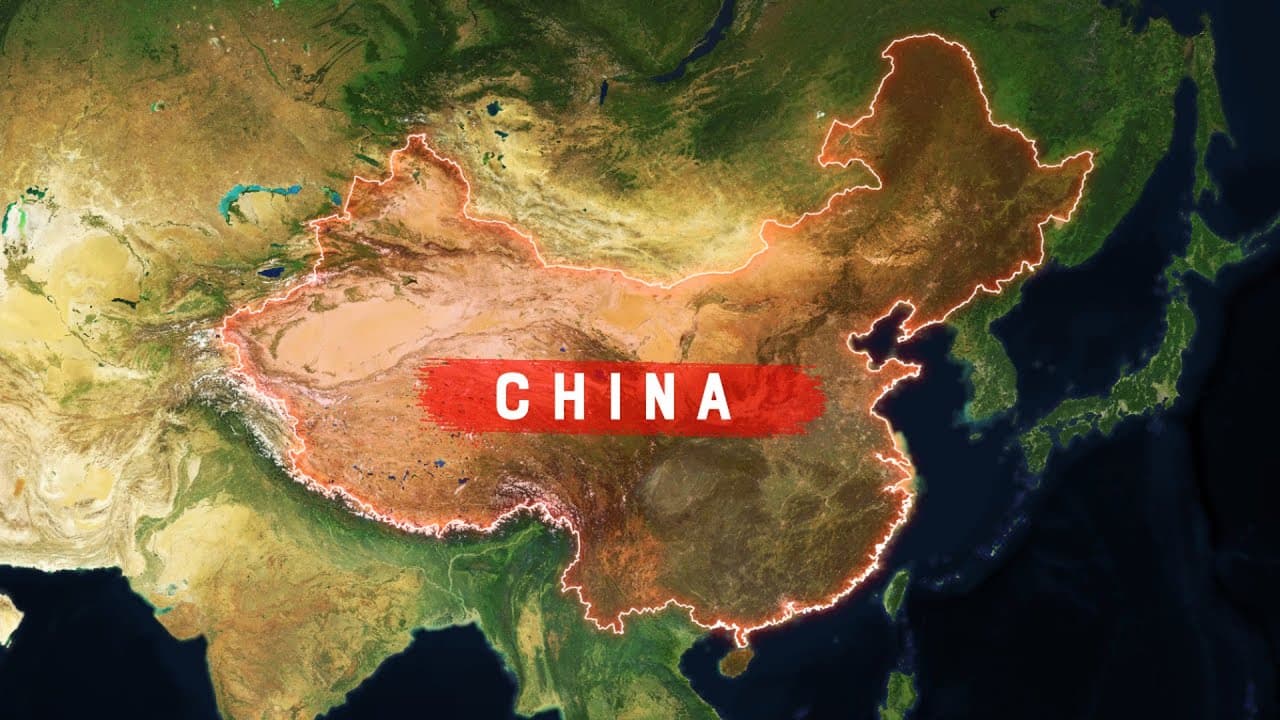
China became an economic power by permitting controlled market activity while preserving one-party rule. Special economic zones attracted foreign investment and cheap-labor manufacturing, turning places such as Shenzhen into enormous cities and making China the world’s second-largest economy, but the same growth model also intensified inequality, displaced Western workers, and increased carbon emissions.
Transcript
(lively electronic music) - Back in the old days, this part of the world used to be the economic superpower of the planet. There were dynasties that discovered everything from the compass, to printing, to making paper, to gunpowder. They would lead huge expeditions around the globe. This was China, the Middle Kingdom, and right next door, India. Th... Read More
Key Insights
- China’s historical power was rooted in its position at the center of the global economy and in dynasties associated with major inventions, including the compass, printing, paper, and gunpowder. That position weakened as industrialization accelerated in Europe and the United States during the 1800s.
- China’s long economic decline followed its failure to industrialize at the same pace as Western powers. Superior Western firepower forced territorial concessions, including land ceded to Britain that became Hong Kong, while Japan’s later invasion further damaged an already weakened economy.
- Mao Zedong’s communist system kept China outside the expanding capitalist order described in the transcript. While postwar capitalism helped rebuild countries such as Germany, France, and Japan, China continued declining and had reached widespread poverty by the 1970s.
- Deng Xiaoping’s central strategy was controlled economic experimentation. He introduced market activity without dismantling China’s one-party political system, describing the resulting approach as socialism with Chinese capitalistic characteristics and initially limiting the experiment to selected locations.
- Shenzhen’s special economic zone demonstrated how foreign investment could transform China. Its proximity to capitalist Hong Kong created a bridge to Western businesses, and the settlement grew from a small fishing community and rice paddies into a city of more than 10 million people.
- China became the world’s factory by expanding special economic zones and attracting foreign companies with cheap labor. This manufacturing role helped China surpass neighboring Asian economies and become the second-largest economy on Earth while contributing to Asia’s growing share of global production.
- The Elephant Graph portrays globalization as producing unequal gains across income groups. China’s emerging middle class and other Asian workers experienced substantial income growth, Western middle-class groups grew more slowly, and the richest 1 percent received the largest gains during the period examined.
- China’s rise carried environmental costs because the economic system prioritized short-term shareholder profits without adequately accounting for planetary effects. The transcript identifies China as the largest national emitter of carbon dioxide and connects industrial growth with ongoing, potentially immense changes in the global climate.
Install to Summarize YouTube Videos and Get Transcripts
Explore YouTube Video Summarizer or Get YouTube Transcript Extractor
Questions & Answers
Q: How did China become a global economic power?
China became a global economic power by combining one-party rule with carefully controlled market reforms. Deng Xiaoping created special economic zones where foreign businesses could invest and use China’s inexpensive labor. As these zones multiplied, China became the world’s factory, developed enormous industrial cities, overtook neighboring Asian economies, and eventually became the second-largest economy on Earth.
Q: Why did China’s global economic position decline in the 1800s?
China declined because the Industrial Revolution advanced much more rapidly in Europe and the United States. Western countries developed machines, factories, transportation, cities, and powerful modern weapons, while China did not industrialize in the same way. Unable to match Western firepower, China accepted territorial concessions, including land transferred to Britain, and its economic standing fell sharply by the mid-1800s.
Q: What role did Mao Zedong play in China’s economic decline?
Mao Zedong established a one-party communist system that resisted the capitalist model spreading through much of the postwar world. According to the transcript, this prevented China from participating in the prosperity experienced by countries including Germany, France, and Japan. China’s economy deteriorated further under Maoist doctrine, and widespread poverty characterized the country by the 1970s.
Q: How did Deng Xiaoping change China’s economy?
Deng Xiaoping abandoned the failed Maoist economic doctrine and began experimenting with a limited form of capitalism. After observing the prosperity of neighboring economies, including Singapore, he allowed foreign investment and free-market activity in designated areas. He introduced these reforms cautiously so economic liberalization would not threaten China’s established one-party political system.
Q: Why was Shenzhen important to China’s economic rise?
Shenzhen served as an early test of Deng Xiaoping’s market reforms. Located across the border from prosperous, British-controlled Hong Kong, it became a special economic zone where foreign companies could invest and operate under more capitalistic conditions. The experiment transformed a small community of several thousand people and rice paddies into a major city of more than 10 million residents.
Q: What does the Elephant Graph show about globalization?
The Elephant Graph compares income growth across global income percentiles during 35 years associated with expanding shareholder capitalism and China’s rise. It shows strong gains for poorer groups and the emerging Asian middle class, weaker growth for much of the Western middle class, and exceptionally large gains for the richest 1 percent. It therefore identifies both winners and losers from globalization.
Q: How did China’s rise affect Western workers?
China’s industrial expansion attracted manufacturing that had previously supported Western blue-collar communities. As companies moved production to China for cheaper labor, some workers in places such as Detroit and the Rust Belt lost their jobs. The transcript’s income graph indicates that Western middle-income groups consequently experienced much slower income growth, with some workers even seeing their incomes decline.
Q: What environmental cost accompanied China’s economic growth?
Rapid industrialization made China the world’s largest national emitter of carbon dioxide, according to the transcript. The broader problem is that shareholder capitalism emphasizes short-term profits while leaving environmental damage outside its central calculations. The description argues that climate change will expose future generations to more extreme and volatile weather and ocean patterns, requiring capitalism to be upgraded rather than discarded.
Summary & Key Takeaways
-
China was once a center of the global economy and produced innovations including paper, printing, gunpowder, and the compass. Its position declined after Western industrialization created superior machines and weapons, foreign powers forced concessions, and Japan later invaded. By the 1970s, Maoist policies had left the country in widespread poverty.
-
Deng Xiaoping reversed course by cautiously experimenting with capitalism without abandoning one-party rule. Inspired partly by Singapore, he established special economic zones where foreign companies could invest and operate. Shenzhen became the leading example, growing from a small settlement near Hong Kong into a city of more than 10 million people.
-
China’s integration into global capitalism created major gains alongside serious costs. Asian workers and the world’s richest people experienced strong income growth, while many Western middle-class workers advanced more slowly or lost manufacturing jobs. China also became the largest national carbon emitter, illustrating how profit-focused growth can neglect environmental consequences.
Read in Other Languages (beta)
Share This Summary 📚
Summarize YouTube Videos and Get Video Transcripts with 1-Click
Try YouTube Summary with ChatGPT & Claude or YouTube Transcript Generator
Explore More Summaries from Johnny Harris 📚





Summarize YouTube Videos and Get Video Transcripts with 1-Click
Try YouTube Summary with ChatGPT & Claude or YouTube Transcript Generator