Are Software Agents Replacing Traditional SaaS?
TL;DR
Software agents are poised to replace traditional SaaS, fundamentally transforming how applications are developed and evaluated. This shift could redefine workforce dynamics, prioritizing the creation and management of agents over conventional job experiences. OpenAI's innovation of super agents further signals a drastic evolution in the tech landscape, as AI capabilities expand beyond existing frameworks.
Transcript
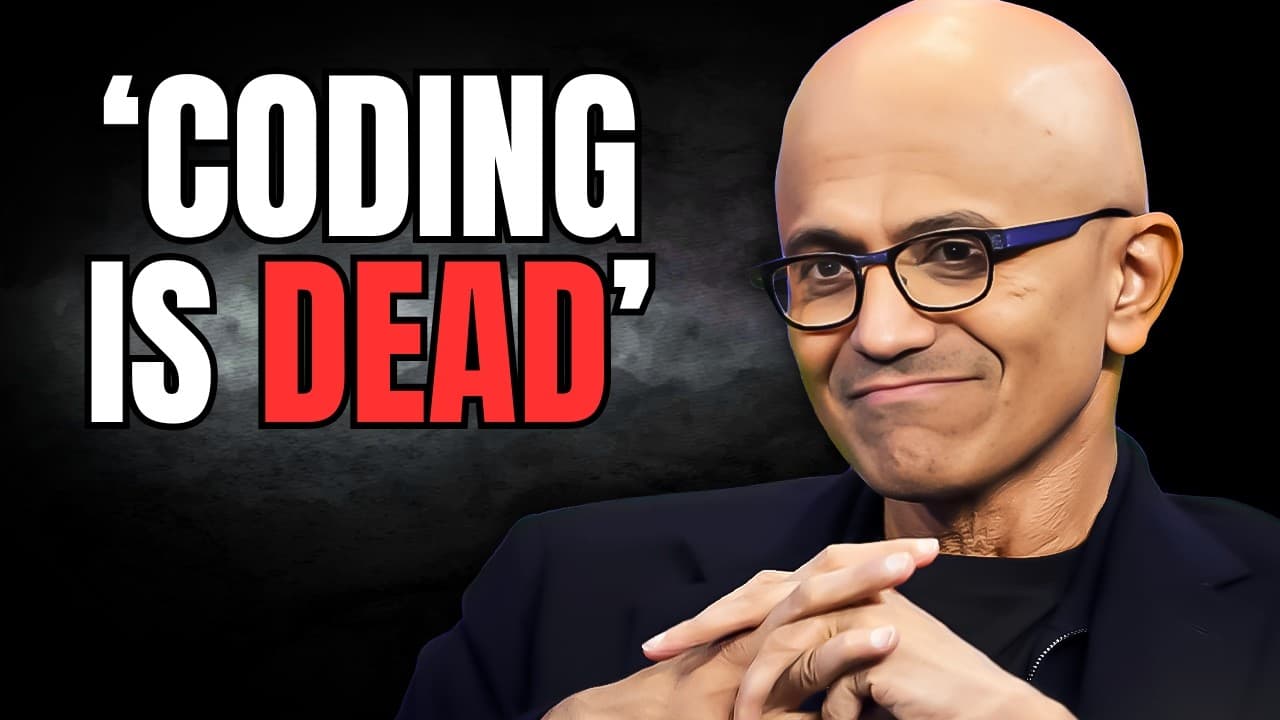
Satia nadela the CEO of Microsoft gets asked directly the question is SAS dead what does the transition look like from traditional software of service applications to agents on top of databases and he doubles down on it so to me yes SAS is dead or at least it's dying and not only that SAA talks about a future where people are hired based on... Read More
Key Insights
- The CEO of Microsoft, Satya Nadella, suggests a major shift from traditional software to agents, indicating that SaaS may be dying.
- Future hiring practices may focus on the agents and workflows individuals have created rather than traditional resumes.
- Agents are expected to handle business logic, UI creation, and database interactions, leading to a more streamlined software development process.
- The transition to agents represents a significant change in application architecture, similar to past shifts like the introduction of relational databases.
- Agents will not be tied to specific applications or databases, allowing them to function across various platforms and industries.
- OpenAI is working on 'super agents' designed to tackle complex, real-world problems, marking a new era of AI capabilities.
- The onboarding process for agents in organizations could become a significant business opportunity, as agents will require company-specific information to function effectively.
- The role of software engineers is rapidly evolving, with AI and agents increasing productivity and potentially reducing the need for traditional engineering roles.
Install to Summarize YouTube Videos and Get Transcripts
Explore YouTube Video Summarizer or Get YouTube Transcript Extractor
Questions & Answers
Q: What does Satya Nadella say about the future of SaaS?
Satya Nadella suggests that SaaS, as we know it, is dying. He envisions a future where agents replace traditional software applications, handling tasks like business logic and UI creation. This shift represents a fundamental change in how software is developed and used, similar to past technological shifts.
Q: How will hiring practices change in the future according to the video?
Hiring practices are expected to change by focusing on the agents and workflows individuals have created, rather than their past job experiences. This means that future resumes might list the agents and automated workflows a person has developed, showcasing their ability to innovate and automate tasks.
Q: What are 'super agents' and how will they impact the industry?
Super agents, as described by OpenAI, are sophisticated AI tools designed to solve complex, real-world problems. They go beyond responding to single commands, pursuing goals by synthesizing information and delivering solutions. These agents could significantly impact industries by automating complex tasks and potentially replacing mid-level human roles.
Q: How might the transition to agents affect software engineers?
The transition to agents could drastically change the role of software engineers. With AI and agents increasing productivity, there may be less demand for traditional engineering roles. Engineers might need to adapt by learning to develop and manage agents, ensuring they remain valuable in a rapidly evolving tech landscape.
Q: What opportunities could arise from the onboarding process of agents?
The onboarding process for agents could become a significant business opportunity. Agents will need to be provided with company-specific rules, documentation, and data to function effectively. This process, which could take minutes or hours for agents, may require specialized services to ensure seamless integration into organizations.
Q: What analogy is used to describe the future hiring process?
The future hiring process is compared to hiring a data analyst with their spreadsheets. Similarly, individuals will be hired along with their agents and workflows, representing the knowledge and tools they have developed. This analogy highlights the importance of personal innovation and automation in future job markets.
Q: What is the significance of the shift to agents in application architecture?
The shift to agents represents a significant change in application architecture, akin to past shifts like the introduction of relational databases. It moves away from hardcoded UIs and business logic, allowing agents to dynamically handle these aspects, leading to more flexible and efficient software development processes.
Q: How does the video suggest agents will interact with existing software and databases?
Agents are expected to interact with existing software and databases by orchestrating tasks across multiple platforms. They will not be bound to specific applications or databases, allowing them to operate universally. This flexibility enables agents to handle diverse business logic and data interactions, streamlining processes across industries.
Summary & Key Takeaways
-
Microsoft's CEO, Satya Nadella, discusses the future of software, emphasizing a shift from traditional SaaS to agents. This change could redefine how applications are built and how the workforce is evaluated, focusing on agent creation over past job experiences.
-
The role of agents in software development is expanding, with the potential to handle business logic and UI creation. This shift could lead to the decline of traditional SaaS models and a new era of application architecture.
-
OpenAI's development of 'super agents' highlights the growing capabilities of AI. These agents are expected to tackle complex problems and revolutionize industries, impacting the role of software engineers and the overall tech landscape.
Read in Other Languages (beta)
Share This Summary 📚
Summarize YouTube Videos and Get Video Transcripts with 1-Click
Try YouTube Summary with ChatGPT & Claude or YouTube Transcript Generator
Explore More Summaries from Matthew Berman 📚
Summarize YouTube Videos and Get Video Transcripts with 1-Click
Try YouTube Summary with ChatGPT & Claude or YouTube Transcript Generator