How Does the Parasympathetic Nervous System Work?
TL;DR
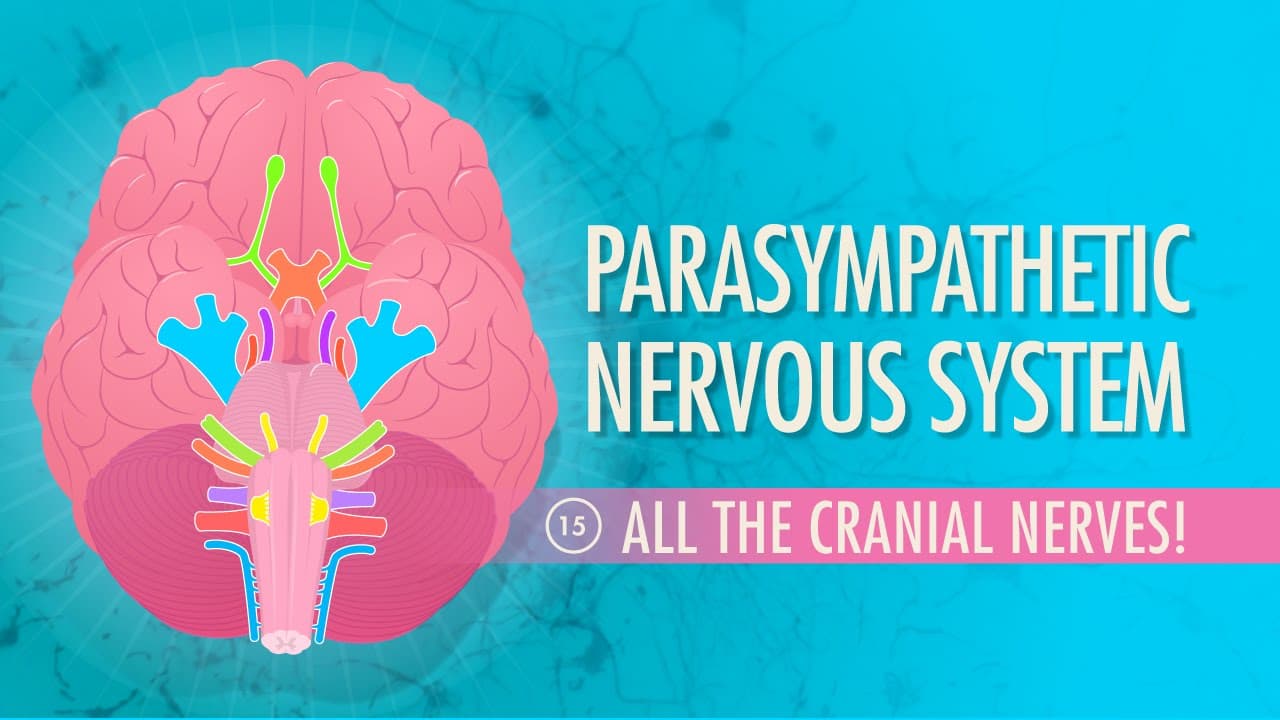
The parasympathetic nervous system regulates bodily functions when at rest, maintaining balance between excitement and inhibition. It controls heart rate, digestion, and other vital processes, opposing the sympathetic system's stress responses. Understanding its structure and functions, including the 12 cranial nerves and the vagus nerve, is essential for comprehending human physiology.
Transcript
Consider your heart for a moment. For the average person -- at rest, like you probably are, sitting there watching me -- the heart beats at around 60 beats per minute. Once a second. Nice and easy. But if you were to somehow disconnect your heart from your autonomic nervous system, things, as you might imagine, would change. But, your heart would n... Read More
Key Insights
- The parasympathetic nervous system regulates bodily functions at rest, promoting balance and homeostasis.
- It counteracts the sympathetic system, calming the body after stress and facilitating digestion, reproduction, and waste excretion.
- Parasympathetic ganglia are located near effectors, unlike sympathetic ganglia near the spinal cord.
- Both sympathetic and parasympathetic systems release acetylcholine in preganglionic synapses, but differ postganglionically.
- The parasympathetic division is craniosacral, with nerves running from the brain to effectors, bypassing the spinal cord.
- The vagus nerve is crucial, connecting the brain to visceral organs and facilitating sensory and motor functions.
- Cranial nerves vary in function, controlling sensory, motor, or both, with mnemonics aiding in memorization.
- Balancing sympathetic and parasympathetic tones is essential for functions like sex, requiring both systems' cooperation.
Install to Summarize YouTube Videos and Get Transcripts
Explore YouTube Video Summarizer or Get YouTube Transcript Extractor
Questions & Answers
Q: How does the parasympathetic nervous system maintain bodily balance?
The parasympathetic nervous system maintains bodily balance by regulating functions when the body is at rest. It counteracts sympathetic system stress responses by slowing heart rate, aiding digestion, and conserving energy. This balance, known as homeostasis, ensures the body functions optimally, allowing processes like digestion and reproduction to occur efficiently.
Q: What are the structural differences between sympathetic and parasympathetic systems?
The sympathetic and parasympathetic systems differ in their ganglia locations and nerve pathways. Sympathetic ganglia are near the spinal cord, while parasympathetic ganglia are close to effectors. Sympathetic nerves originate from the thoracolumbar region, whereas parasympathetic nerves are craniosacral, with most bypassing the spinal cord, running from the brain to effectors.
Q: What role does the vagus nerve play in the parasympathetic system?
The vagus nerve is vital in the parasympathetic system, connecting the brain to visceral organs like the heart, lungs, and stomach. It functions as a two-way communication channel, transmitting sensory information to the brain and motor instructions back to the body, aiding in heart rate regulation, digestion, and stress reduction.
Q: How do cranial nerves function in the parasympathetic system?
Cranial nerves in the parasympathetic system have diverse functions, controlling both voluntary and involuntary actions. They include sensory nerves, motor nerves, and mixed nerves. For example, the olfactory nerve transmits scent information, while the oculomotor nerve controls eye movement. Mnemonics help memorize their names and functions, crucial for understanding human anatomy.
Q: What is the significance of neurotransmitter differences in autonomic systems?
Neurotransmitter differences in autonomic systems are significant for their functions. Both sympathetic and parasympathetic systems release acetylcholine at preganglionic synapses, but differ postganglionically. Parasympathetic postganglionic neurons release acetylcholine, while sympathetic neurons typically release norepinephrine, influencing how each system affects target organs and bodily responses.
Q: How do mnemonic devices aid in studying the 12 cranial nerves?
Mnemonic devices aid in studying the 12 cranial nerves by providing memorable phrases to recall their order and functions. For example, phrases like 'On old Olympus’ towering top...' help memorize nerve names, while sequences like 'Some say marry money...' assist in remembering whether each nerve is sensory, motor, or both, facilitating efficient learning.
Q: What is the role of the parasympathetic system in sexual function?
The parasympathetic system plays a crucial role in sexual function by ensuring the body is calm enough for arousal. It redirects blood flow to the genitals, facilitating sexual readiness. However, the sympathetic system also contributes by providing excitement, highlighting the need for a balanced interaction between both systems for effective sexual function.
Q: Why is homeostasis important in the autonomic nervous system?
Homeostasis is crucial in the autonomic nervous system as it ensures the body maintains a stable internal environment, balancing sympathetic and parasympathetic influences. This balance allows for efficient functioning of bodily processes, such as digestion, heart rate regulation, and stress response, preventing overexertion and ensuring overall health and well-being.
Summary & Key Takeaways
-
The parasympathetic nervous system maintains bodily functions at rest, opposing the stress-induced responses of the sympathetic system. It aids in digestion, reproduction, and waste excretion by regulating heart rate and energy use. Understanding its structure, including cranial nerves and neurotransmitter use, is key to grasping its role in human physiology.
-
Cranial nerves, part of the parasympathetic system, have varied functions. They control voluntary and involuntary actions, like eye movement and facial expressions. Mnemonics help memorize their names and functions, highlighting the importance of the vagus nerve in connecting the brain to visceral organs.
-
Balancing sympathetic and parasympathetic tones is crucial for homeostasis. The parasympathetic system dominates most of the time, enabling essential functions like eating and sex. Both systems work together, with the parasympathetic system calming the body and the sympathetic system providing necessary excitement.
Read in Other Languages (beta)
Share This Summary 📚
Summarize YouTube Videos and Get Video Transcripts with 1-Click
Try YouTube Summary with ChatGPT & Claude or YouTube Transcript Generator
Explore More Summaries from CrashCourse 📚





Summarize YouTube Videos and Get Video Transcripts with 1-Click
Try YouTube Summary with ChatGPT & Claude or YouTube Transcript Generator