What Is Indonesia's Role in the ASEAN Economic Community?
TL;DR
Indonesia plays a pivotal role in the ASEAN Economic Community, being its largest member with a population of 255 million and a GDP of approximately $900 billion. To thrive, Indonesia must improve its infrastructure and financial inclusiveness and diversify away from energy commodities to enhance its competitiveness and economic integration within ASEAN.
Transcript
Afternoon Ladies and Gentlemen, as the organizers have said we are running slightly late, but nevertheless, I think this is a very important session. It is on the Indonesian perspective on the ASEAN economic community, and as the organizers have stated we see Indonesia as being the founder and largest member state of ASEAN with a population of ... Read More
Key Insights
- Indonesia is the largest and most critical member of ASEAN, with a significant population and GDP, making its role crucial in the ASEAN Economic Community (AEC).
- ASEAN's economic stability over the past 40-50 years has been bolstered by the absence of regional conflicts, which has facilitated economic growth.
- Global quantitative easing by developed economies has not been mirrored in ASEAN, putting the region at a liquidity disadvantage.
- Indonesia's infrastructure and financial inclusiveness lag behind other ASEAN countries, affecting its readiness for economic integration.
- The opening of ASEAN Economic Community gates will expose Indonesia, but this exposure is necessary for growth and adherence to ASEAN principles.
- Indonesia's economic diversification away from energy commodities is crucial to its future economic stability and integration.
- The ASEAN region has immense potential for increased intra-regional trade, which is currently underutilized.
- Indonesia must improve its educational infrastructure to move up the value chain and compete effectively within ASEAN.
Install to Summarize YouTube Videos and Get Transcripts
Explore YouTube Video Summarizer or Get YouTube Transcript Extractor
Questions & Answers
Q: What is Indonesia's role in ASEAN?
Indonesia is the largest and most critical member of ASEAN, with a population of 255 million and a GDP of approximately USD 900 billion. Its role is crucial in the ASEAN Economic Community (AEC) due to its size and economic influence, making its commitment and policies vital for regional integration and economic growth.
Q: How has ASEAN maintained economic stability?
ASEAN has maintained economic stability over the past 40-50 years primarily due to the absence of regional conflicts. This political stability has facilitated economic growth and development, allowing member countries to focus on economic initiatives and integration without the distraction of wars or major political upheavals.
Q: What challenges does ASEAN face regarding liquidity?
ASEAN faces liquidity challenges because, unlike developed economies, it has not engaged in quantitative easing. This has resulted in a relative liquidity disadvantage compared to regions like the US, Japan, and the EU, which have infused trillions of dollars into their economies, impacting ASEAN's financial markets and economic stability.
Q: How does Indonesia's infrastructure compare within ASEAN?
Indonesia's infrastructure, particularly in terms of electrification and financial inclusiveness, lags behind other ASEAN countries. For example, Indonesia's electrification is at 700 kilowatt-hours per capita, compared to Malaysia's 4,500 and Singapore's 9,000. This affects Indonesia's readiness for economic integration and its competitiveness within ASEAN.
Q: What is the significance of the ASEAN Economic Community's opening for Indonesia?
The opening of the ASEAN Economic Community (AEC) gates represents both a challenge and an opportunity for Indonesia. While it will expose the country to greater competition, it is a necessary step for Indonesia to improve its economic practices and adhere to ASEAN principles of socio-cultural, political security, and economic issues, ultimately fostering growth.
Q: Why is economic diversification important for Indonesia?
Economic diversification is important for Indonesia to reduce its reliance on energy commodities, which currently constitute 70% of its fiscal space. Diversifying the economy will help stabilize it against global commodity price fluctuations and integrate more effectively with ASEAN by moving up the value chain and increasing trade in non-commodity sectors.
Q: What potential does ASEAN have for increased intra-regional trade?
ASEAN has immense potential for increased intra-regional trade, which is currently underutilized. The region's intra-trade is less than 1 trillion dollars, whereas a one-to-one ratio with the collective GDP of 2.5 trillion dollars would better reflect its economic integration potential. Enhancing intra-ASEAN trade would strengthen economic ties and growth.
Q: How can Indonesia improve its competitiveness within ASEAN?
Indonesia can improve its competitiveness within ASEAN by enhancing its educational infrastructure, particularly in vocational and tertiary education. This will enable the workforce to move up the value chain and compete more effectively. Additionally, improving financial inclusiveness and infrastructure readiness will support economic integration and growth.
Summary & Key Takeaways
-
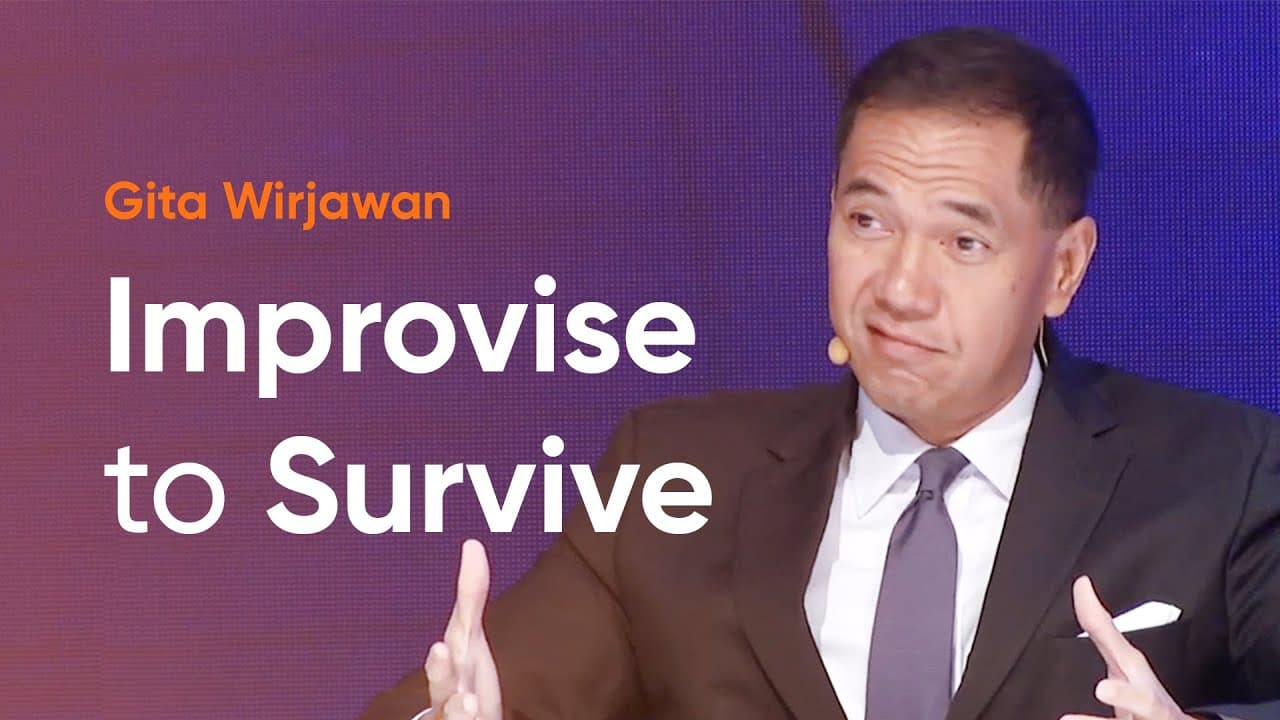
Gita Wirjawan emphasizes Indonesia's pivotal role in the ASEAN Economic Community, highlighting its large population and significant GDP as critical components. He discusses the country's progress and challenges in economic integration and the importance of stability in the region's growth.
-
ASEAN's economic robustness is attributed to political stability, but the region faces challenges due to global quantitative easing practices that have not been adopted locally. Indonesia's infrastructure and financial inclusion are areas needing improvement to compete effectively within ASEAN.
-
The ASEAN Economic Community's opening will expose Indonesia to new challenges and opportunities. Diversification from energy commodities and enhancing educational infrastructure are vital for Indonesia's economic future and integration into the ASEAN framework.
Read in Other Languages (beta)
Share This Summary 📚
Summarize YouTube Videos and Get Video Transcripts with 1-Click
Try YouTube Summary with ChatGPT & Claude or YouTube Transcript Generator
Explore More Summaries from Gita Wirjawan 📚




Summarize YouTube Videos and Get Video Transcripts with 1-Click
Try YouTube Summary with ChatGPT & Claude or YouTube Transcript Generator