How to make habits stick with tiny steps?
TL;DR
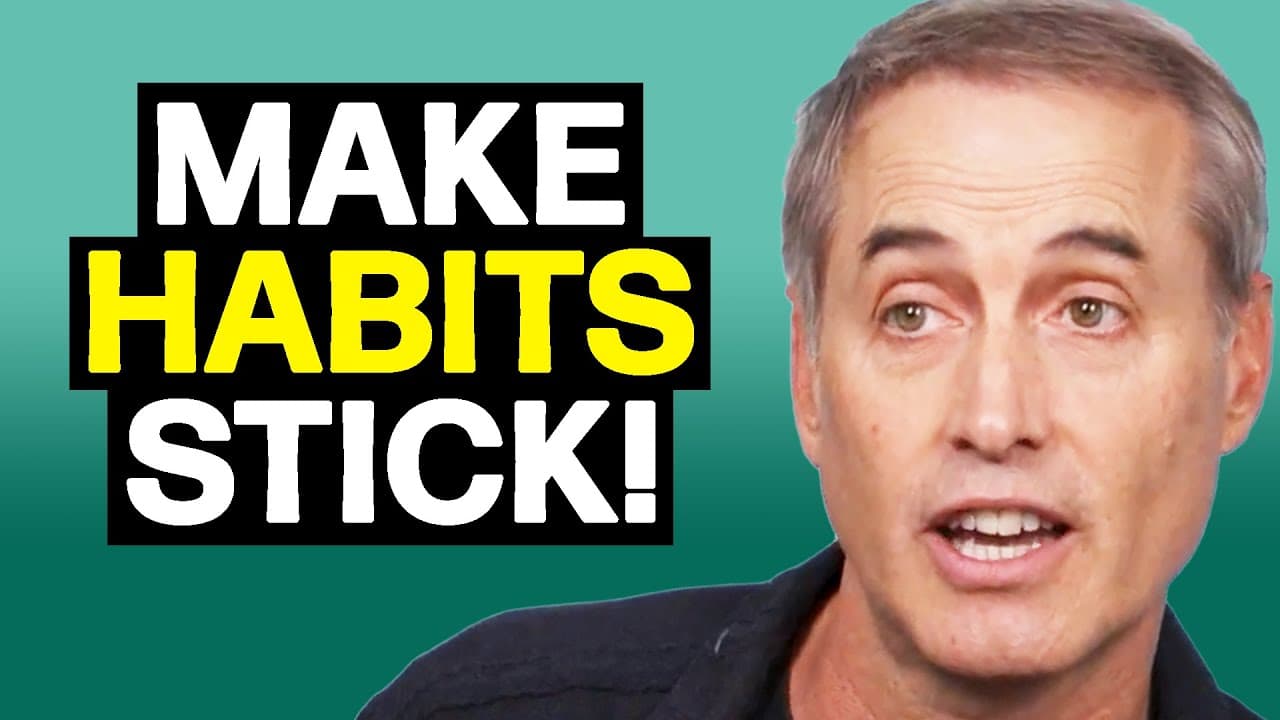
Tiny habits and emotional reward drive lasting change. Small, easy actions create success feelings that wire in new behaviors, not sheer repetition or willpower. By designing for success and lowering the barrier, you can start durable changes that compound over time and improve everyday health and wellbeing.
Transcript
emotions great habits so you don't have to have people change 40 things at once or do this huge thing you just have to help them feel successful on something really really small the feeling of success is what wires in the habit so BJ welcome to the feel better live more podcast thank you thank you for having me in Rangoon well look I'm in one of th... Read More
Key Insights
- Habits are wired in by the emotion of success, not by sheer repetition.
- Tiny habits reduce barriers so people can experience frequent wins and build momentum.
- Behavior design combines models and methods to shape how people behave.
- The concept originated from Stanford research on persuasive technology and behavior.
- Real-world practice shows small wins can disrupt negative self-talk and doubt.
- Technology founders like Instagram emerged from early design thinking about positive use cases.
- People change more when they feel supported and capable, not when they are overwhelmed.
- A compassionate approach to change acknowledges everyday life has challenges and still enables progress.
Install to Summarize YouTube Videos and Get Transcripts
Explore YouTube Video Summarizer or Get YouTube Transcript Extractor
Questions & Answers
Q: What is behavior design and how does it differ from traditional behavior change?
Behavior design is a set of models for thinking clearly about human behavior plus methods for designing interventions. It differs from traditional approaches by combining theoretical frameworks with practical design techniques, aimed at shaping real world actions rather than just providing information. It emphasizes understanding what motivates people and how to structure environments to make desired actions feel easy and rewarding.
Q: How can small changes lead to lasting habits?
Small changes create a sense of immediate success which reinforces the behavior and makes it more automatic over time. By scaling actions down to ultra manageable steps, people experience frequent wins, reducing resistance and self-criticism. This ongoing pattern gradually rewires behavior as the brain associates the action with positive feelings and progress.
Q: Why do information and motivation often fail to produce action?
Information and motivation alone rarely trigger behavior because life is complex and challenging. People face daily stressors, competing demands, and discouragement from past failed attempts. When actions feel overwhelming, the brain avoids them. Designing actions that are easy to start and can be completed quickly helps overcome these barriers.
Q: What role does emotion play in habit formation according to the interview?
Emotion is central because the feeling of success strengthens the likelihood of repeating a behavior. Positive emotions after small wins create durable associations, making the behavior more automatic. The approach focuses on cultivating that positive emotional feedback rather than relying solely on willpower or repetition.
Q: How did BJ Fogg’s Tiny Habits concept originate and evolve?
The Tiny Habits concept began from hands-on coaching of hundreds of people and an emphasis on helping them feel successful. A key moment came when a participant described years of negative self-talk, which highlighted the need for a compassionate, scalable method. The approach expanded from experiments to broader interventions that aim to help many people.
Q: What example connects Tiny Habits to a real world tech outcome?
An example is a student in BJ Fogg’s class who helped seed the idea that later evolved into Instagram. The project involved using the capacity to share photos in a positive way, demonstrating how early design thinking can anticipate technology trends and create meaningful social connections.
Q: How does the interview link habit design to health behavior change in practice?
The interview argues that health improvements come from scalable, achievable changes built on feelings of success. This aligns with clinical practice where patients benefit from small, actionable steps rather than daunting, long-term plans. The approach supports sustainable health behaviors by reducing overwhelm and fostering positive emotional experiences.
Q: What is the broader impact of behavior design on technology and society?
Behavior design informs how technology can be used to support positive behavior changes at scale. By focusing on small wins and emotional reinforcement, apps and platforms can enhance user wellbeing, improve adherence to healthy habits, and reduce the likelihood of disengagement. This thoughtful design approach aims to benefit diverse users globally.
Summary & Key Takeaways
-
A practical approach to behavior change centers on making small, easy actions that produce a feeling of success, which then strengthens the habit loop.
-
The method emphasizes designing for progress and compassion, helping people avoid self-criticism and that the environment often undermines motivation, while tiny steps create reliable momentum.
-
The interview links behavior design research to real world practice, showing how big tech and daily health outcomes can improve when habits are scaffolded around ease and positive emotions.
Read in Other Languages (beta)
Share This Summary 📚
Summarize YouTube Videos and Get Video Transcripts with 1-Click
Try YouTube Summary with ChatGPT & Claude or YouTube Transcript Generator
Explore More Summaries from Dr Rangan Chatterjee 📚



Summarize YouTube Videos and Get Video Transcripts with 1-Click
Try YouTube Summary with ChatGPT & Claude or YouTube Transcript Generator