How Does Rationality Drive Human Progress?
TL;DR
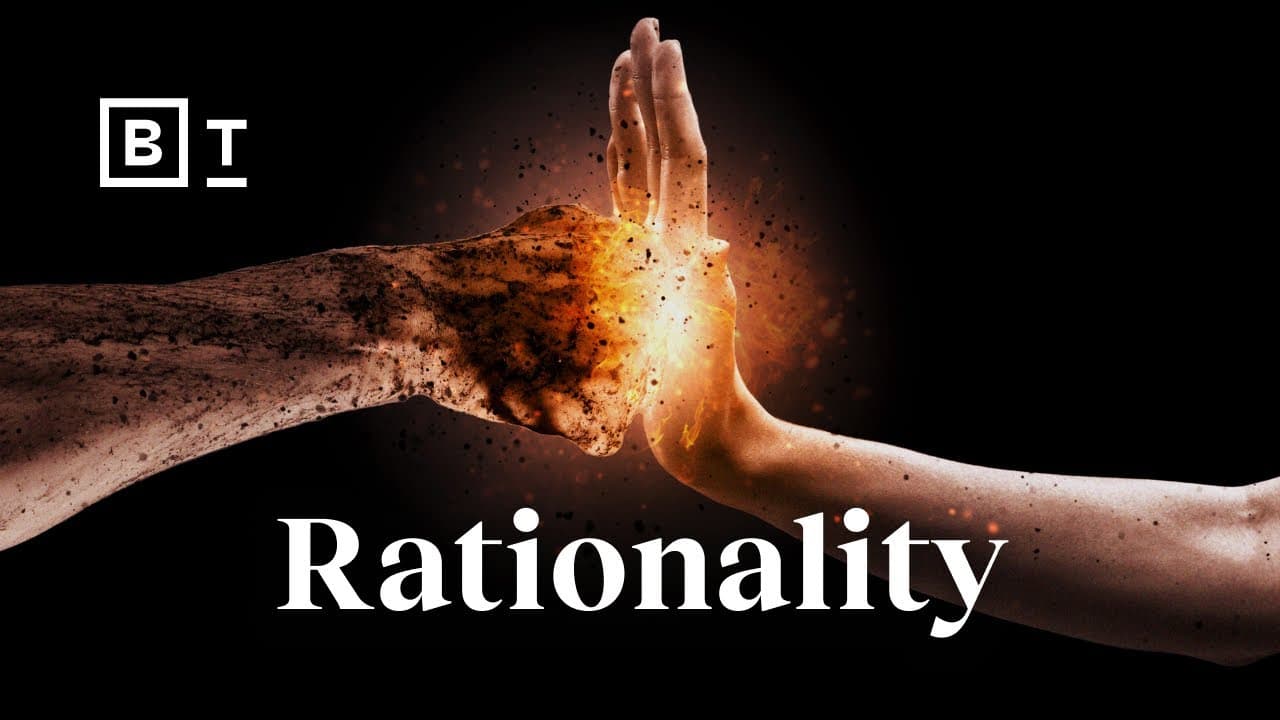
Rationality significantly drives human progress by enabling people to make informed decisions that improve their lives. Key areas of advancement include increased longevity, reduced extreme poverty, and higher literacy rates. Despite notable progress, irrational beliefs and fallacies are on the rise, highlighting the need for continued emphasis on critical thinking and rational discourse.
Transcript
- A question that I often get is: Do you believe in progress? Well, I don't believe in progress, at least not as a force in the Universe. To quote Fran Lebowitz, "I don't believe in anything you have to believe in." Because there isn't any arc bending toward justice. There is no force that's lifting us ever upward. Quite the contrary. The Universe ... Read More
Key Insights
- ❓ Progress has occurred despite the challenges of the universe and human nature.
- 🛟 Rationality is the driving force behind progress by improving the lives of individuals.
- 😮 There is a concerning rise in fallacies and irrational beliefs, leading to rationality inequality.
- 🤔 Rationality can be enhanced through education, societal norms, and the application of critical thinking principles.
- 🖐️ Narratives play a significant role in shaping human beliefs, often prioritizing moral values and community interests.
- ❓ Rationality relies on institutions, such as scientific societies and responsible journalism, to collectively pursue truth and rationality.
- 🤔 Education alone is not enough; rational thinking should be ingrained in societal norms.
- 🎙️ More videos with Steven Pinker:
Install to Summarize YouTube Videos and Get Transcripts
Explore YouTube Video Summarizer or Get YouTube Transcript Extractor
Questions & Answers
Q: What is the role of rationality in driving progress?
Rationality is crucial in making rational decisions and taking actions that improve people's lives. By using rationality to deploy cognition and language to benefit others, progress can be achieved.
Q: How do we explain the coexistence of rationality and irrationality among humans?
Humans are storytelling animals, and narratives play a significant role in shaping our beliefs. When it comes to important questions or moral values, people tend to prioritize narratives that align with their own interests or the interests of their community.
Q: How can society encourage more rationality?
Education is an essential factor, but it cannot be limited to a single course. Principles of critical thinking and rationality should be integrated into societal norms, ensuring that rationality becomes a fundamental aspect of being a respectable person.
Q: Is it possible to eliminate irrationality completely?
While there will always be pockets of irrationality, society can gradually steer toward greater rationality by promoting critical thinking, evidence-based decision-making, and adherence to rational norms.
Key Insights:
- Progress has occurred despite the challenges of the universe and human nature.
- Rationality is the driving force behind progress by improving the lives of individuals.
- There is a concerning rise in fallacies and irrational beliefs, leading to rationality inequality.
- Rationality can be enhanced through education, societal norms, and the application of critical thinking principles.
- Narratives play a significant role in shaping human beliefs, often prioritizing moral values and community interests.
- Rationality relies on institutions, such as scientific societies and responsible journalism, to collectively pursue truth and rationality.
- Education alone is not enough; rational thinking should be ingrained in societal norms.
- Progress towards greater rationality is possible, although it takes time and effort to steer society in that direction.
Summary & Key Takeaways
-
Rationality has led to progress by making people better off over time.
-
Three areas of progress are health (increased longevity), wealth (decrease in extreme poverty), and wisdom (increased literacy rates).
-
Although there is evidence of rationality in areas like medicine and technology, there is also a concerning rise in fallacies and irrational beliefs.
Read in Other Languages (beta)
Share This Summary 📚
Summarize YouTube Videos and Get Video Transcripts with 1-Click
Try YouTube Summary with ChatGPT & Claude or YouTube Transcript Generator
Explore More Summaries from Big Think 📚


Summarize YouTube Videos and Get Video Transcripts with 1-Click
Try YouTube Summary with ChatGPT & Claude or YouTube Transcript Generator