What Is the Scroll Prize and Its Importance in History?
TL;DR
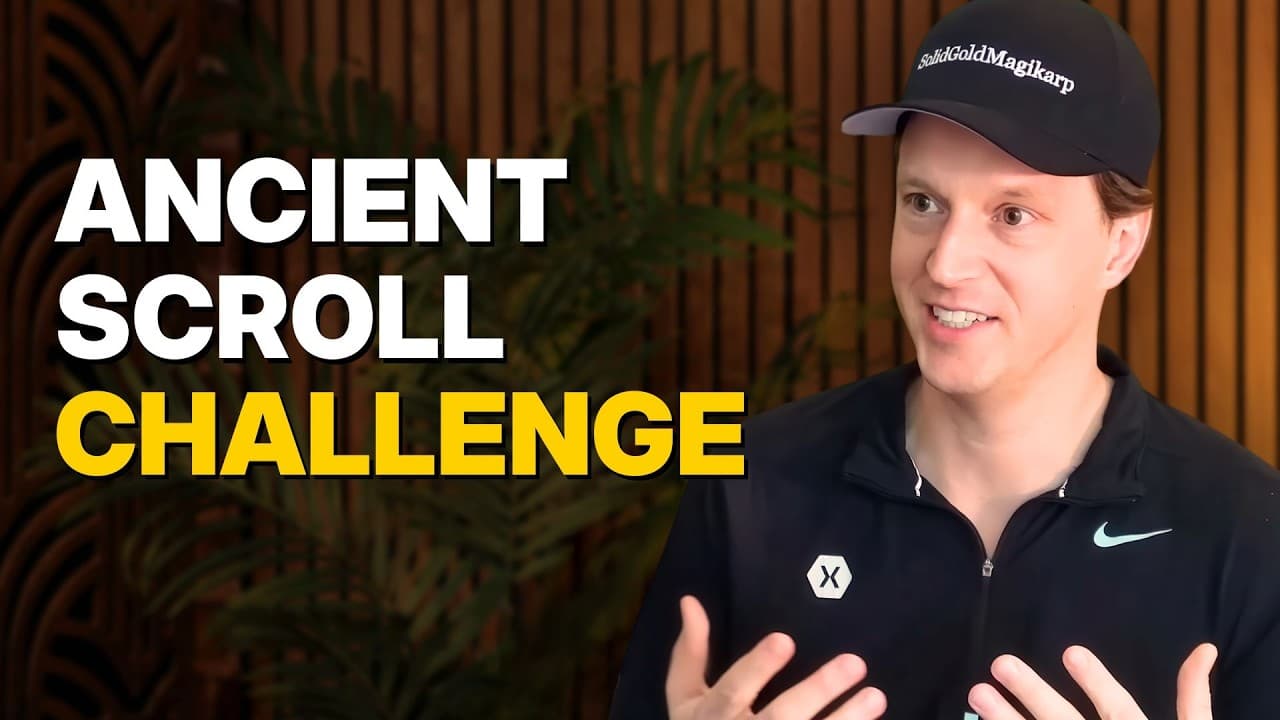
The Scroll Prize, also known as the Vesuvius Challenge, aims to decode ancient papyrus scrolls from Herculaneum, buried during the eruption of Mount Vesuvius in AD 79. Utilizing advanced imaging and machine learning techniques, this initiative seeks to unlock knowledge that could double our current understanding of ancient texts and history.
Transcript
Today I have the pleasure of speaking with Nat Friedman, who was the CEO of GitHub from 2018 to 2021. Before that, he started and sold two companies, Ximian and Xamarin. And he is also the founder of AI Grant and California YIMBY. And most recently, he is the organizer and founder of the Scroll prize, which is where we'll start this conve... Read More
Key Insights
- 👎 The Scroll prize aims to decode ancient papyrus scrolls buried by the eruption of Mount Vesuvius in AD 79.
- 👎 The scrolls are preserved in Herculaneum, a town buried under volcanic material, providing a unique library from antiquity.
- 🎰 Advanced imaging techniques and machine learning algorithms are being used to virtually unroll and decipher the fragile scrolls.
Install to Summarize YouTube Videos and Get Transcripts
Explore YouTube Video Summarizer or Get YouTube Transcript Extractor
Questions & Answers
Q: What is the Scroll prize, and what is its purpose?
The Scroll prize, also known as the Vesuvius challenge, is an open competition aiming to decode ancient papyrus scrolls buried by the eruption of Mount Vesuvius in AD 79. The purpose is to uncover valuable insights into ancient history and potentially expand the known texts from antiquity.
Q: How were the papyrus scrolls preserved and what makes them difficult to decipher?
The papyrus scrolls were buried in Herculaneum, a town destroyed by the eruption of Mount Vesuvius. The volcanic ash and mud preserved the scrolls but also made them extremely fragile. Attempts to physically unroll them have resulted in their destruction. The challenge lies in finding non-destructive ways to read the text without damaging the scrolls.
Q: What techniques have been used to unravel the mystery of the scrolls?
Researchers have employed advanced imaging techniques such as CT scanning and 3D X-ray scans to create high-resolution models of the scrolls. Machine learning algorithms have been developed to recognize ink within the scans and virtually unroll the papyrus.
Q: What is the significance of decoding these ancient scrolls?
Decoding the scrolls would provide valuable insights into ancient history, including potential lost epic poems and historical texts. It is estimated that if successful, the technique could double the total texts from antiquity, shedding new light on the ancient world.
Summary & Key Takeaways
-
The Scroll prize, also known as the Vesuvius challenge, aims to unlock the secrets of ancient papyrus scrolls buried by the eruption of Mount Vesuvius in AD 79.
-
Herculaneum, a nearby town, was buried under 20 meters of volcanic material, preserving a vast villa containing a large library of papyrus scrolls.
-
The challenge involves using advanced imaging techniques, including CT scanning and machine learning algorithms, to virtually unroll and decipher the fragile scrolls.
-
The hope is that decoding the scrolls will provide valuable insights into ancient history and potentially double the known texts from antiquity.
Read in Other Languages (beta)
Share This Summary 📚
Summarize YouTube Videos and Get Video Transcripts with 1-Click
Try YouTube Summary with ChatGPT & Claude or YouTube Transcript Generator
Explore More Summaries from Dwarkesh Podcast 📚




Summarize YouTube Videos and Get Video Transcripts with 1-Click
Try YouTube Summary with ChatGPT & Claude or YouTube Transcript Generator