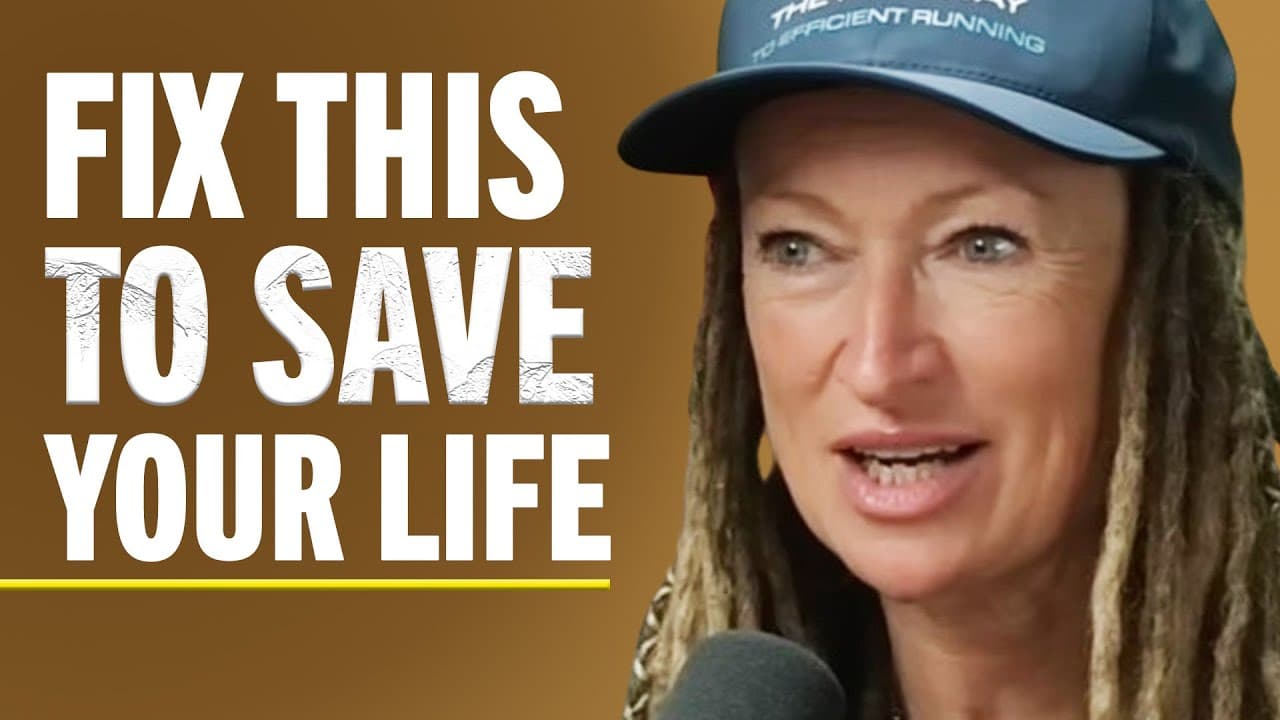
What Does Walking Every Day Do for Your Body, Pain, Posture, and Longevity? | Helen Hall
TL;DR
Daily walking improves whole-body health by coordinating the feet, legs, pelvis, trunk, arms, head, and eyes while loading muscles, bones, and joints under gravity. Helen Hall explains that heel-to-toe steps support venous return and lymphatic circulation, while the trunk’s natural twist moves the torso and may massage internal organs. Read on to understand these effects and how to add walking without micromanaging every step.
Transcript
I think that if we just called it movement rather than exercise people might attach a little bit more value to just the action of walking if we think about what we do habitually so we might go to the supermarket but search for the parking spot that's closest to the entrance Door instead of maybe parking the furthest away walking to the supermarket ... Read More
Key Insights
- Walking is a whole-body movement practice because the legs advance, the arms swing, the trunk twists, and the head moves while eye reflexes stabilize vision. Even when the movement feels effortless, many body regions are coordinating continuously under the load of gravity.
- Walking is valuable beyond calorie expenditure because efficiency is part of its natural function. Its benefits described in the discussion include loading joints, bones, and muscles, supporting brain function, moving connective tissues, and coordinating the body through a repeating human movement pattern.
- The heel-to-toe step supports venous return by using the lower leg and foot action to help move blood back toward the heart. Helen identifies dropping the heel into each step as a particularly strong contributor to this circulation process.
- The lymphatic system collects metabolic waste, dead cells, and broken cellular material for organization and elimination. Because lymphatic circulation is linked to venous action, regular heel-to-toe walking can help maintain the movement of lymphatic fluid through its extensive network.
- The trunk twist in walking creates movement through the middle of the body. Helen describes this action as an internal massage for the organs, connecting ordinary locomotion with natural movement inside the torso rather than treating walking as a leg-only activity.
- Walking technique is best supported by allowing the action to occur naturally instead of consciously controlling every detail of foot placement. Trying to dictate heel contact, movement around the outside of the foot, and toe-off can disrupt the fast timing of the walking cycle.
- Movement awareness often declines when people walk less, stop running, and stop playing. Helen argues that reduced movement provides less stimulus to the brain, while pain or dysfunction may finally draw attention to asymmetry, avoidance, altered timing, or facial signs of discomfort.
- Peripheral vision is often reduced when people walk with their heads and eyes directed downward at specific objects. The discussion contrasts this narrow visual focus with seeing the wider environment, suggesting that head position, vision, awareness, and movement quality are closely connected.
Install to Summarize YouTube Videos and Get Transcripts
Explore YouTube Video Summarizer or Get YouTube Transcript Extractor
Questions & Answers
Q: How does walking every day benefit the whole body?
Walking coordinates the feet, legs, pelvis, trunk, arms, head, and eyes. It also places body weight through the joints, bones, and muscles under gravity, making it a loaded whole-body movement rather than merely a way to expend calories.
Q: How does walking help blood return to the heart?
The repeated heel-to-toe action helps draw venous blood from below the knee back toward the heart. Helen Hall identifies dropping the heel into each step as a particularly strong contributor to venous return.
Q: How does walking support the lymphatic system?
The lymphatic system carries metabolic waste, dead cells, and broken cellular material for organization and elimination. Because lymphatic circulation is connected to venous action, regular heel-to-toe walking helps keep fluid moving through this extensive network.
Q: Why is walking valuable even when it does not burn many calories?
Walking is meant to be an efficient human movement, so low calorie expenditure does not mean low value. It loads joints, bones, and muscles, moves connective tissues, supports circulation and brain function, and coordinates a repeating whole-body pattern.
Q: How does the twisting motion of walking affect the torso?
Alternating arm and leg movements create a twist through the middle of the body. Helen Hall describes this natural trunk movement as an internal massage for the organs, showing why walking is not just a leg activity.
Q: Should you consciously control every part of each walking step?
No. Trying to direct heel contact, movement around the outside of the foot, and toe-off can interfere with the fast timing of the walking cycle. The suggested approach is to let the action occur naturally and make walking part of daily movement practice.
Q: How can you add more walking to an ordinary day?
Small changes to existing routines can create more movement. One example is parking farther from the supermarket, walking to and through the store, pushing a trolley, and returning to the car with the trolley loaded.
Q: How are head position, vision, and walking awareness connected?
Looking downward at a phone or another specific object can narrow visual attention and reduce peripheral vision. Helen Hall connects broader awareness of the environment with head position, eye use, and awareness of the body’s movement.
Summary & Key Takeaways
-
Walking should be valued as everyday movement, not judged only by exercise intensity or calorie expenditure. Parking farther from a shop, walking through it, and pushing a loaded trolley can add meaningful movement to the day. These ordinary actions load the body and engage coordinated movement across multiple regions.
-
Human walking coordinates the feet, legs, pelvis, trunk, arms, head, and eyes. The upper body moves through arm swing, the lower body advances one foot at a time, and the middle twists. Because walking occurs under gravity, it also places useful load through joints, bones, and muscles.
-
The heel-to-toe walking action supports circulation by helping return venous blood from the lower legs toward the heart. The lymphatic system is connected to this action and carries metabolic waste, dead cells, and broken cellular material. Regular walking therefore supports both movement quality and fluid circulation throughout the body.
Read in Other Languages (beta)
Share This Summary 📚
Summarize YouTube Videos and Get Video Transcripts with 1-Click
Try YouTube Summary with ChatGPT & Claude or YouTube Transcript Generator
Explore More Summaries from Dr Rangan Chatterjee 📚



Summarize YouTube Videos and Get Video Transcripts with 1-Click
Try YouTube Summary with ChatGPT & Claude or YouTube Transcript Generator