Mask vs No Mask Lab Results - Do they work?
TL;DR
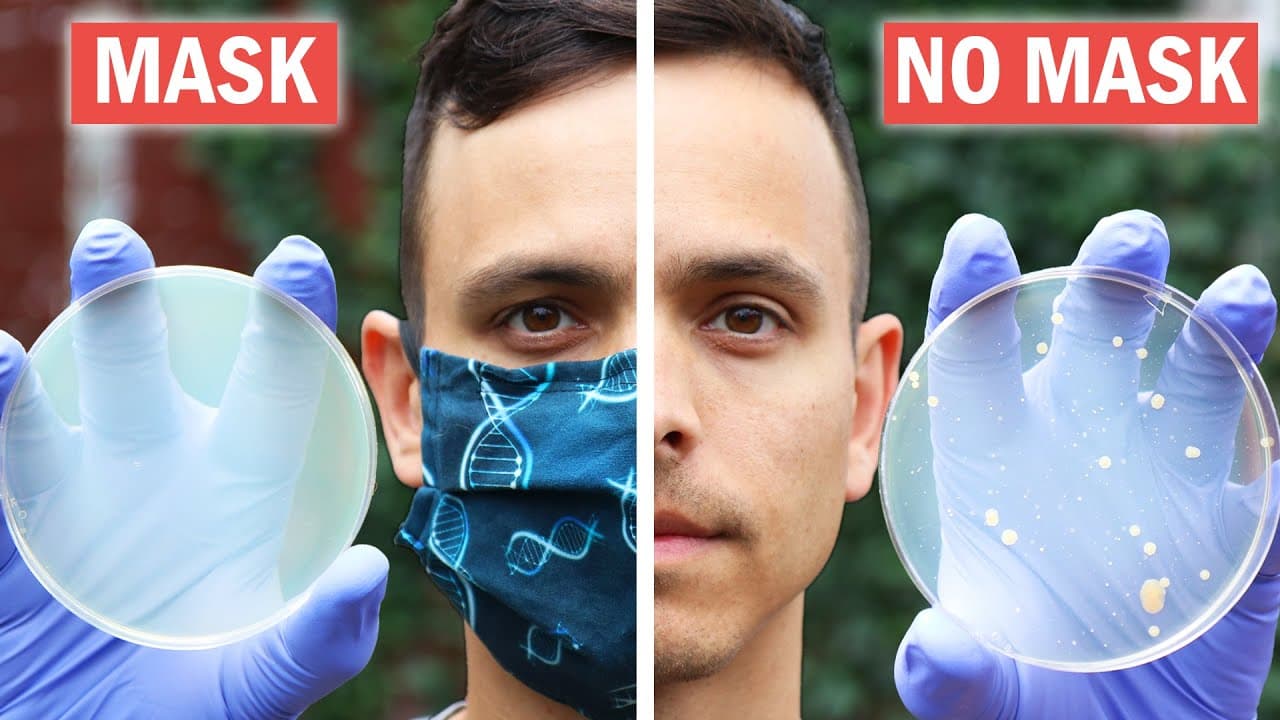
This experiment tests the effectiveness of masks in stopping the spread of germs by comparing bacterial cultures on Petri dishes with and without masks.
Transcript
- This episode is sponsored by Skillshare. I saw these images circulating around the internet that showed bacterial cultures growing in Petri dishes and claiming to represent the effectiveness of masks in stopping or minimizing the spread of germs. It was in relation to COVID-19 and whether or not we should all be wearing masks. So today we're gonn... Read More
Key Insights
- 😷 The experiment demonstrates that wearing a mask can significantly reduce the amount of bacteria spread through respiratory droplets.
- 🤑 Sneezing without a mask resulted in a large number of bacterial colonies on the Petri dishes, emphasizing the importance of covering the mouth when sneezing.
- 😷 Talking without a mask also led to noticeable bacterial growth, highlighting the role of masks in reducing transmission during everyday activities.
- 😷 Singing without a mask showed the potential for even more bacterial growth, suggesting the need for caution in situations such as choirs or performances where aerosol spread can occur.
- 😷 The laboratory results confirm the findings of the at-home experiment, further supporting the effectiveness of masks in reducing the spread of germs.
- 🙈 While the experiment focused on bacterial cultures, it does not account for viruses, which are much smaller and cannot be seen on the Petri dishes.
- 😷 Wearing a mask is one part of a comprehensive strategy that includes other preventive measures to stop the spread of COVID-19.
Install to Summarize YouTube Videos and Get Transcripts
Explore YouTube Video Summarizer or Get YouTube Transcript Extractor
Questions & Answers
Q: How accurate are the images of bacterial cultures representing the effectiveness of masks in stopping the spread of germs?
The experiment aims to validate the accuracy of these images and determine if the results are consistent and reproducible.
Q: Why is this experiment relevant if COVID-19 is caused by a virus, not bacteria?
Although the experiment doesn't measure the presence of the SARS CoV-2 virus specifically, it shows the relative amount of respiratory droplets and how they spread, which is important for understanding germ transmission.
Q: What are the differences in the results between coughing, sneezing, talking, and singing with and without masks?
The experiment shows that wearing a mask significantly reduces bacterial cultures on Petri dishes in all activities tested, indicating that masks can help prevent the spread of germs in various situations.
Q: Why is it essential to wear masks even if they only prevent droplets' spread and not necessarily protect the wearer?
Wearing a mask is altruistic and aims to protect others from potential germs the wearer may be carrying. It is part of a comprehensive approach that includes handwashing, physical distancing, and isolation when exposed, in addition to vaccines and treatments.
Summary & Key Takeaways
-
The hosts recreate an experiment that circulated on the internet, where bacterial cultures grew in Petri dishes to represent the effectiveness of masks in minimizing germ spread.
-
They perform the experiment by coughing, sneezing, talking, and singing into Petri dishes both with and without masks.
-
The results show a significant decrease in bacterial cultures on dishes with masks, indicating that wearing a mask can help prevent the spread of germs.
Read in Other Languages (beta)
Share This Summary 📚
Summarize YouTube Videos and Get Video Transcripts with 1-Click
Try YouTube Summary with ChatGPT & Claude or YouTube Transcript Generator
Explore More Summaries from AsapSCIENCE 📚




Summarize YouTube Videos and Get Video Transcripts with 1-Click
Try YouTube Summary with ChatGPT & Claude or YouTube Transcript Generator