How Is Hazardous Wildfire Debris Cleaned Up? | February 5, 2025
TL;DR
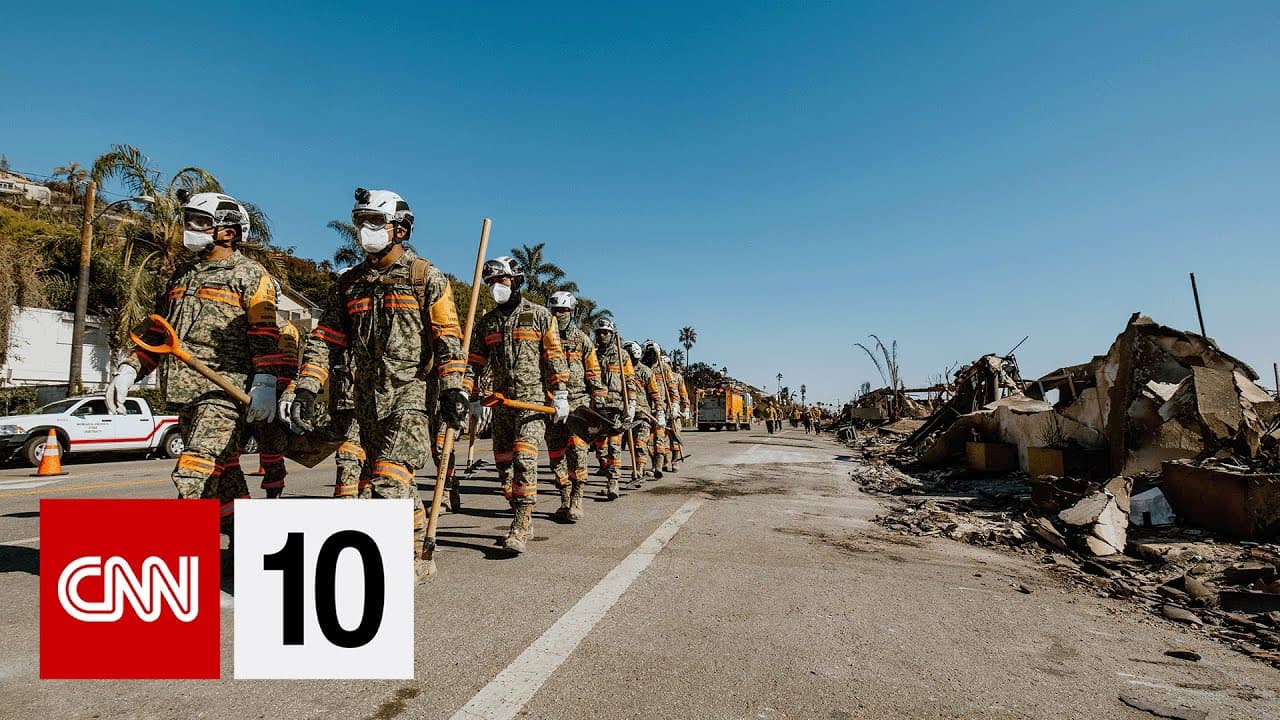
Hazardous wildfire debris is cleaned up in two phases: EPA crews first remove dangerous materials, then public or private contractors clear the remaining debris. After the Palisades and Eaton fires burned more than 37,000 acres, crews searched properties for paint, oils, propane, and damaged batteries. Read on to understand each cleanup stage, its hazards, and why recovery may take months.
Transcript
hello everyone welcome to cnn1 and welcome to New Orleans I am Coy wire coming to you from the iconic Jackson Square renamed in the year 1815 to honor General Andrew Jackson who won the Battle of New Orleans for America as the British army attempted to take over the city in the War of 1812 all right we have made it to #y word Wednesday the day of t... Read More
Key Insights
- • Wildfire cleanup is a staged process that begins with hazardous-material removal before general debris clearance can start. EPA crews complete phase one, then public or private contractors can enter individual properties during phase two to remove the remaining debris.
- • The Palisades and Eaton fires were fully contained nearly a month after they began. According to Cal Fire information cited in the report, they were the second and third most destructive wildfires in California history and burned more than 37,000 acres.
- • EPA crews are searching burned properties for hazardous materials commonly found in homes and businesses. Their targets include paint, shop supplies, oils stored in garages, and propane from grills, particularly when those materials were not completely consumed by fire.
- • Partially damaged batteries are a serious post-fire hazard because internal heat and gas can cause them to ignite without an outside flame. The resulting fire can shoot from the battery like a jet, creating additional danger for cleanup workers and surrounding properties.
- • Phase two cannot begin on a property until EPA crews have removed and safely disposed of dangerous items during phase one. General debris removal is then handled by public or private contractors, moving residents another step toward rebuilding.
- • The Eaton fire cleanup has an uncertain completion timeline because the damage extends across an entire community. Officials were increasing staffing and working under pressure to finish faster than usual as thousands of residences awaited inspection and displaced residents sought to rebuild.
- • The Ultra MK2 is a self-flying cargo drone designed to deliver humanitarian aid to places that regular airlines cannot reach. It can take off and land on almost any terrain, operate during the day or night, and function with minimal ground-operator oversight.
- • Humanitarian drones are intended to supplement traditional aid delivery rather than replace it. Organizations see them as a way to transport time-critical items into areas made difficult or dangerous to access by floods, droughts, storms, earthquakes, and other crises.
Install to Summarize YouTube Videos and Get Transcripts
Explore YouTube Video Summarizer or Get YouTube Transcript Extractor
Questions & Answers
Q: How is hazardous waste removed after a wildfire?
EPA crews wearing hazardous-material suits inspect burned properties for dangerous household and commercial materials. They remove surviving paint, shop supplies, garage oils, grill propane, and damaged batteries for safe disposal before general debris clearance begins.
Q: What are the two phases of wildfire debris cleanup?
Phase one is the EPA's inspection, removal, and safe disposal of hazardous materials. Once that work is complete, phase two allows public or private contractors to remove the remaining debris from each property.
Q: Why are partially damaged batteries dangerous after a wildfire?
Heat and gas can build up inside a partially damaged battery and cause it to ignite without an outside flame. The fire can shoot from the battery like a jet, creating a serious hazard for cleanup crews.
Q: How do EPA crews mark properties that have been inspected?
Crews place a white X on a property after checking it and finding nothing dangerous. This marking indicates that the hazardous-material inspection has been performed.
Q: When can general debris removal begin on a burned property?
General debris removal can begin only after EPA crews have completed phase one and safely disposed of dangerous items. Public or private contractors can then enter the property for phase two.
Q: How destructive were the Palisades and Eaton fires?
The two Southern California fires burned more than 37,000 acres, destroyed homes and businesses, and caused dozens of deaths. According to Cal Fire information cited in the report, they were the second and third most destructive wildfires in California history.
Q: How long will cleanup after the Eaton fire take?
Officials did not give a definite completion date because the damage covered an entire community and thousands more residences awaited attention. The broader removal of toxic ash, hazardous waste, and charred debris was expected to take months, while crews increased staffing to work faster than usual.
Q: Why must hazardous materials be removed before residents can rebuild?
Dangerous materials must be identified and safely disposed of before contractors can clear the rest of a property. Completing these stages moves displaced residents closer to beginning reconstruction.
Summary & Key Takeaways
-
The Palisades and Eaton fires were fully contained nearly a month after they began, but recovery remained a major undertaking. The fires burned more than 37,000 acres, destroyed homes and businesses, and caused dozens of deaths. Officials expected the removal of toxic ash, hazardous waste, and charred debris to take months.
-
EPA teams wearing hazardous-material suits began phase one of the cleanup in Altadena. They inspected burned properties for dangerous household and commercial materials, including paint, shop supplies, garage oils, and grill propane. Checked properties without dangerous items were marked, while hazardous materials that survived the fire were removed for safe disposal.
-
Humanitarian organizations are exploring self-flying cargo drones for reaching communities that conventional airlines cannot access. The Ultra MK2 can carry twice the payload of its predecessor, remain overhead for up to nine hours, and travel up to 621 miles. It can operate on varied terrain with minimal ground oversight.
Read in Other Languages (beta)
Share This Summary 📚
Summarize YouTube Videos and Get Video Transcripts with 1-Click
Try YouTube Summary with ChatGPT & Claude or YouTube Transcript Generator
Explore More Summaries from CNN 10 📚






Summarize YouTube Videos and Get Video Transcripts with 1-Click
Try YouTube Summary with ChatGPT & Claude or YouTube Transcript Generator