How to Master Learning Skills Efficiently
TL;DR
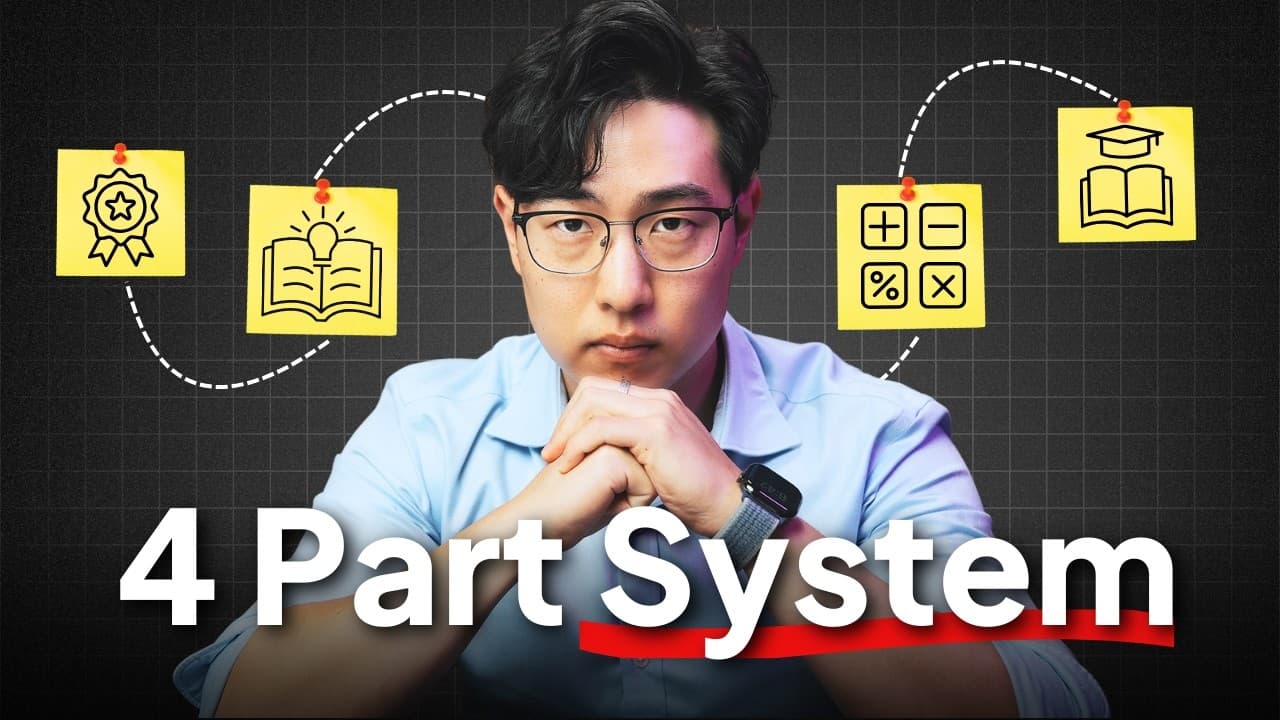
Mastering learning skills involves understanding and applying principles of encoding and retrieval. By debunking common myths about learning, adopting a systematic approach, and managing self-discipline, learners can significantly improve their efficiency and effectiveness. The key is to focus on long-term strategies and integrate learning into a structured system.
Transcript
I've been a learning coach for over 13 years. I've spent thousands of hours learning about learning and I've taught this skill to tens of thousands of people. It's no exaggeration to say that learning to learn for me has been life-changing. I went from studying 20 hours a day desperately trying to enter into medical school to working as a doctor wh... Read More
Key Insights
- Learning is most effective when viewed as a system involving encoding and retrieval.
- Common learning myths, such as the necessity of high IQ or specific learning styles, can hinder progress.
- Encoding involves turning new information into memory by finding relevance and connections.
- Retrieval strengthens memory and highlights knowledge gaps, essential for effective learning.
- Higher order learning, which integrates information, improves memory retention and understanding.
- Self-management skills, including time and task management, are crucial for effective learning.
- Short-term solutions can help manage focus and procrastination, but long-term strategies are essential.
- Accountability and breaking tasks into manageable parts can enhance productivity and focus.
Install to Summarize YouTube Videos and Get Transcripts
Explore YouTube Video Summarizer or Get YouTube Transcript Extractor
Questions & Answers
Q: How to improve learning efficiency?
Improving learning efficiency involves focusing on both encoding and retrieval processes. Encoding requires connecting new information to existing knowledge, making it relevant and memorable. Retrieval, on the other hand, reinforces memory by actively recalling information, which helps in identifying knowledge gaps. By focusing on higher order learning, integrating knowledge, and managing self-discipline, learners can achieve significant improvements in efficiency.
Q: What are common myths about learning?
Common myths about learning include the belief that high IQ is necessary for effective learning and that everyone has a unique learning style. Research shows that intelligence is not the sole determinant of learning success and that the brain is capable of learning in multiple ways. Emphasizing principles over specific tactics and focusing on systematic approaches can debunk these myths and enhance learning efficiency.
Q: What is the role of self-management in learning?
Self-management plays a crucial role in learning by ensuring that learners effectively manage their time, tasks, and focus. Good time management involves realistic scheduling and time blocking, while task management requires prioritizing tasks based on importance and urgency. Focus management helps prevent distractions and procrastination, supporting a productive learning environment. Together, these skills enable learners to maximize their learning potential.
Q: How does retrieval improve learning?
Retrieval improves learning by reinforcing memory and identifying gaps in knowledge. Actively recalling information strengthens neural connections, making memories more durable. It also provides feedback on what has been retained and what needs further review. By practicing retrieval in a way that simulates real-world application, learners can enhance their ability to use knowledge effectively, leading to better understanding and retention.
Q: Why is higher order learning important?
Higher order learning is important because it involves integrating information, which enhances memory retention and understanding. Unlike lower order learning, which focuses on isolated facts, higher order learning requires learners to see relationships, prioritize information, and solve complex problems. This approach creates a network of knowledge, leading to deeper comprehension and the ability to apply information in various contexts, making it essential for effective learning.
Q: What are effective strategies for focus management?
Effective focus management strategies include both short-term and long-term approaches. Short-term solutions like app blockers and accountability partners can help manage distractions and maintain concentration. Long-term strategies involve addressing root causes of focus issues, such as emotional coping mechanisms that lead to procrastination. By understanding these underlying factors and gradually developing better habits, learners can achieve sustained improvements in focus and attention.
Q: How can task management improve learning outcomes?
Task management improves learning outcomes by helping learners prioritize tasks based on importance and urgency. Using tools like the Eisenhower matrix, learners can categorize tasks into focus, schedule, batch, and delete quadrants. This ensures that they spend time on tasks that are both important and urgent, while also scheduling time for important but not urgent tasks. Effective task management reduces stress and increases productivity, leading to better learning outcomes.
Q: What is the impact of encoding on memory retention?
Encoding has a significant impact on memory retention as it involves transforming new information into long-term memory by making it relevant and connected to existing knowledge. Effective encoding creates strong memory traces that are less likely to decay over time. By focusing on higher order learning and integrating information into a cohesive network, learners can enhance their memory retention, leading to a deeper understanding and the ability to recall information more effectively.
Summary & Key Takeaways
-
Learning to learn involves mastering both encoding and retrieval processes. Encoding strengthens memory by connecting new information to existing knowledge, while retrieval helps reinforce memory and identify gaps. A systematic approach to learning, focusing on principles over tactics, is crucial for long-term success.
-
Debunking myths such as the need for high IQ or specific learning styles is essential. Everyone can improve their learning efficiency by 20-30% by adopting better strategies. Higher order learning, which involves integrating information, enhances memory retention and understanding, making it a key focus area.
-
Effective self-management, including time and task management, is critical for learning success. Short-term solutions like app blockers can help manage focus, but long-term strategies addressing root causes are essential. Accountability and prioritization of tasks can greatly enhance productivity and focus.
Read in Other Languages (beta)
Share This Summary 📚
Summarize YouTube Videos and Get Video Transcripts with 1-Click
Try YouTube Summary with ChatGPT & Claude or YouTube Transcript Generator
Explore More Summaries from Justin Sung 📚


Summarize YouTube Videos and Get Video Transcripts with 1-Click
Try YouTube Summary with ChatGPT & Claude or YouTube Transcript Generator