Why Was Patton Prepared for Battle of the Bulge?
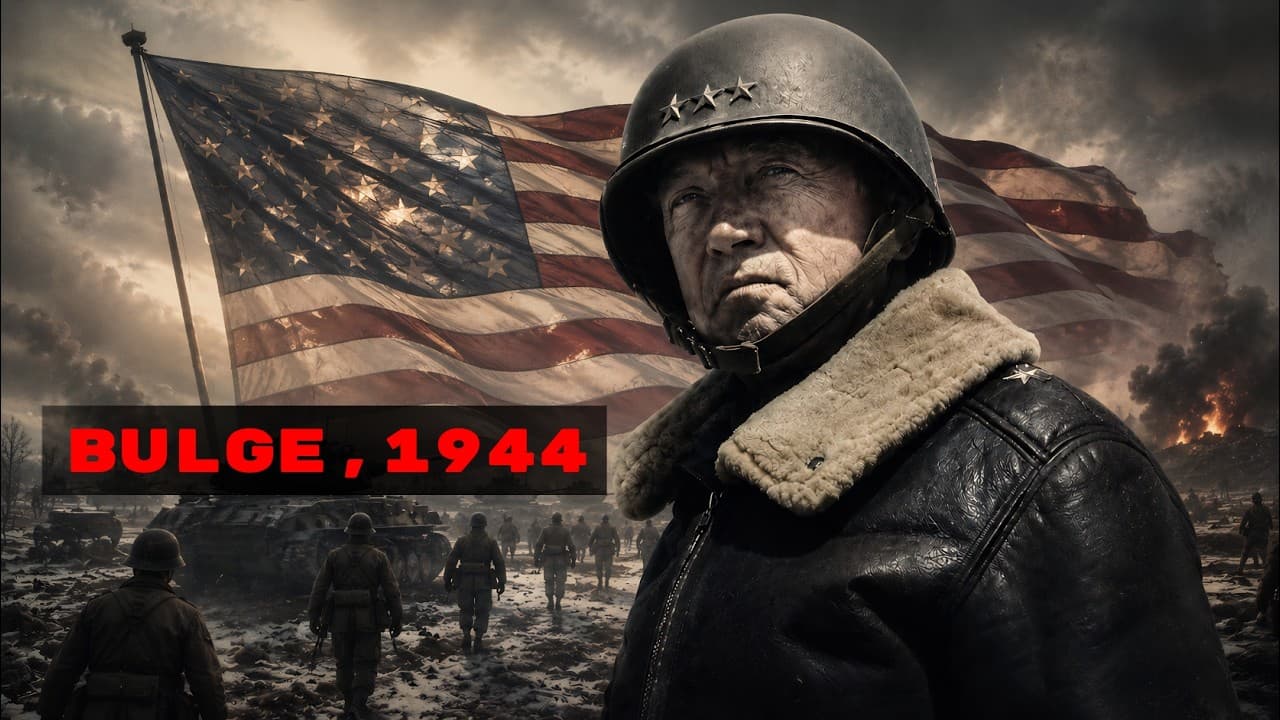
TL;DR
George S. Patton was uniquely prepared for the Battle of the Bulge due to early intelligence from his officer, Oscar Koch, who identified a potential German offensive. While other Allied commanders dismissed the threat, Patton developed contingency plans, allowing his Third Army to rapidly counterattack and relieve Bastogne, demonstrating the critical importance of foresight and preparation in military strategy.
Transcript
December 19th, 1944, a gray winter light leaked through shattered windows of a converted French army barracks in Verdun. Inside, the air was thick with cigarette smoke, the bitter smell of coffee, and something heavier, fear. Around a long wooden table sat the most powerful generals in the Allied command. Map folders lay open. Pencils were clenched... Read More
Key Insights
- Patton was the only general prepared for the Battle of the Bulge due to early intelligence and planning.
- Oscar Koch, Patton's intelligence officer, identified the German buildup and predicted the offensive.
- Patton trusted Koch's analysis and prepared contingency plans for a rapid response.
- The Third Army's quick redeployment was crucial in relieving Bastogne and countering the German advance.
- Most Allied commanders underestimated the German capability for a major offensive in December 1944.
- Patton's foresight and trust in intelligence allowed for a successful counterattack, preventing a potential disaster.
- The Battle of the Bulge highlighted the importance of questioning assumptions and acting on intelligence.
- Patton's preparation and execution underscored the value of readiness and adaptability in military operations.
Install to Summarize YouTube Videos and Get Transcripts
Explore YouTube Video Summarizer or Get YouTube Transcript Extractor
Questions & Answers
Q: How did Patton prepare for the Battle of the Bulge?
Patton prepared for the Battle of the Bulge by trusting the intelligence provided by his officer, Oscar Koch, who identified the German buildup and predicted the offensive. Patton developed detailed contingency plans for a rapid response, allowing his Third Army to disengage from current operations and redeploy quickly, which was crucial in countering the German advance.
Q: What role did Oscar Koch play in Patton's preparation?
Oscar Koch, Patton's intelligence officer, played a critical role by identifying the disappearance of German divisions and predicting a potential offensive through the Ardennes. His systematic analysis and warnings enabled Patton to prepare contingency plans, making Third Army ready to respond quickly to the German attack, demonstrating the importance of reliable intelligence in military strategy.
Q: Why did other Allied commanders underestimate the German threat?
Other Allied commanders underestimated the German threat because they believed the war in Europe was nearly won and assumed Germany was too weak to mount a major offensive. This assumption led them to dismiss intelligence signals as anomalies, whereas Patton, guided by Koch's analysis, prepared for the possibility of a German attack, highlighting the dangers of complacency in warfare.
Q: What was the significance of Patton's rapid counterattack?
Patton's rapid counterattack was significant because it relieved the besieged town of Bastogne and disrupted the German offensive, preventing a potential split in the Allied front. This swift action demonstrated the effectiveness of Patton's preparation and adaptability, turning a potential disaster into a strategic victory and underscoring the importance of readiness in military operations.
Q: How did Patton's preparation impact the outcome of the Battle of the Bulge?
Patton's preparation impacted the outcome of the Battle of the Bulge by enabling a rapid and effective counterattack that relieved Bastogne and thwarted the German advance. His foresight and readiness prevented a potential catastrophe, demonstrating the critical role of planning and adaptability in military success and altering the course of the battle in favor of the Allies.
Q: What lessons can be learned from Patton's actions during the Battle of the Bulge?
Lessons from Patton's actions include the importance of questioning assumptions, the value of reliable intelligence, and the need for readiness and adaptability in military strategy. Patton's success in the Battle of the Bulge highlights how preparation and foresight can turn potential disasters into strategic victories, emphasizing the need for commanders to act on credible intelligence.
Q: Why was the Battle of the Bulge a critical turning point in WWII?
The Battle of the Bulge was a critical turning point in WWII because it was Germany's last major offensive in the West, aiming to split the Allied forces. Patton's rapid counterattack prevented this, maintaining the integrity of the Allied front. The battle demonstrated the importance of preparation and adaptability, influencing the final phases of the war in Europe.
Q: How did Patton's leadership style contribute to his success?
Patton's leadership style, characterized by decisiveness, trust in intelligence, and a willingness to prepare for unlikely scenarios, contributed to his success. His ability to act on Koch's analysis and develop contingency plans allowed Third Army to respond swiftly to the German offensive, showcasing the effectiveness of proactive leadership and strategic foresight in military operations.
Summary & Key Takeaways
-
George S. Patton was prepared for the Battle of the Bulge due to early intelligence and preparation. Oscar Koch, Patton's intelligence officer, identified a potential German offensive, leading Patton to develop contingency plans that enabled a rapid counterattack. This readiness was crucial in relieving Bastogne and demonstrated the importance of foresight in military strategy.
-
While other Allied commanders dismissed the threat, Patton trusted Koch's analysis and acted accordingly. The Third Army's swift redeployment was a key factor in countering the German advance, highlighting the critical role of intelligence and preparation in successful military operations.
-
The Battle of the Bulge exposed the failure of Allied intelligence to anticipate the German offensive, but Patton's readiness turned a potential disaster into a strategic victory. His actions underscored the value of questioning assumptions and the importance of adaptability in warfare.
Read in Other Languages (beta)
Share This Summary 📚
Summarize YouTube Videos and Get Video Transcripts with 1-Click
Try YouTube Summary with ChatGPT & Claude or YouTube Transcript Generator