How Does Matt Hagger Survive Startup Failure and Start Again? | TaleTree
TL;DR
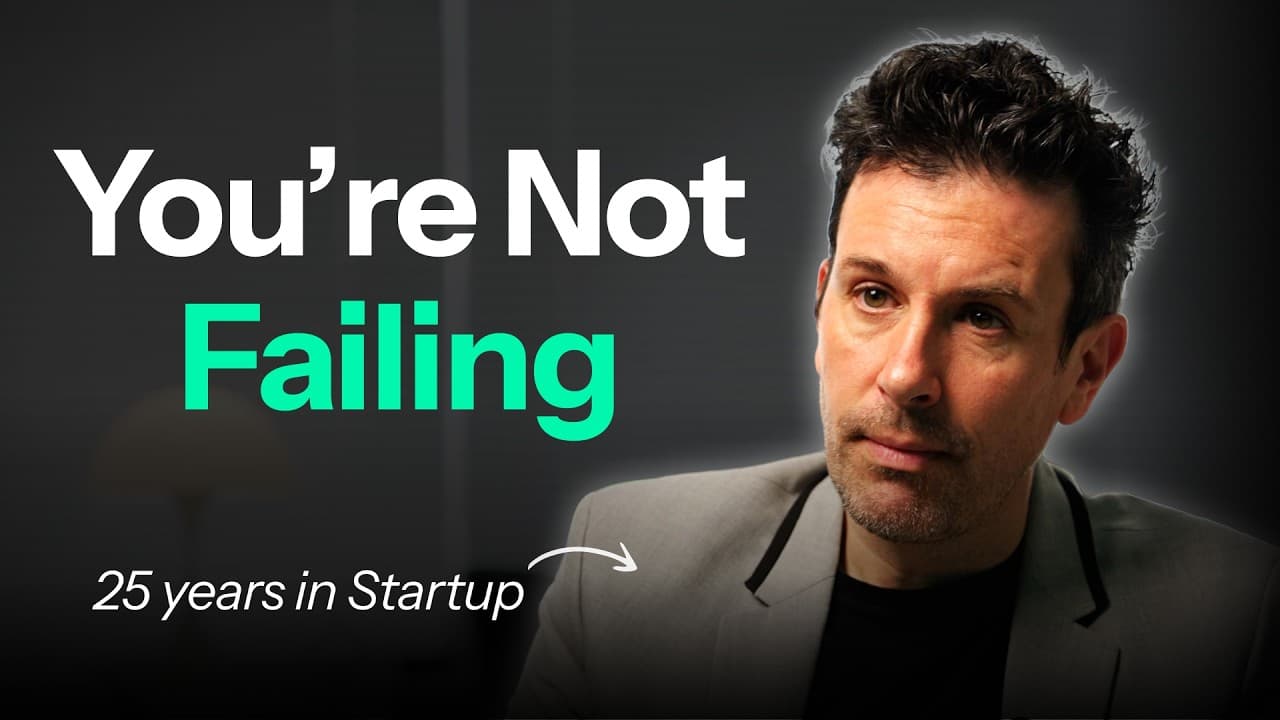
Startup founders can survive failure by treating it as preparation, returning with greater courage, and staying committed to a meaningful problem. Matt Hagger says 95% of startups fail and describes how Scatter’s collapse gave him “armor” for future ventures. His journey from desktop news alerts to TaleTree also highlights contrarian thinking, creative freedom, and the power of one supportive person. Read on for his practical lessons.
Transcript
Over the last 20 years, I've been a serial entrepreneur in the UK and then Silicon Valley in Los Angeles. The second company was Scatter, which was the photo sharing product. I wanted it to become something that every member of the world would access and use. When you're working on something that means everything to you at the time, you're putting ... Read More
Key Insights
- Startup passion is essential because founders can lose direction when the struggle becomes severe. Hagger advises against starting without a deep, meaningful problem to solve, since commitment to that problem sustains the founder through uncertainty and setbacks.
- Failure is practical preparation for future ventures because each unsuccessful attempt produces lessons and emotional armor. Hagger's venture lab values entrepreneurs who have failed several times, viewing every iteration as movement closer to a possible success.
- A contrarian idea is worth serious attention when most people consider it unreasonable. Hagger argues that universal agreement may indicate the opportunity is already obvious or developed, while strong skepticism can signal an insight that others have not recognized.
- Timing and market conditions are major startup variables because a strong product can still arrive before customers, technology, or distribution systems are ready. Scatter's experience showed that founder vision alone cannot guarantee adoption, financing, or commercial survival.
- Supportive communities are important for founders and creative people because isolation makes difficult work harder to sustain. Hagger found stronger encouragement for unconventional ideas in Silicon Valley and designed Taletree around children communicating, sharing artwork, and offering compliments.
- Childlike persistence is a model for entrepreneurship because young children repeatedly stand up after setbacks. Hagger calls for a lifelong kindergarten mindset in which curiosity, experimentation, imagination, and recovery remain active rather than diminishing through fear or conformity.
- Empowerment can begin with one trusted person expressing belief in someone's ability. Hagger connects his father's challenge-based teaching with Taletree's mission, arguing that simple acts of encouragement can liberate children to explore their interests and creative gifts.
- Taletree is designed to protect children's imagination and creativity in a post-AI era. Children adopt a companion, brainstorm ideas, explore personal interests, share creative work, and participate in a global community intended to be both kind and creative.
Install to Summarize YouTube Videos and Get Transcripts
Explore YouTube Video Summarizer or Get YouTube Transcript Extractor
Questions & Answers
Q: How can entrepreneurs recover from startup failure and start again?
Hagger says failure gives entrepreneurs useful weaponry and armor for future ventures. Although losing a company is painful when a founder has invested heart and soul, the experience can build courage and preparation for another attempt. He believes true entrepreneurs stand up again and return.
Q: When should someone start a startup?
A person should start a company when they have a deep, meaningful passion for a problem they need to solve. Hagger warns that entrepreneurship is not for everyone because the struggle becomes extremely hard and founders can lose sight of their direction. A personally important problem provides a reason to keep going.
Q: What happened to Matt Hagger’s photo-sharing startup Scatter?
Scatter was a photo-sharing product that Hagger hoped everyone in the world would use. It did not become an enduring platform like Instagram, TikTok, or X and no longer exists. Its failure was painful, but Hagger says the experience equipped him for future work.
Q: What does Matt Hagger say about contrarian startup ideas?
Hagger says founders should take an idea seriously when everybody thinks it is crazy. If everybody already agrees with an idea, he argues that the opportunity may have arrived too late because someone has probably done it. Widespread skepticism can therefore be a reason to examine an idea carefully.
Q: What was Matt Hagger’s first internet business idea?
Hagger created a desktop news-alert protocol after expensive dial-up sessions repeatedly showed him unchanged pages on his favorite football website. The system checked a selected website upon connecting and delivered breaking news to the desktop. The idea received a feasibility-study grant from Cambridge University Science Park and was later rolled out as the Sky Sports News alerts platform.
Q: Why does Matt Hagger compare entrepreneurship to falling from a plane?
He says entrepreneurs often begin without knowing the solution, like falling from a plane without knowing how to open the parachute. As they approach the ground, they must work out what to do. The comparison emphasizes taking a leap and developing courage through uncertainty.
Q: What is TaleTree designed to do for children?
TaleTree is designed to help children preserve imagination and creativity in a post-AI era. Children adopt a companion, brainstorm ideas, and explore what is in their hearts, including their interests and concerns. Hagger describes it as a free space for creative exploration.
Q: How can adults help children become more courageous and creative?
Hagger says one person expressing belief can be a powerful act of empowerment. His father supported him while making him feel responsible for solving challenges independently, including learning through their soccer trips. He connects that experience with helping children retain the persistence of kindergarteners, who fall and stand up again.
Summary & Key Takeaways
-
Matt Hagger traces his entrepreneurial path from solving the cost of dial-up internet to building companies in the UK, Silicon Valley, and Los Angeles. His first major idea delivered website news alerts to desktops and was eventually implemented through Sky Sports News alerts, despite his initially knowing little about venture capital or entrepreneurship.
-
Hagger presents startup failure as painful but valuable preparation. His photo-sharing app, Scatter, anticipated demand for sharing smartphone media but struggled with market readiness, capital, and skepticism in the UK. Moving to Silicon Valley provided encouragement and infrastructure, yet the experience reinforced how strongly startup outcomes depend on timing, technology, market demand, and support.
-
Taletree connects Hagger's entrepreneurial experience with his childhood need for creative freedom. The platform gives children space to imagine, develop ideas, share artwork, and encourage one another. Its broader mission is to preserve imagination and authenticity in a post-AI era while rebuilding the curiosity that conventional education may leave underdeveloped.
Read in Other Languages (beta)
Share This Summary 📚
Summarize YouTube Videos and Get Video Transcripts with 1-Click
Try YouTube Summary with ChatGPT & Claude or YouTube Transcript Generator
Explore More Summaries from EO 📚


Summarize YouTube Videos and Get Video Transcripts with 1-Click
Try YouTube Summary with ChatGPT & Claude or YouTube Transcript Generator