How to Accept Your Limits and Live More Fully
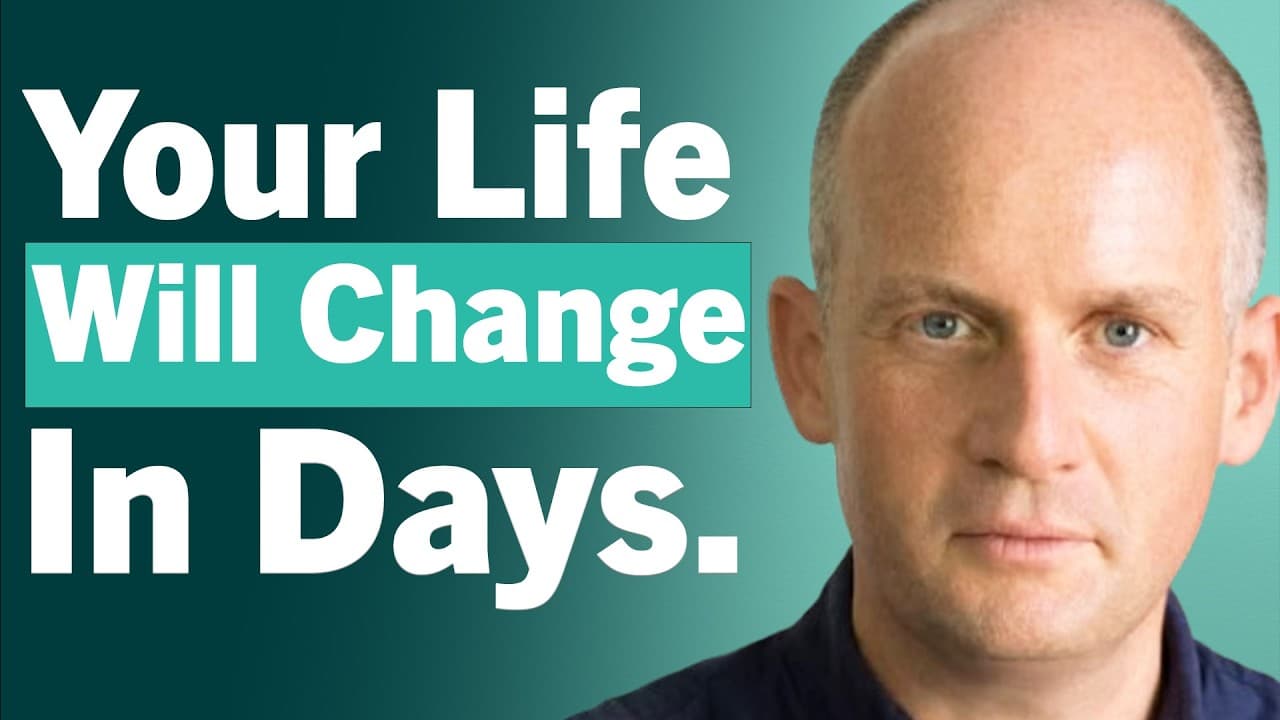
TL;DR
Accept that your time, attention, and energy are finite, then choose a handful of meaningful priorities instead of trying to complete every possible demand. A calmer life begins when you practice its qualities now, treat yourself with the fairness you give others, and stop postponing participation in life until you feel fixed, efficient, or fully caught up.
Transcript
In your new book, you talk about the kind of life that you would like to be living and you describe it as calm and focused, energetic, and meaningfully productive and connected to others as opposed to anxious, isolated, and overwhelmed. I think that's the kind of life, Oliver, that many people would also like to lead. So, I guess my first question ... Read More
Key Insights
- A calmer life is available partly through present behavior, rather than only as a future condition reached after enough work, improvement, or optimization. People can begin expressing calm, focus, connection, and meaningful productivity while their circumstances and obligations remain unresolved and imperfect.
- Overwhelm is reinforced when people sacrifice peace today in an attempt to clear every demand before allowing themselves to live peacefully. Buckling down indefinitely can reproduce the stressful conditions a person believes they are working hard to escape.
- Sustainable change can begin by participating in desired activities now instead of postponing enjoyment until a personal goal has been reached. In the weight-loss example, living more fully today may support progress as a secondary effect rather than making happiness conditional on a target weight.
- Self-punishment can reinforce the belief that a person is defective and must be fixed before fully participating in life. Deprivation, restriction, and harsh internal criticism therefore risk preserving the very self-judgment that the attempted improvement is supposed to resolve.
- The reverse golden rule is the principle that people should not treat themselves worse than they would treat someone else. It frames self-compassion as equal treatment, avoiding the implication that someone must regard themselves as unusually special or more deserving than others.
- Human capacity is finite because time, attention, energy, and lifespan are limited. Potential obligations, ambitions, family responsibilities, career goals, and incoming demands can continue expanding, creating a permanent mismatch between what might be done and what any individual can actually complete.
- Productivity systems cannot eliminate the need to choose among competing possibilities. A person can be ambitious, productive, and useful while accepting that an infinite collection of demands and aspirations will never fit within finite human time and attention.
- Acceptance of limitation can be liberating because unfinished work is not necessarily evidence of laziness, failure, or a defective system. Recognizing that nobody gets to do everything allows people to relax into reality and concentrate on a handful of activities that genuinely count.
Install to Summarize YouTube Videos and Get Transcripts
Explore YouTube Video Summarizer or Get YouTube Transcript Extractor
Questions & Answers
Q: How can I start living a calmer life right now?
Begin by treating calm as a quality of how you act today, not as a reward that becomes available after every email, obligation, or improvement project is finished. Choose at least some actions that express focus, connection, enjoyment, or meaningful productivity now. The result will remain imperfect, but it avoids building a more stressful present in pursuit of an imagined peaceful future.
Q: Why does trying to finish everything increase overwhelm?
Trying to finish everything can increase overwhelm because the strategy often requires spending more time immersed in demands, obligations, and messages. Meanwhile, new possibilities and responsibilities continue appearing. A person may therefore create a busier and more stressful life while pursuing a point at which nothing remains. Burkeman argues that this imagined point is unavailable because human capacity is finite and potential demands keep expanding.
Q: Why will there always seem to be too much to do?
There will often seem to be too much to do because a person has limited time, attention, energy, and years of life, while possible responsibilities and ambitions can expand continually. Family obligations, career goals, messages, and worthwhile projects do not naturally stop at the boundary of personal capacity. The practical response is to accept selection as unavoidable and complete only a handful of possible activities.
Q: How does accepting finite time improve productivity?
Accepting finite time replaces the impossible goal of covering every demand with the realistic task of choosing what counts. It does not require abandoning ambition, work, or meaningful contribution. Instead, it acknowledges that no system can fit unlimited obligations into limited capacity. This can reduce shame about unfinished tasks and support more deliberate use of attention and energy on a small number of worthwhile priorities.
Q: What is the reverse golden rule for self-compassion?
The reverse golden rule is: do not treat yourself worse than you would treat other people. Burkeman found this more approachable than language suggesting that self-compassion requires feeling unusually special or deserving. The principle asks only for equal treatment. If a form of internal criticism would be outrageous when directed at a friend or ordinary acquaintance, it is also unreasonable when directed at yourself.
Q: Why can self-criticism make personal change harder?
Self-criticism can make change harder by reinforcing the belief that a person is bad, defective, or unworthy of full participation in life until they have improved. Punishment, deprivation, and restriction then become conditions for earning future happiness. Burkeman and the interviewer instead connect change with present enjoyment, fair self-treatment, and participation, allowing improvement to develop within the desired life rather than before it.
Q: Should enjoyment wait until after reaching a weight goal?
Enjoyment does not need to wait until a weight goal has been reached. The discussion suggests doing valued activities, taking desired trips, or engaging in enjoyable hobbies now rather than making them rewards for becoming a different person. This approach allows someone to participate in life immediately, and progress may follow as a secondary effect of building a life that feels exciting and worth sustaining.
Q: Can someone be ambitious while accepting personal limits?
A person can remain productive, ambitious, and committed to making a difference while accepting personal limits. Acceptance does not mean declaring work meaningless or withdrawing from every responsibility. It means recognizing that finite time and attention cannot contain an unlimited number of demands. Ambition therefore requires choosing among possibilities, leaving some tasks undone, and directing available capacity toward the handful of activities that matter most.
Summary & Key Takeaways
-
Oliver Burkeman argues that calm, focused, connected living should not be treated as a distant reward earned after finishing every obligation. Because that finish line continually recedes, people can instead express their desired way of living through present choices, even when their circumstances, workloads, and personal progress remain imperfect and demanding.
-
Human capacity is finite, while perceived obligations and ambitions can expand without a clear limit. No productivity system can make someone complete every potentially worthwhile task. Recognizing this mismatch can reduce shame and redirect attention toward choosing a small number of meaningful activities that fit within the time and energy actually available.
-
Self-compassion does not require believing that you are unusually special or deserving. Burkeman uses the reverse golden rule: do not treat yourself worse than you would treat another person. Replacing internal criticism with equal treatment allows personal change to begin through participation, enjoyment, and fairness rather than punishment, restriction, or delayed living.
Read in Other Languages (beta)
Share This Summary 📚
Summarize YouTube Videos and Get Video Transcripts with 1-Click
Try YouTube Summary with ChatGPT & Claude or YouTube Transcript Generator
Explore More Summaries from Dr Rangan Chatterjee 📚
Summarize YouTube Videos and Get Video Transcripts with 1-Click
Try YouTube Summary with ChatGPT & Claude or YouTube Transcript Generator