How to Install and Use IndexTTS2 for Free AI Voices
TL;DR
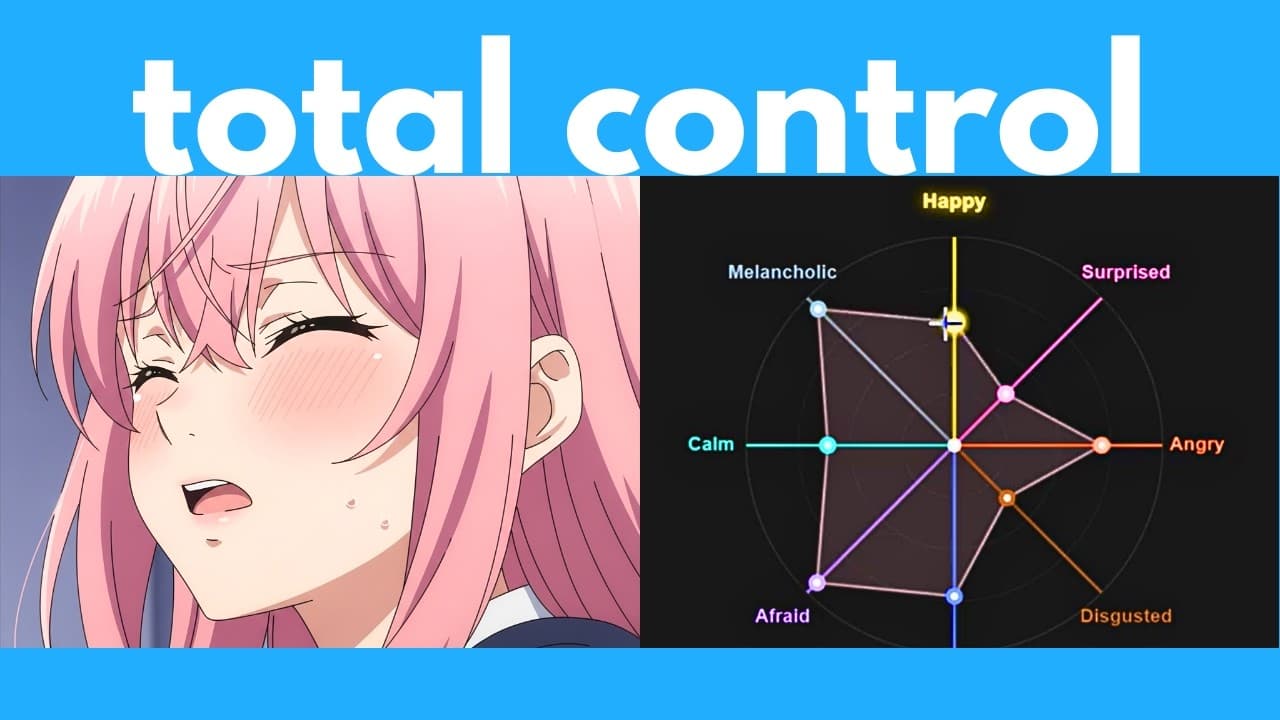
IndexTTS2 is a free text-to-speech generator that clones a voice from a few seconds of audio and lets you control emotion separately with sliders such as happy, sad, angry and hate, or by uploading a second reference clip carrying the emotion you want. It runs offline on your own computer for unlimited generations. Accent cloning is inconsistent: an Indian accent came out well, an Australian one did not.
Transcript
We have a new top texttospech generator that's completely free to use and this might be the best one out there in terms of controlling emotions and expressiveness. So in this video I'm going to go over all the cool things that it can do. Plus of course I'm going to show you how you can install this on your computer so you can run it for free for un... Read More
Key Insights
- IndexTTS2 is a free text-to-speech AI that can be installed and run offline on a personal computer, allowing unlimited generations at no cost. It is the successor to the earlier IndexTTS and is described as free and uncensored.
- Emotion control is the feature that separates IndexTTS2 from other text-to-speech tools. Sliders for happy, sad, angry and hate can each be dragged toward 1, changing the delivery of the same sentence while keeping the reference speaker's voice intact.
- Voice cloning works from extremely short reference clips. The demos used 4 seconds of a woman's voice, roughly 2 seconds of a male voice, and 6 seconds of Trump audio, each producing output that sounded like the original speaker.
- Emotion can be transferred from a second audio file instead of set by slider. Uploading a sad-sounding reference clip alongside a British voice reference made the British voice deliver the line with that borrowed sadness, at a default influence value of 0.8.
- Emotion intensity is adjustable, not binary. The same passage was generated with a speaker feeling down and then extremely depressed, and the two outputs differed noticeably in how heavy the delivery sounded.
- The model can carry emotion across a language change. A Chinese film was run through the AI so each actor's cloned voice spoke an English transcript while keeping the original performance's emotion and expressiveness, despite being text-to-speech rather than voice-to-voice.
- Accent cloning is inconsistent in IndexTTS2. An Australian male reference produced output the creator judged poor, while an Indian female reference came out surprisingly good, so results vary by accent rather than failing uniformly.
- VibeVoice by Microsoft is offered as the alternative when accents matter. It is also free, handles up to four speakers, and can produce generations of over 90 minutes, whereas the accent test it was given sounded better than IndexTTS2's attempt.
Install to Summarize YouTube Videos and Get Transcripts
Explore YouTube Video Summarizer or Get YouTube Transcript Extractor
Questions & Answers
Q: What is IndexTTS2?
IndexTTS2 is a free text-to-speech AI generator, described in the video as free and uncensored and as an improved version of the previous IndexTTS. It converts written text into spoken audio using a reference voice clip, and it can be installed on your own computer so it runs offline with unlimited generations at no cost. Its distinguishing strength is control over emotion and expressiveness rather than plain voice cloning, which the creator notes most text-to-speech tools already handle. The project is hosted on GitHub at github.com/index-tts/index-tts.
Q: How do you control emotion in IndexTTS2?
There are two methods. The first is an emotion vector made of sliders in the interface, including happy, sad, angry and hate. You drag a slider toward 1 to increase that emotion, and you can combine them, for example angry at 1 with hate at around 0.4 for an accusatory line. The second method is uploading a separate reference audio clip that already contains the emotion you want, then setting how much influence that clip has over the generation, which defaults to 0.8. Both methods keep the timbre of your main voice reference while changing the delivery.
Q: How much audio does IndexTTS2 need to clone a voice?
Only a few seconds. The video's demos used a 4 second clip of a woman's voice, a clip of roughly 2 seconds for a male speaker, and a 6 second clip of Trump, and in each case the generated speech sounded like the original person. Other clones shown include Furina from Genshin Impact, whose expressive voice was reproduced, and a British male reference. The creator calls the 6 second Trump result impressive given how little source audio was supplied, which means you do not need a long recording session to build a usable reference.
Q: How do you install IndexTTS2 on your computer?
The video includes a full installation walkthrough with dedicated chapters starting at the 15:48 mark, covering Python at 17:10, Git and Git LFS at 18:42, the remainder of the IndexTTS2 installation at 20:28, and how to use the tool at 25:49. The description links the components you need: the IndexTTS GitHub repository at github.com/index-tts/index-tts, Python from python.org/downloads, Git from git-scm.com/downloads, and Git LFS from git-lfs.com. Once installed it runs locally and offline for unlimited free generations.
Q: Can IndexTTS2 clone accents?
Only sometimes. The creator tested an Australian male reference voice and concluded the tool does not seem to do well with accents on that attempt. He then ran the same transcript with an Indian female reference and called the result surprisingly good. His summary is that IndexTTS2 can handle some accents but not others, so accent reproduction should be tested per voice rather than assumed. For accent work specifically he recommends Microsoft's VibeVoice, which produced a better result on the same kind of test.
Q: How does IndexTTS2 compare to other free text-to-speech tools?
The IndexTTS2 project page includes side-by-side comparisons against other generators the creator has covered before, including Spark TTS and F5-TTS, which had been his previous favorite. His assessment is that on average IndexTTS2 sounds slightly better than those alternatives. The separate comparison is with Microsoft's VibeVoice, which he says handled an accent test noticeably better and which supports up to four speakers and generations of over 90 minutes. He has a separate tutorial video reviewing VibeVoice and its installation.
Q: What is the difference between using an emotion slider and an emotion reference clip?
The slider approach sets an emotion vector numerically: you pick named emotions such as happy, sad, angry or hate and dial each between 0 and 1, which is useful when you know exactly which feeling you want and how strong. The reference clip approach instead uploads a second audio file whose emotional delivery is copied onto your generation, so the output inherits the pacing and feeling of a real performance rather than a labeled value. With the clip method you control an influence setting, left at the default 0.8 in the demo, to decide how strongly that emotion carries over.
Q: Can IndexTTS2 dub a video into another language while keeping the original acting?
The developers demonstrated exactly that. They took a film originally in Chinese, cloned each actor's voice, and had those cloned voices speak an English transcript instead. The creator's point about the demo is that the output preserved the original emotions and expressiveness from the source performance, including a clearly sad passage, even though the system is text-to-speech rather than voice-to-voice conversion. That means the emotional performance is reconstructed from the reference audio and emotion controls rather than carried over directly from the original waveform.
Summary & Key Takeaways
-
IndexTTS2 is presented as a free, uncensored, open-source text-to-speech generator and an upgrade over the earlier IndexTTS. The video walks through official demos, the creator's own tests, and a full installation tutorial covering Python, Git and Git LFS so the tool can be run offline on a personal computer for unlimited generations.
-
The standout capability is separating voice identity from emotion. A reference clip supplies the speaker's timbre, while emotion is set either with sliders (happy, sad, angry, hate) or by uploading a second audio clip whose emotion is cloned onto the output, with an adjustable influence value defaulting to 0.8.
-
Cloning works from very short samples: 4 seconds of a woman's voice, 2 seconds of a male voice, and 6 seconds of Trump all produced convincing matches. Accents were mixed, with the Australian clip failing and the Indian one succeeding. For accents and multi-speaker work, the creator points to Microsoft's VibeVoice instead.
Read in Other Languages (beta)
Share This Summary 📚
Summarize YouTube Videos and Get Video Transcripts with 1-Click
Try YouTube Summary with ChatGPT & Claude or YouTube Transcript Generator
Explore More Summaries from AI Search 📚





Summarize YouTube Videos and Get Video Transcripts with 1-Click
Try YouTube Summary with ChatGPT & Claude or YouTube Transcript Generator