How Can Your Nervous System Boost Your Immune System?
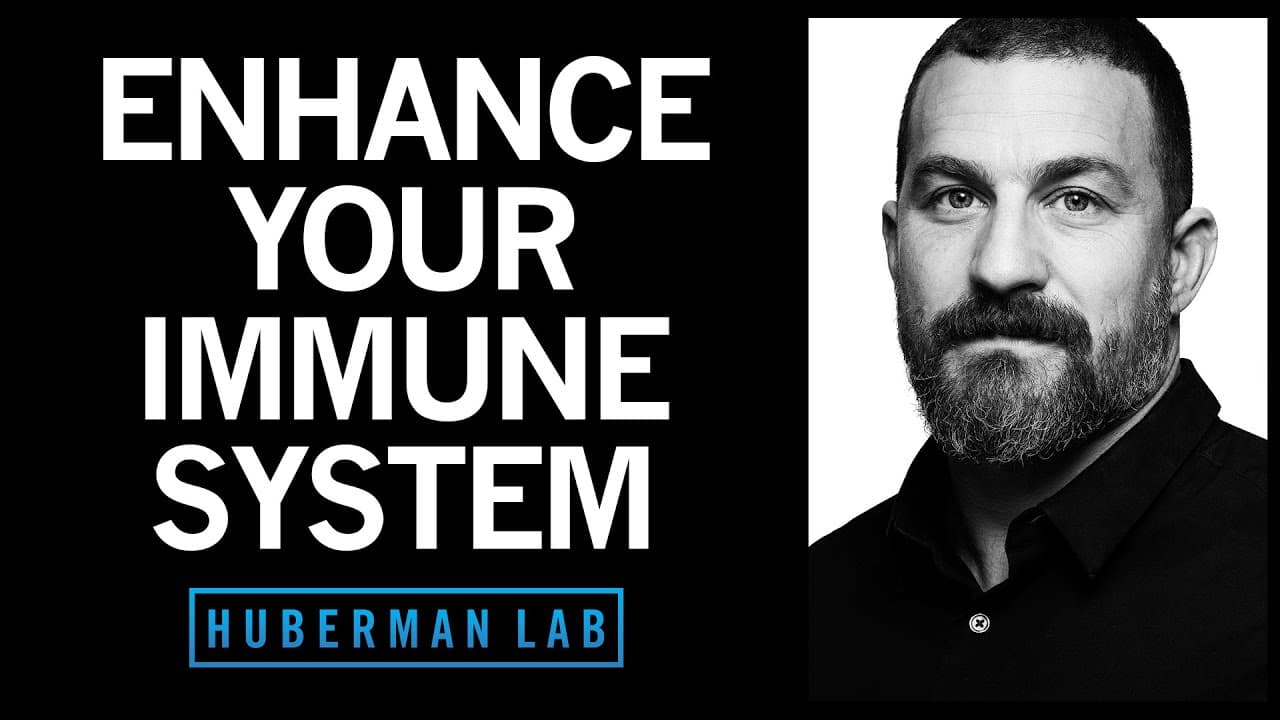
TL;DR
Your nervous system can enhance your immune system by activating it during infections. Sickness behavior, such as lethargy and loss of appetite, helps the body focus resources on healing and involves communication via the vagus nerve. Sleep supports immune function, particularly during illness, by promoting the release of serotonin and boosting the glymphatic system's activity.
Transcript
- Welcome to the Huberman Lab Podcast, where we discuss science and science-based tools for everyday life. I'm Andrew Huberman, and I'm a Professor of Neurobiology and Ophthalmology at Stanford School of Medicine. Today, we are discussing the immune system, and we are also discussing the nervous system, which is the brain, spinal cord, and the conn... Read More
Key Insights
- 😣 Sickness behavior, characterized by reduced activity, loss of appetite, and rest, is a natural response to infection that aids in the healing process.
- 🖐️ The vagus nerve plays a crucial role in transmitting signals related to sickness behavior and immune system activation between the body and the brain.
- 😪 Sleep, particularly the early stages associated with infection, enhances immune system function through the release of serotonin and increased activity of the glymphatic system.
Install to Summarize YouTube Videos and Get Transcripts
Explore YouTube Video Summarizer or Get YouTube Transcript Extractor
Questions & Answers
Q: How does sickness behavior contribute to better immune system function?
Sickness behavior activates certain responses, such as reduced activity, loss of appetite, and rest, which help combat infection by limiting the spread of pathogens and reducing the availability of iron.
Q: What role does the vagus nerve play in sickness behavior?
The vagus nerve serves as a pathway for signals from the body to the brain, triggering sickness behavior and influencing aspects such as reduced appetite, photophobia, and desire for rest.
Q: How does sleep aid in immune system function?
Sleep, especially the early stages associated with infection, enhances immune system activity by increasing serotonin levels and promoting the glymphatic system's clearance of waste and debris in the brain.
Q: What are the benefits of reducing exposure to bright lights during sickness?
Reducing exposure to bright lights during sickness helps alleviate symptoms of photophobia, which is a common response during illness. This light sensitivity is mediated by specific pathways in the brain and could aid in promoting a restful and healing environment.
Summary & Key Takeaways
-
Sickness behavior, characterized by lethargy, loss of appetite, and reduced grooming, is a natural response to infection. It is motivated by the immune system to combat the infection more effectively.
-
The vagus nerve serves as a communication pathway between the body and the brain, transmitting signals related to sickness behavior and immune system activation.
-
Photophobia (sensitivity to light) and the desire for rest and sleep are also part of sickness behavior, aimed at reducing inflammation and aiding in the healing process.
-
Sleep, particularly the early stages associated with infection, promotes immune system function through the release of serotonin and increased activity of the glymphatic system.
Read in Other Languages (beta)
Share This Summary 📚
Summarize YouTube Videos and Get Video Transcripts with 1-Click
Try YouTube Summary with ChatGPT & Claude or YouTube Transcript Generator
Explore More Summaries from Andrew Huberman 📚

Summarize YouTube Videos and Get Video Transcripts with 1-Click
Try YouTube Summary with ChatGPT & Claude or YouTube Transcript Generator